You wake up. The room is dark, your phone says 2:47AM, and you’ve got four more hours until your alarm. You close your eyes. Nothing happens. If you keep waking up at night — whether it’s once or four times — you’re not alone, and something specific is almost always driving it.
Most people who always wake up at night assume it’s just “the way they sleep.” It usually isn’t. There are well-understood causes behind waking up during the night multiple times, and most of them respond to changes once you know what you’re dealing with. This guide covers every major cause, what’s going on in your body when it happens, and where to start.
Key Takeaways
- Briefly waking between sleep cycles is biologically normal — most people just don’t remember it
- REM sleep makes your brain more vulnerable to full waking, especially in the second half of the night
- The most common culprits are stress, sleep apnea, needing to urinate, night sweats, and alcohol — all identifiable and most are treatable
- 2–4AM is peak waking time because your deepest sleep has already passed and cortisol starts rising
- If night waking is affecting your daytime functioning for more than four weeks, it’s worth talking to a doctor
Medical Disclaimer: This article is for informational purposes only and is not a substitute for professional medical advice, diagnosis, or treatment. If you’re experiencing persistent sleep issues, please consult a qualified healthcare provider.
Affiliate Disclosure: This post contains affiliate links. If you purchase through these links, we may earn a small commission at no extra cost to you. We only recommend products we genuinely believe in.
Why Waking Up at Night Is Actually Normal — To a Point
Here’s something most people don’t know: you’re supposed to wake up during the night. Not for an hour at a time, but briefly — your brain actually surfaces toward consciousness multiple times every single night, and you never remember most of it.
Sleep isn’t a single, continuous state. Your body moves through a series of sleep cycles, each lasting roughly 90 minutes. Within each cycle, you pass through three stages of non-REM sleep — ranging from light sleep to deep, restorative slow-wave sleep — and then into REM sleep, where most dreaming happens. At the end of each cycle, your brain briefly transitions back toward wakefulness before descending into the next.
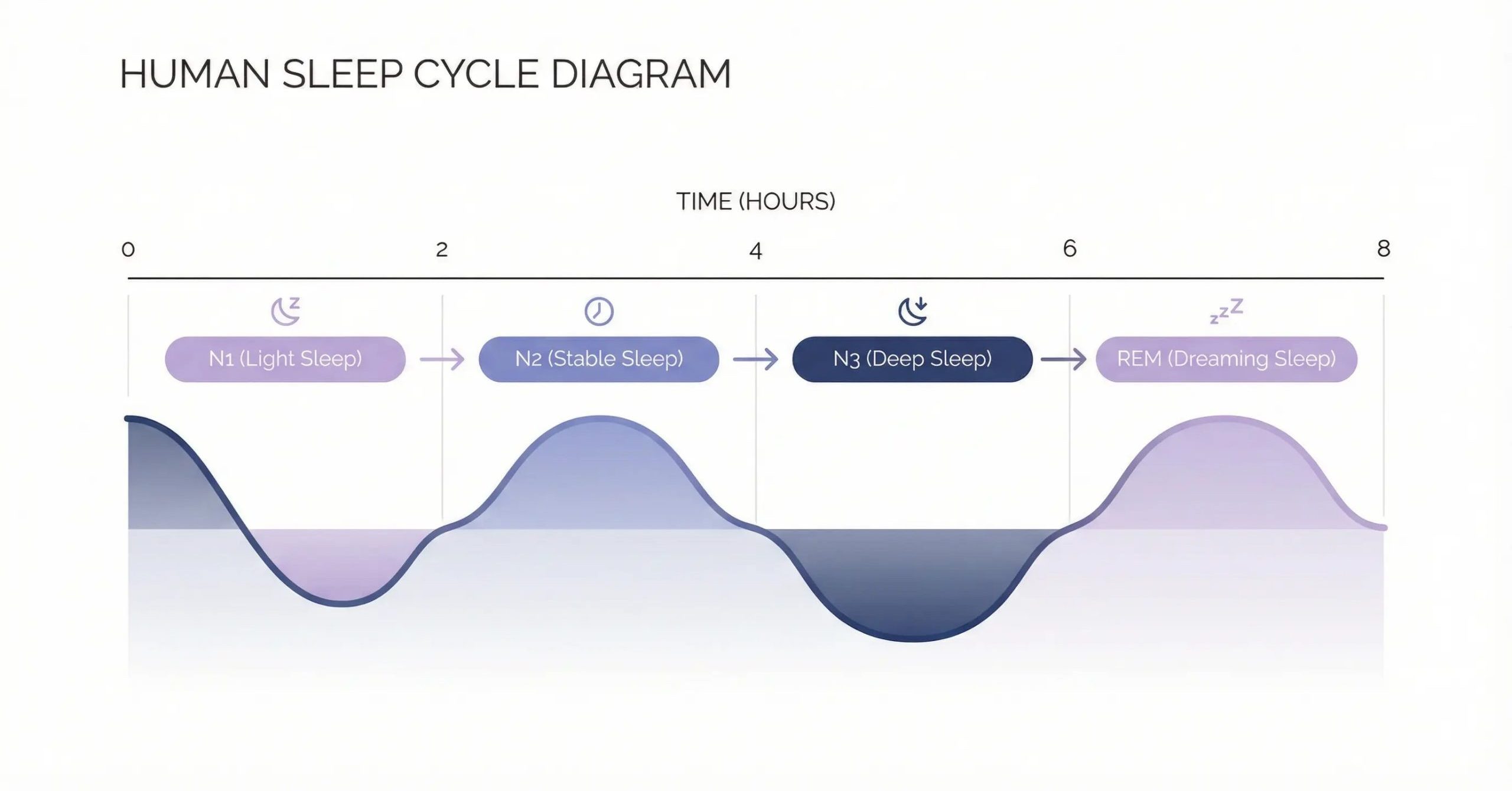
These micro-awakenings are normal. Research from the American Academy of Sleep Medicine confirms that brief arousals at cycle boundaries are a standard feature of healthy sleep architecture. The problem isn’t the transition itself — it’s when something catches your brain during that vulnerable window and pulls you into full wakefulness.
Waking up during REM sleep is especially common in the later hours of the night. REM stages get progressively longer as the night goes on, and because REM sleep is lighter than deep slow-wave sleep, your brain is closer to the surface. A noise, a full bladder, a cortisol pulse — any of these can tip you from REM into fully awake. Understanding this mechanism is the first step to understanding why it keeps happening to you.
The Most Common Causes of Waking Up at Night
There are a lot of reasons this happens. Most of them aren’t random — they follow identifiable patterns. Here’s a thorough look at each one.
Stress and Anxiety
Stress is probably the most common reason people find themselves staring at the ceiling in the early hours. When you’re under psychological stress, your nervous system stays in a state of partial activation called hyperarousal. Cortisol — the body’s primary stress hormone — naturally rises in the early morning hours to prepare you for the day. But under stress, that rise comes earlier and spikes higher, nudging you out of sleep well before your alarm.
Racing thoughts also tend to surface during lighter sleep stages. Your brain is still semi-active during light sleep, and unresolved anxieties have a way of breaking through when your conscious filters are down. That sudden “remembering everything I was worried about” feeling at 3AM? That’s stress-related hyperarousal doing exactly what it’s designed to do.
Sleep Apnea
Sleep apnea is one of the most under-diagnosed causes of night waking — and one of the most important to catch. With obstructive sleep apnea, the muscles in your throat relax too much during sleep, partially or fully blocking your airway. Your brain detects the oxygen drop and jolts you awake just enough to restore breathing. Many people do this dozens of times a night without any memory of it.
If you’re waking up from sleep choking or gasping, starting mornings with a dry mouth or headache, or a partner has mentioned your snoring, sleep apnea is a serious possibility worth investigating. This one needs a proper diagnosis — typically a sleep study — because untreated sleep apnea carries real cardiovascular and metabolic risks over time.
Needing to Urinate (Nocturia)
Getting up one or more times a night to use the bathroom is so common it has a clinical name: nocturia. For some people it’s a fluid intake issue — drinking too much in the hours before bed, especially alcohol or caffeinated drinks that increase urine production. For others, it’s more than that.
If you keep waking up at night to pee and it’s a new or worsening pattern, it’s worth investigating with your doctor. An overactive bladder, UTI, diabetes, kidney issues, or in men, an enlarged prostate can all be driving it. The Sleep Foundation notes that nocturia affects around one-third of adults over 30 — it’s common, but that doesn’t make it inevitable.
Night Sweats
Waking up drenched in sweat is uncomfortable and disorienting. If you keep waking up at night sweating, the first thing to check is your sleep environment — a room that’s too warm, heavy bedding, or a mattress that traps heat can cause sweating that has nothing to do with your body chemistry.
Beyond the environment, night sweats have a range of physiological causes. Alcohol metabolism is a big one: as alcohol breaks down during the night it disrupts your body’s temperature regulation, causing core temperature to spike. Hormonal changes are another major factor, particularly during perimenopause and menopause. Certain antidepressants and other medications can trigger night sweats as a side effect. And in some cases, night sweats signal something that needs medical attention — infection, autoimmune conditions, or rarely, certain cancers.
Alcohol and Caffeine
Both are sleep disruptors, but in ways that many people don’t fully appreciate. Alcohol is misleading — it helps you fall asleep faster, which is why so many people use it as a sleep aid. But alcohol suppresses REM sleep in the first half of the night, and as it metabolizes, your brain rebounds into lighter, more fragmented sleep with frequent waking in the second half. That 3AM wake-up after a few evening drinks? Classic alcohol rebound.
Caffeine works differently. Its half-life is approximately five to six hours, meaning a 3PM coffee still has half its stimulant effect active at 9PM. Caffeine blocks adenosine receptors — adenosine is the chemical that builds up throughout the day and creates sleep pressure. When caffeine is blocking those receptors, your brain doesn’t register the full sleep pressure it should, and sleep architecture gets fragmented even if you fall asleep without trouble.
Blood Sugar Fluctuations
This one flies under the radar. When your blood glucose drops too low in the middle of the night, your body releases cortisol and adrenaline as a compensatory mechanism — a mini stress response designed to mobilize stored glucose. That cortisol spike, which typically hits hardest between 2AM and 4AM, can wake you suddenly with no obvious cause. You might feel anxious, heart-racey, or inexplicably alert.
This pattern is especially common in people who eat dinner early, exercise heavily in the evening, or have blood sugar regulation issues. It can also be triggered by a high-sugar meal close to bed, which causes a rapid insulin response that overshoots and leaves glucose too low by the early morning hours.
Environmental Factors
Your bedroom environment does more to your sleep than most people give it credit for. Noise is one of the biggest culprits — and it doesn’t have to be loud to be disruptive. The brain stays partially alert to sound even in deep sleep, monitoring for threats. Irregular noise (a partner snoring, unpredictable street traffic, a pet shifting) is far more disruptive than consistent background sound.
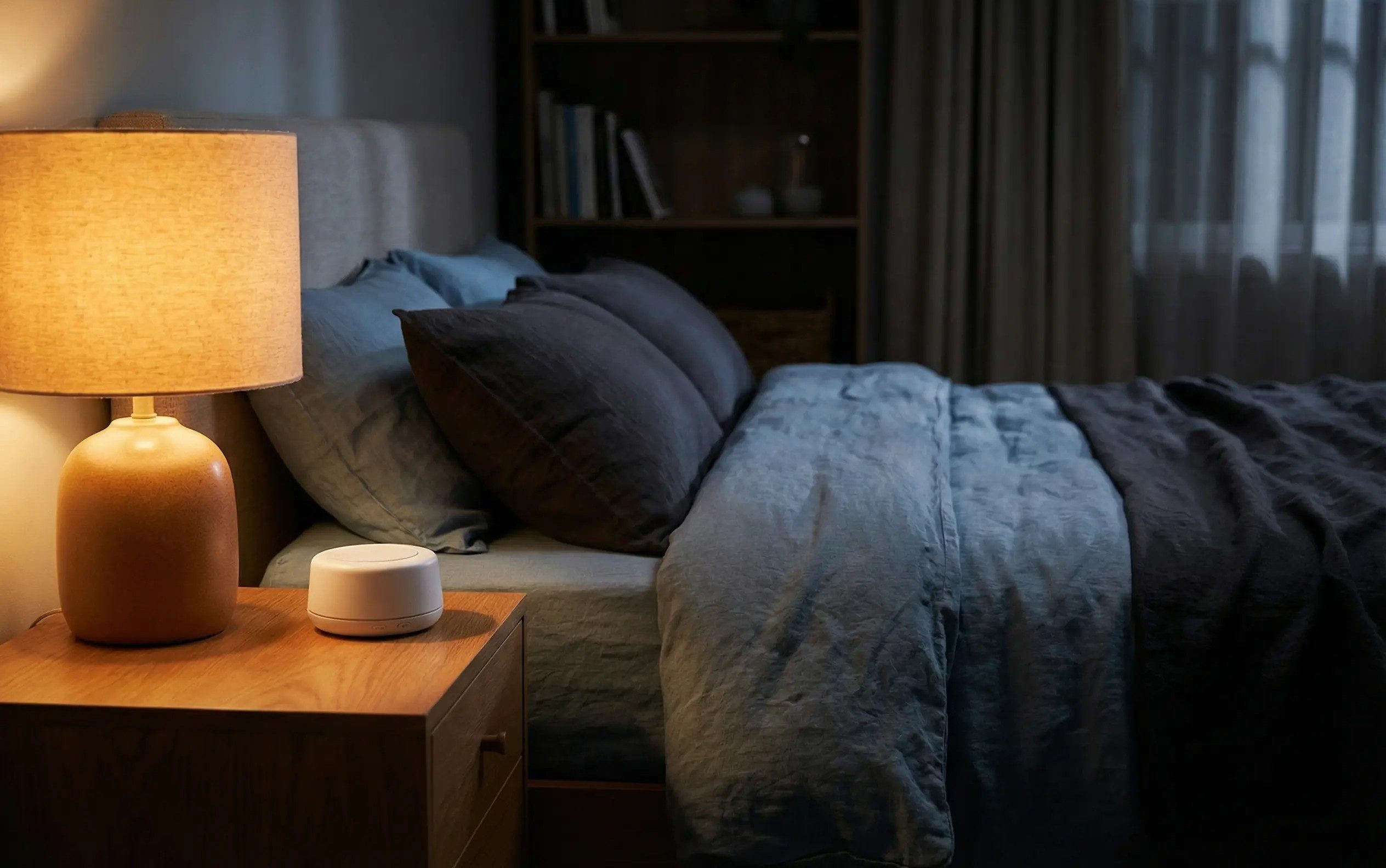
A sound machine helps by masking those unpredictable acoustic spikes with consistent background noise your brain can tune out. Light is another factor — even dim light can suppress melatonin and pull you toward wakefulness during lighter sleep stages. If you need to get up at night, using a red night light for sleep instead of overhead lighting keeps your melatonin intact and makes it far easier to drift back off. A simple plug-in option placed at outlet level means you can navigate safely without triggering your alertness response — our guide to the best plug-in red night light covers the most practical choices. And temperature matters: the ideal sleep room sits around 65–68°F (18–20°C). Too warm, and your body struggles to lower its core temperature, which is a prerequisite for deep sleep.
→ Recommended for Noise Disruption
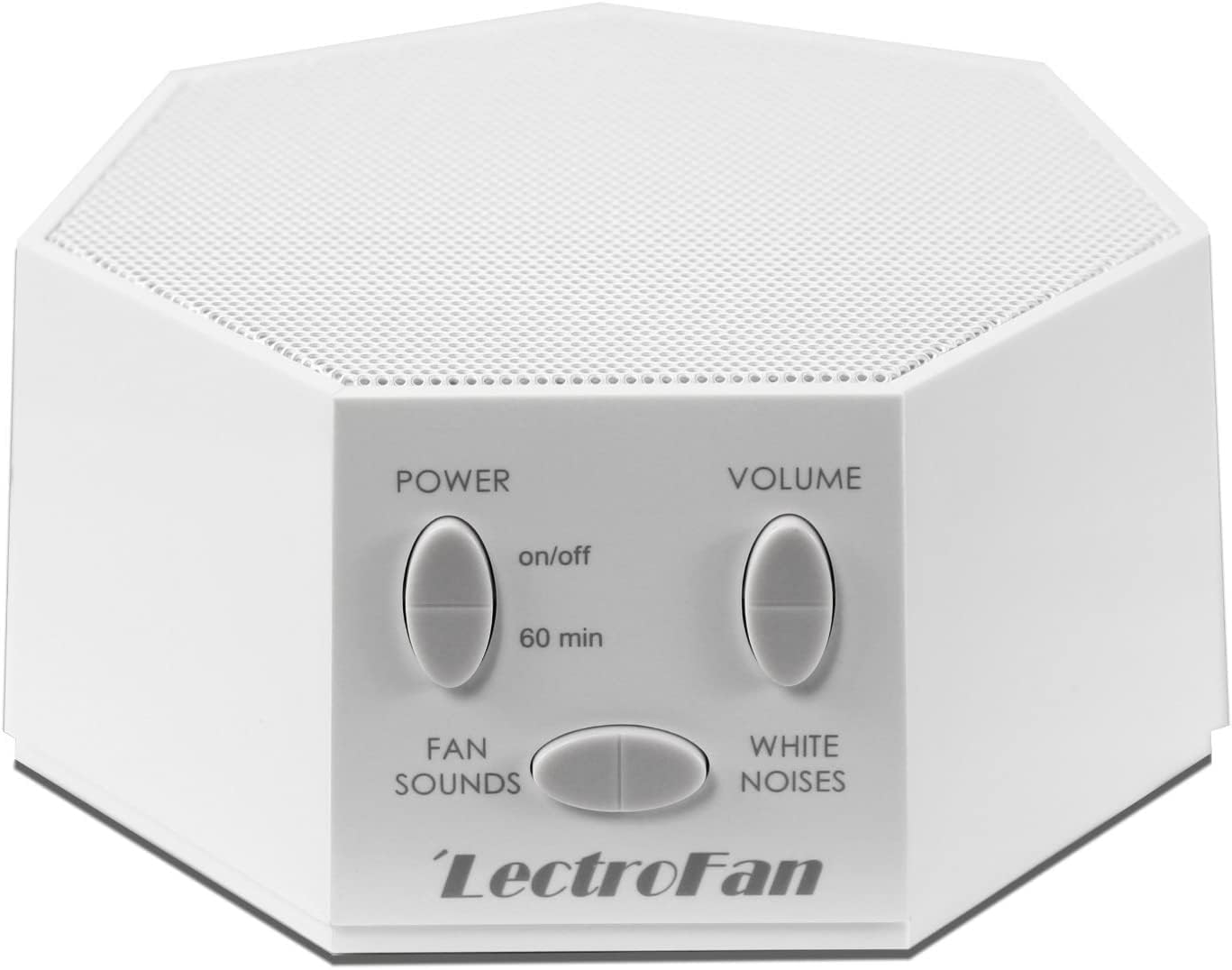
White Noise Sound Machine
A consistent sound environment your brain can tune out — masking the unpredictable noises that pull you out of sleep. One of the most straightforward fixes for noise-related night waking.
View on Amazon→ Recommended for Temperature & Night Sweats

Cooling Pillowcase
If warmth or night sweats are waking you up, your sleep surface is the first thing to address. A breathable, heat-wicking pillowcase keeps things cooler throughout the night without changing your whole bedding setup.
View on AmazonMedications
Certain medications are known sleep disruptors, and they don’t always come with that warning on the label. Beta blockers suppress melatonin production and can cause vivid dreams and night waking. Corticosteroids like prednisone are potent sleep disruptors. Some antidepressants — particularly SSRIs taken in the evening — can increase nighttime arousals. Decongestants and certain allergy medications contain stimulants.
If your night waking started around the same time as a new prescription, that connection is worth exploring with your doctor. Never adjust or stop a medication without guidance — but the conversation is worth having.
Age-Related Changes in Sleep
Sleep architecture changes significantly as we age. From around your 40s onward, the proportion of deep slow-wave sleep each night decreases. Sleep becomes lighter and more fragmented. Your circadian rhythm tends to shift earlier — you feel sleepy sooner and wake earlier. A minor disruption that a younger person would sleep through can fully wake someone in their 50s or 60s.
This doesn’t mean poor sleep is just inevitable with age. Many of the causes above — sleep apnea, nocturia, medications, anxiety — become more prevalent with age too, and those are addressable. Understanding that the underlying architecture shifts does help contextualize why it gets harder, and why targeted interventions matter more, not less, as you get older.
Why Do I Keep Waking Up at 2AM or 3AM Specifically?
If your wake-ups happen around the same time every night — 2AM, 3AM, sometimes 4AM — that’s not a coincidence. There’s a biological explanation.
By 2AM, most adults have already completed their deepest slow-wave sleep, which dominates the first third of the night. What’s left is predominantly lighter sleep and longer REM cycles. You’re already sleeping closer to the surface. Combine that with the body’s natural cortisol rise — which begins between 3AM and 5AM as part of your circadian preparation for the day — and you have a window where almost anything can push you into full waking.
Blood sugar troughs, alcohol rebound, stress-related cortisol spikes, and bladder pressure all tend to hit hardest in this same window. That’s why you keep waking up at 3AM every night — or at 2AM every night — even when nothing obvious seems to be causing it. The timing is baked into your biology.
“The 2–4AM window is the perfect storm: deep sleep is over, REM is dominant, cortisol is rising, and almost every lifestyle-driven sleep disruptor peaks at the same time.”
For a deeper look at why 3AM has become such a predictable pattern for so many people, we’ve covered it in detail in our piece on why you keep waking up at 3AM. And if you’ve ever wondered whether the timing has a deeper meaning, what it means when you wake up at 3AM explores that question.
What Waking Up Multiple Times a Night Is Telling You
Waking up during the night multiple times isn’t just a nuisance. It’s information. Your body doesn’t disrupt its own sleep for no reason — every arousal reflects something: a stress load that hasn’t been discharged, a physical condition that needs attention, an environmental factor making restorative sleep impossible, or a lifestyle habit working against your sleep architecture.
The frustrating part is that the cause isn’t always obvious in the moment. You wake up, there’s nothing visibly wrong, and yet here you are at 3:15AM, fully alert. Tracing it back to blood sugar, or a half glass of wine at 9PM, or cortisol from a rough work week — that takes some detective work. But it’s worth doing. Chronic fragmented sleep isn’t a benign inconvenience. It compounds over time, affecting mood, cognitive function, immune health, and cardiovascular risk.
Some people find it useful to track their wake-up patterns alongside diet, alcohol intake, stress levels, and exercise. Patterns usually emerge within a week or two. If you’re waking after only a few hours consistently, our article on waking up after only 4 hours of sleep may help identify what’s driving that specific pattern.
How to Stop Waking Up at Night — Where to Start
Start by identifying your most likely cause. Go back through the sections above and be honest with yourself. Is there stress you haven’t dealt with? Are you drinking alcohol too close to bed? Does the waking come with sweating, gasping, or a sudden urge to use the bathroom? The specific character of your waking is the first clue.
Address the root cause, not the symptom. Melatonin won’t fix sleep apnea. Earplugs won’t fix blood sugar crashes. Match the intervention to what’s actually happening. For sleep hygiene fundamentals: a consistent sleep and wake schedule is the single most powerful tool you have. A cool, dark room, no alcohol within three hours of bed, and limiting caffeine after midday will address several causes at once.
Once you’ve made those changes, if you do wake up and can’t get back to sleep, we have a dedicated guide on how to fall back asleep after waking at night that walks through the most evidence-based techniques. And if you notice you’re waking at a suspiciously consistent time each night, it’s worth reading about why you wake up at the same time every night — that regularity is often a signal in itself.
Still waking up at the same time every night?
You don’t need more tips — you need a reset. Our free 3AM Wake-Up Guide gives you a simple, step-by-step plan to break the pattern for good. Grab your free copy below.
Download Our Free Guide →When to See a Doctor About Night Waking
Most night waking is manageable and responds to lifestyle changes. But some causes need professional evaluation, and knowing when to push for it matters.
See a doctor if you’re waking gasping or choking — this is one of the clearest warning signs for obstructive sleep apnea. A sleep study is the gold standard for diagnosis, and treatment options including CPAP and newer alternatives are genuinely effective.
See a doctor if night sweats are accompanied by fever, unexplained weight loss, sweats that soak through your clothing, or any other symptoms that feel out of the ordinary. These combinations can sometimes indicate infection, autoimmune conditions, or in rare cases, a malignancy.
See a doctor if frequent urination at night is new or getting worse — this can be a symptom of diabetes, kidney disease, or prostate issues, all of which respond far better to early intervention.
And if night waking is meaningfully affecting your daytime function — concentration, mood, reaction time, your ability to do your job — for more than four weeks despite reasonable lifestyle adjustments, that’s not something to push through alone. If you suspect a medication is the culprit, bring that to your prescriber. There are often alternatives or timing adjustments that can help.
Frequently Asked Questions
Why do I keep waking up at night for no apparent reason?
It often isn’t “no reason” — it’s an unidentified reason. The most common hidden causes include blood sugar fluctuations that trigger a cortisol response around 2–4AM, mild sleep apnea arousals you don’t remember, stress-related hyperarousal keeping your nervous system partially active, and environmental triggers like noise or temperature changes you weren’t conscious of. Tracking your wake-up patterns alongside diet, alcohol intake, and stress levels for a week or two usually reveals a pattern.
Is it normal to wake up multiple times during the night?
Very briefly waking at cycle boundaries — roughly every 90 minutes — is completely normal and happens to everyone. What matters is whether you return to sleep quickly and feel rested in the morning. If you’re having full awakenings that last more than a few minutes, happening more than twice a night, or leaving you exhausted the next day, that’s worth investigating.
Why do I keep waking up at 3AM every night?
The 2–4AM window is biologically the most vulnerable time for waking. By this point your deep slow-wave sleep is largely complete, cortisol is beginning its natural morning rise, and you’re spending more time in lighter REM sleep. Blood sugar troughs, alcohol metabolism rebound, and stress-related cortisol spikes all tend to peak in this window too. See our detailed piece on why you keep waking up at 3AM for a full breakdown.
Can anxiety cause you to keep waking up at night?
Yes — and it does so through a specific physiological mechanism, not just racing thoughts. Anxiety keeps your nervous system in a state of hyperarousal, which means your brain maintains a higher baseline of alertness even during sleep. Cortisol, which is elevated under chronic stress, also rises earlier in the early morning hours. The result is that your brain crosses the threshold into full wakefulness more easily during normal sleep-cycle transitions.
Why do I wake up at night sweating?
Night sweats have several common causes: a bedroom that’s too warm, alcohol metabolism disrupting temperature regulation, hormonal fluctuations (especially during perimenopause and menopause), and certain medications including some antidepressants. A cooling pillow or breathable mattress pad can resolve temperature-related sweating quickly. If sweats are severe or accompanied by fever, weight loss, or other symptoms, see a doctor — these combinations can indicate an underlying condition.
Should I be worried about waking up during REM sleep?
Not inherently. REM sleep is lighter than deep slow-wave sleep, so waking during REM is common and expected, especially in the second half of the night when REM stages get longer. What’s worth paying attention to is if those wakings are very frequent, accompanied by vivid nightmares, or leave you unable to return to sleep. Certain medications can dramatically alter REM architecture, and REM sleep behavior disorder — where people physically act out dreams — is a distinct condition worth discussing with a doctor if it applies to you.
Sources
- American Academy of Sleep Medicine. “Sleep and Sleep Disorders.” https://aasm.org/
- Sleep Foundation. “Nocturia.” https://www.sleepfoundation.org/sleep-disorders/nocturia
- Mayo Clinic. “Sleep apnea — Symptoms and causes.” https://www.mayoclinic.org/diseases-conditions/sleep-apnea/symptoms-causes/syc-20377631
- Cleveland Clinic. “Night Sweats.” https://my.clevelandclinic.org/health/symptoms/21874-night-sweats
- National Institute of Neurological Disorders and Stroke. “Brain Basics: Understanding Sleep.” https://www.ninds.nih.gov/health-information/public-education/brain-basics/brain-basics-understanding-sleep
- Roehrs T, Roth T. “Caffeine: Sleep and Daytime Sleepiness.” Sleep Medicine Reviews, 2008. https://pubmed.ncbi.nlm.nih.gov/17983876/
About The Author