KEY TAKEAWAYS
- Waking up at 3AM is extremely common and usually not a sign something is wrong.
- Natural sleep cycle shifts, cortisol rhythms, and environmental changes all converge around 3–4AM.
- What you do in the first few minutes after waking matters far more than the waking itself.
- Checking the clock, grabbing your phone, or turning on lights can delay falling back asleep significantly.
- Slow breathing, staying still, and keeping light dim are usually all you need to drift off again.
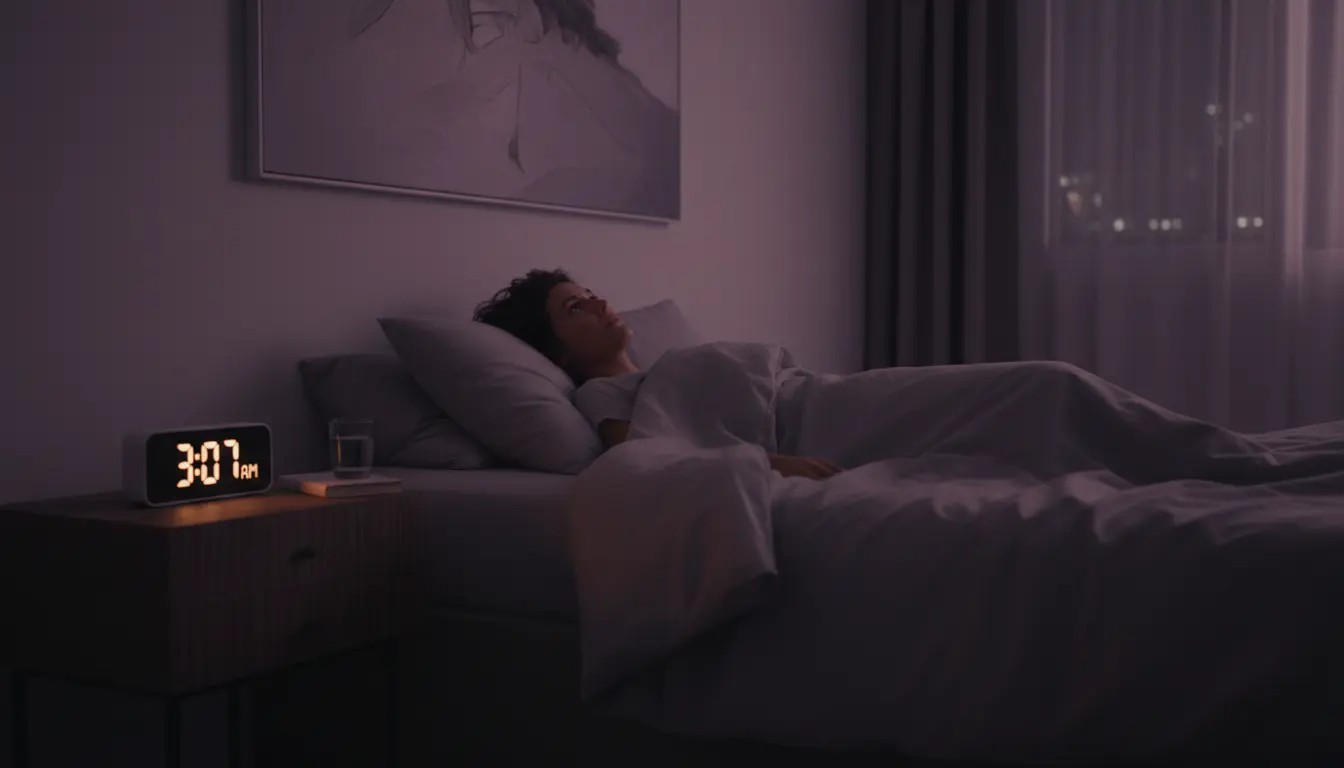
You open your eyes. The room is dark. You glance at the clock — and there it is, 3:07AM. Again. For the third night in a row.
If you keep waking up at 3AM and can’t quite figure out why, you’re in very good company. This is one of the most common sleep complaints people quietly deal with, often feeling confused or mildly unsettled, especially when it starts happening regularly.
Before you start Googling symptoms in the dark (please don’t), here’s something reassuring: waking briefly during the night is a completely normal part of human sleep. The real question isn’t just why it happens — it’s why your brain decides to stay awake once it does. And that’s actually the more useful thing to understand.
QUICK ANSWER
Waking up at 3AM most often means your brain has moved into a lighter stage of its sleep cycle, making brief awakenings more noticeable. Cortisol — your body’s alertness hormone — also begins rising naturally around this time. For most people this is completely normal and not a sign that anything is wrong.
Wait — Is It Actually Normal to Wake Up at Night?
Short answer: yes, genuinely. Sleep isn’t the smooth, uninterrupted stretch we imagine it to be. It’s a cycle, repeating roughly every 90 minutes, moving through lighter and deeper phases throughout the night.
During those lighter phases — particularly in the early hours of the morning — your brain is much closer to consciousness. It doesn’t take a lot to nudge you from light sleep to fully awake. A change in room temperature, a noise outside, or even a natural shift in breathing can do it.
Most people wake briefly multiple times per night without ever remembering it. The difference is what happens next. If your brain simply drifts back down into sleep, you won’t recall it in the morning. If it fires up instead — becomes alert, anxious, or starts thinking — that’s when you notice.
So the 3AM wake-up itself? Often not the problem. It’s the 3AM brain that decides to stay awake that you’re actually dealing with.
Why Does It Happen Around 3AM Specifically?
A few things converge in the early hours of the morning that make this window particularly common for waking. It’s not random — there are real physiological reasons why 2AM to 4AM is prime time for a brief stirring.
Your Sleep Cycle Timing
After around 6 hours of sleep, you’ve worked through the deeper, more restorative stages of your sleep cycle. You’re now in lighter, REM-heavy sleep — the stage associated with dreaming, memory consolidation, and yes, easier waking. If you went to bed around 11PM, 3AM lines up almost perfectly with this shift.
Cortisol Starts Rising
Cortisol — the hormone associated with alertness — doesn’t wait for your alarm. It begins climbing naturally in the early morning hours as your body prepares for the day ahead. For some people, this process starts earlier or more abruptly, and that gentle hormonal shift can be enough to pull them out of sleep.
Temperature Changes
Your core body temperature drops during sleep to support deep rest. Around 3–4AM, it begins to tick back up. That subtle shift can coincide with lighter sleep stages, making waking more likely. If your room is also warming up — especially in summer — the effect is amplified.
Environmental Cues
The world outside isn’t as quiet in the early hours as we’d like. Delivery trucks, birds beginning to sing, light creeping in — any of these can trigger waking during a naturally light stretch of sleep. Even a partner shifting position can be enough.
The Moment You Wake Up — What Happens Next
Here’s where it gets interesting, and where most people accidentally make things worse.
You open your eyes. You’re awake. And immediately, most of us do one of several things: check the time, reach for our phone, mentally calculate how many hours we have left, or start thinking about the day ahead.
Each of those responses — totally understandable — sends a signal to your nervous system that it’s time to get up. The brain interprets light from a screen, a racing mental calculation, or a spike of frustration as “we’re getting up now.” It’s not being difficult. It’s doing exactly what it’s designed to do.
The amygdala — your brain’s alarm system — is particularly reactive at night. Even mild anxiety about not sleeping can trigger a low-level stress response that keeps you awake far longer than the original waking ever would have.
Interestingly, the way you think about waking up matters too. People who treat middle-of-the-night waking as a crisis tend to stay awake longer than those who treat it as a normal, temporary pause in their sleep cycle.
💡 A SMALL REFRAME THAT HELPS
Instead of “Why am I awake again?”, try “My body is just cycling through sleep — this is normal.” It sounds almost too simple, but steering your brain toward calm rather than alarm can genuinely shift how quickly you settle back down.
Something I’ve noticed in practice is that the clients who recover from habitual 3AM waking fastest are the ones who stop treating it as a problem to solve during the night. The mindset shift from “why is this happening to me” to “this is a normal phase of my sleep cycle” sounds simple, but I’ve watched it break the pattern for people who had been stuck for months. Your brain stops preparing for a crisis at 3AM when you stop treating it like one.

Practical Things to Try When You Wake at Night
These aren’t complicated. The simpler you keep the next few minutes after waking, the better. The goal is to give your nervous system the signal that nothing interesting is happening and sleep can continue.
Stay physically still. Even if your mind is active, keep your body relaxed. Don’t flip over, sit up, or get out of bed unless you truly need to. Movement signals wakefulness to the brain.
Don’t check the clock. Seriously. Knowing it’s 3:12AM versus 3:47AM doesn’t help you fall back asleep — it just gives your brain a number to fixate on. Turn the clock face away from the bed if this is a habit you can’t shake.
Keep any light extremely dim. If you need to get up briefly, avoid turning on bright overhead lights. More on why in just a moment.
Try slow, deliberate breathing. A steady 4-count inhale, brief hold, and 6-count exhale activates your parasympathetic nervous system — the “rest and digest” mode. It’s subtle but genuinely effective.
Give your mind something gentle to focus on. Not a problem to solve. Not tomorrow’s to-do list. Something neutral and repetitive — counting, mentally tracing a familiar walk, or simply noticing the sensation of each breath.
None of these require any equipment or preparation. They’re small acts of not stimulating your brain, which is often all it takes.
Want a step-by-step guide for exactly what to do when you wake at night? The 3AM Wake-Up Reset Guide walks you through a simple, calm sequence designed to help you fall back asleep — no willpower required.
👉 Download the Free 3AM Wake-Up Reset GuideHow Your Sleep Environment Plays a Bigger Role Than You’d Think
Your bedroom is actively working with or against you during those early-morning light sleep stages. The environment that felt fine when you fell asleep at 11PM might be subtly different by 3AM — and your sleeping brain notices.
Light
Even low levels of light — a streetlamp through thin curtains, the glow of a standby device — can be detected through closed eyelids and signal your brain toward alertness. If your bedroom gradually gets lighter between 2AM and dawn, your sleep quality gets lighter with it.
Blackout curtains are one of the most practical investments for people who wake in the early morning. They’re not glamorous, but they work. For a fuller guide to building a sleep-supportive room, the SnoozeValley guide on how to create the ideal sleep environment covers this in detail.
Noise
The brain continues to process sound during sleep — it’s a survival mechanism. Inconsistent or unexpected noise is far more disruptive than steady background sound. A sudden creak is far more likely to wake you than a fan running continuously. If noise is a factor where you live, a white noise machine or even a simple phone app playing steady rainfall can create a much more stable acoustic environment.
Temperature
Most sleep research points to a slightly cool room — around 65–68°F (18–20°C) — as optimal for maintaining sleep. If your room warms significantly through the night, that temperature rise can be enough to pull you into wakefulness right around the 3–4AM window.
If You Need Light at Night, Make It Red
Sometimes you do need to get up — bathroom, a drink of water, checking on a child. And if you’re trying not to further disrupt your sleep, the type of light you use genuinely matters.
White and blue-toned light suppresses melatonin, the hormone that signals to your brain that it’s nighttime. Even a brief exposure to bright overhead lighting at 3AM can delay melatonin production for hours, making it harder to fall back asleep.
Red and amber light sits at the far end of the visible spectrum and has minimal impact on melatonin levels. It’s enough to see by, but far less likely to convince your brain that morning has arrived. A red night light on the lowest warm setting makes a real difference if you need to move around at night. You can read more about the science behind this in the SnoozeValley article on whether red light affects melatonin.
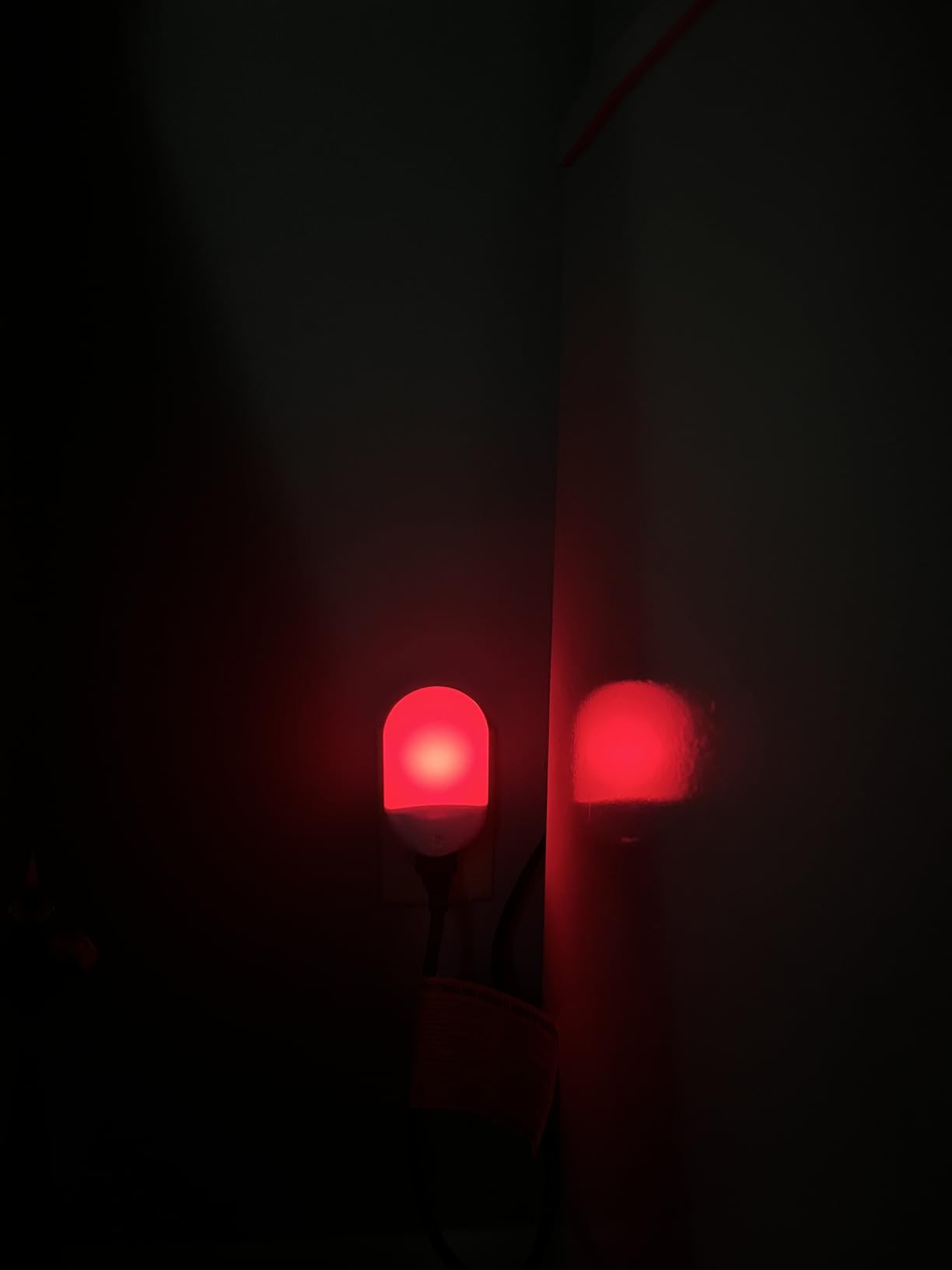
Not sure which red light to get? We tested several and there’s one that stands out. Read the full guide to find the best plug-in red night light for sleep, then grab our top pick below.
👉 See Our Top Pick on AmazonWhen It Might Be Worth Looking Deeper
For most people, occasional or even regular early morning waking is a rhythm issue — your sleep architecture, your environment, or your pre-bed habits nudging things slightly off. It’s common, manageable, and often improves with small adjustments.
That said, if you’re waking up at 3AM every night and it’s accompanied by persistent exhaustion, significant mood changes, physical discomfort, or difficulty functioning during the day, it may be worth a conversation with your doctor. Sleep apnea, anxiety, and certain hormonal conditions can all contribute to night waking — and they respond well to targeted treatment.
If you want to improve the quality of the sleep you’re getting overall — not just survive the 3AM moment — it’s worth exploring your deeper sleep patterns. The SnoozeValley article on how to increase deep sleep goes into practical detail on strengthening the most restorative phases of your cycle.
Here’s the Bottom Line
If you keep waking up at 3AM, your body isn’t broken. You’re not developing a sleep disorder. You’re experiencing something that happens to a remarkable number of adults, most of whom fall back asleep within minutes once they stop fighting it.
The night-waking itself is almost never the real issue. The real issue is usually what follows it — the clock-checking, the phone-grabbing, the anxious arithmetic about how much sleep you have left. Take those away, keep the environment calm, and let your nervous system do what it already knows how to do.
Sleep wants to come back. Your job is mostly to stay out of its way.
Frequently Asked Questions
Why do I keep waking up at 3AM every night?
Waking at 3AM typically coincides with a natural transition into lighter, REM-heavy sleep, a gradual rise in cortisol, and small environmental shifts like temperature or light changes. It’s extremely common and usually doesn’t indicate a medical issue.
Is waking at 3AM a sign of anxiety?
It can be. Anxiety can lower the threshold at which the brain transitions from sleep to wakefulness. However, 3AM waking also happens in people with no anxiety at all. If worry is consistently keeping you awake, addressing the anxiety directly is usually more effective than focusing on the sleep symptom alone.
How long does it normally take to fall back asleep?
If you stay relaxed and avoid stimulating your brain with light or activity, most people naturally drift back within 10–20 minutes. The key is keeping your brain in a calm, unstimulated state rather than engaging with the waking.
What does waking up at 3AM mean spiritually?
Various traditions assign significance to the 3AM hour — if you’re curious about what waking up at 3AM means across both cultural and biological lenses, there’s more to explore. Whether or not you connect with those ideas, the most practical takeaway is that your body has natural cycles that make this a very common waking window for physiological reasons.
Should I get out of bed if I can’t fall back asleep?
If you’ve been awake for 20–25 minutes and feel genuinely alert, some sleep specialists suggest briefly getting up to do something calm in dim light rather than lying awake frustrated. That said, many people find that staying still and focusing on slow breathing is enough without ever leaving bed.
Can diet affect waking up at 3AM?
Yes. Alcohol in particular is well known to fragment sleep in the second half of the night — it disrupts REM sleep and often causes early-morning waking as its sedative effects wear off. Eating large meals close to bedtime can have a similar effect on some people.
About The Author