Key Takeaways
- Deep sleep — also called slow-wave sleep — is the most physically restorative stage of your sleep cycle.
- You can’t force deep sleep, but you can consistently create the conditions that allow more of it to happen.
- Sleep schedule consistency, temperature, light exposure, and exercise are the four highest-impact levers.
- Substances like alcohol and late caffeine actively reduce deep sleep even when total sleep time looks fine.
- If you wake frequently during the night, addressing that pattern is often the fastest route to more deep sleep.
Getting enough sleep and getting good sleep are two very different things. You can spend eight hours in bed and still wake up feeling like you barely rested — and deep sleep is usually the reason why.
Deep sleep is the stage where your body does its most important repair work. It’s when the brain clears waste, the immune system consolidates, hormones regulate, and the body physically recovers from the day. Without enough of it, the hours you do sleep feel far less restorative than they should.
If you’ve been wondering how to increase deep sleep, the good news is that it’s highly responsive to the right conditions. You can’t manually dial it up — but you absolutely can stop the habits that suppress it and build the environment that supports it. Here are ten strategies that are consistently backed by sleep research.
Quick Answer
To increase deep sleep, focus on consistency first — keeping a regular sleep and wake time trains your circadian rhythm to support deeper sleep cycles. Combine this with a cool, dark bedroom, avoiding alcohol and caffeine in the evening, and regular daytime exercise. These four changes alone have the strongest evidence behind them for improving slow-wave sleep in adults.
Why Deep Sleep Matters More Than Total Sleep Time
Deep sleep — formally known as Stage 3 non-REM sleep, or slow-wave sleep — is the phase where your brain waves slow dramatically and the body shifts into full recovery mode. Heart rate and breathing drop. Growth hormone releases. The brain’s glymphatic system clears metabolic waste that accumulates during waking hours.
Research consistently links deep sleep to memory consolidation, immune function, hormonal balance, and cardiovascular health. Chronic disruption of slow-wave sleep — even without reducing total sleep time — has been associated with higher risk of metabolic disorders, cognitive decline, and mood dysregulation.
Most adults get the majority of their deep sleep in the first half of the night. This means the quality of those early sleep cycles matters enormously — and it’s why habits in the hours before bed have such a disproportionate impact on how restorative your sleep actually is.
It’s also worth understanding the relationship between night waking and deep sleep. If you’re regularly waking in the middle of the night, you’re interrupting the very cycles where deep sleep is most available. Understanding why you wake during the night is often the most direct route to protecting deep sleep.
10 Evidence-Backed Ways to Get More Deep Sleep
1. Keep a Consistent Sleep and Wake Time
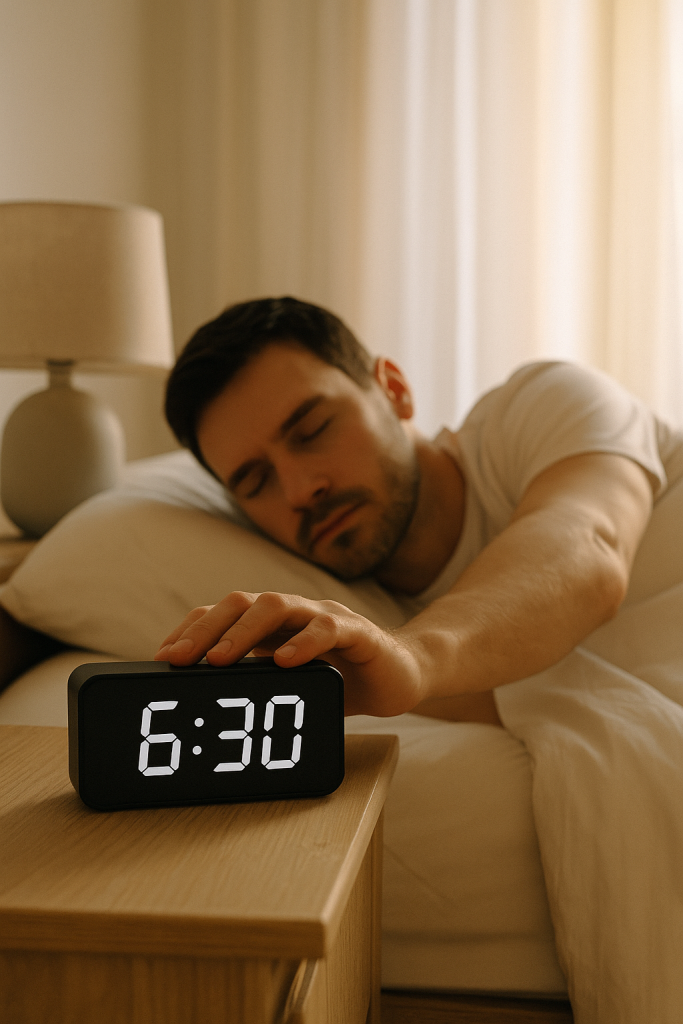
This is the single most impactful change most people can make. Your circadian rhythm — the internal 24-hour clock that governs sleep and wakefulness — functions best with regularity. When your wake time is consistent, your brain learns when to begin the hormonal cascade that initiates sleep, and it progresses more smoothly into deep sleep rather than cycling through lighter stages.
The most important anchor is your wake time, not your bedtime. Pick a time you can maintain even on weekends, and let your natural bedtime fall seven to nine hours earlier. Within a few weeks, most people notice meaningfully deeper, more restorative sleep simply from this one change.
2. Keep Your Bedroom Cool, Dark and Quiet
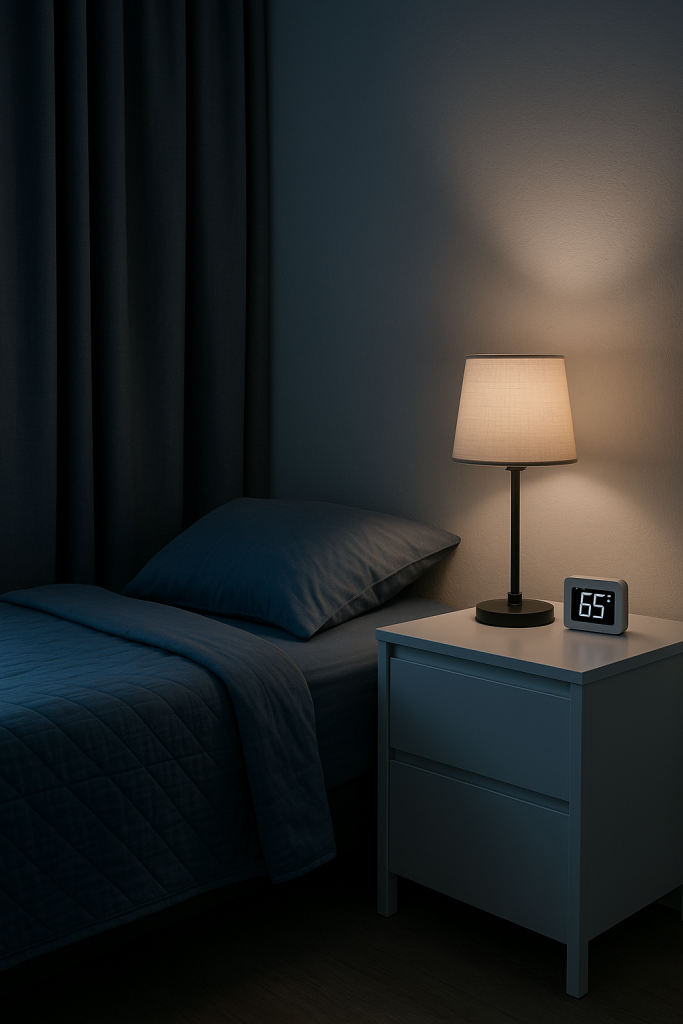
Your sleep environment directly shapes how deeply you sleep. The brain needs three conditions to reach and sustain slow-wave sleep: a drop in core body temperature, darkness, and minimal acoustic disruption.
Most sleep research points to 15–19°C (60–67°F) as the optimal room temperature for deep sleep. Blackout curtains remove the early morning light that pulls the brain toward lighter sleep stages. For noise, consistent background sound — a fan, white noise, or a sound machine — is far less disruptive than intermittent silence broken by sudden sounds.
For a detailed breakdown of building a sleep-supportive bedroom, the SnoozeValley guide on how to create the ideal sleep environment covers each element practically.
A consistent sound environment is one of the most effective ways to reduce micro-awakenings that interrupt deep sleep. A white noise machine creates steady acoustic cover that protects lighter sleep stages from sudden disturbances.
3. Avoid Alcohol, Late Caffeine and Heavy Evening Meals
These three are the most common silent saboteurs of deep sleep — and they work against you even when you don’t feel their effects directly.
Alcohol is the most misunderstood. Many people use it to fall asleep faster, and it does work for that — but as it metabolises in the second half of the night, it actively suppresses slow-wave sleep and fragments REM. The result is more total hours in bed but significantly less restorative sleep overall.
Caffeine has a half-life of around five to six hours. An afternoon coffee at 3PM still has half its stimulant effect at 9PM. It doesn’t just delay sleep onset — it reduces the proportion of slow-wave sleep your brain achieves even after you do fall asleep. Most sleep researchers recommend cutting off caffeine by early afternoon for people who want to protect deep sleep.
Large meals close to bedtime raise core body temperature and divert energy to digestion, both of which work against the physiological conditions your brain needs to enter deep sleep. Aim to finish eating at least two to three hours before bed.
4. Exercise Regularly — But Time It Carefully
Physical activity is one of the most consistently supported non-pharmacological ways to increase deep sleep. People who exercise regularly spend more time in slow-wave sleep and report better sleep quality than sedentary adults across virtually every population studied.
The caveat is timing. Vigorous exercise within two to three hours of bedtime elevates core body temperature and activates the sympathetic nervous system — both of which delay the transition into deep sleep. Morning or early afternoon exercise gets you the benefit without the trade-off. Even a 30-minute brisk walk most days has a measurable impact on sleep depth over time.
5. Get Bright Light in the Morning, Limit It at Night
Light is the primary signal your circadian rhythm uses to calibrate itself. Morning light exposure — ideally natural daylight within the first hour of waking — anchors your body clock and supports the hormonal sequence that leads to deeper sleep that night.
Evening light works in the opposite direction. Blue-toned light from screens, LED overhead bulbs, and most modern lighting suppresses melatonin production and keeps the brain in a more alert state. Reducing screen exposure in the two hours before bed — or using warmer, dimmer lighting in the evening — supports a more natural transition into sleep and allows the earlier sleep cycles to reach deeper stages.
6. Build a Wind-Down Routine That Includes Cooling Down
Your body needs a transition period between waking activity and sleep — and that transition is as much physical as it is mental. Core body temperature needs to drop for the brain to initiate slow-wave sleep, and a warm bath or shower one to two hours before bed actually accelerates this process. The warm water draws blood to the skin’s surface, and the rapid cooling afterward triggers a more pronounced temperature drop than the body would achieve on its own.
Paired with a consistent pre-sleep routine — dimming lights, stepping away from screens, gentle breathing or stretching — this creates the physiological and psychological conditions your brain associates with the transition into deep sleep.
If your body temperature tends to run warm through the night, a cooling pillowcase or mattress pad can help maintain the lower core temperature that deep sleep requires — particularly useful in warmer months.
7. Address Stress and Reduce Mental Load Before Bed
Stress and rumination keep the brain in a state of low-level alertness that makes it genuinely harder to reach slow-wave sleep. Elevated cortisol — the primary stress hormone — actively suppresses deep sleep, which is why periods of high stress so reliably produce sleep that feels light and unrestorative even when the hours seem adequate.
A short pre-bed practice of writing down lingering thoughts, tomorrow’s tasks, or anything that’s circling in your mind can significantly reduce the mental activation that follows you into sleep. It doesn’t need to be elaborate — even five minutes of journalling effectively offloads the cognitive load that would otherwise surface during the night.
8. Be Strategic About Napping
Sleep pressure — the biological drive to sleep that builds the longer you’re awake — is one of the primary forces that determines how much deep sleep you get. The greater the sleep pressure when you go to bed, the more slow-wave sleep your brain prioritises in the early cycles of the night.
Long or late naps reduce this pressure before bedtime, which means your brain enters the night with less drive toward deep sleep. If you nap, keep it under 30 minutes and finish by early afternoon. This preserves enough sleep pressure to support deep sleep while still providing the short-term cognitive benefit of a brief rest.
9. Track Your Patterns to Identify What’s Working
You can’t manage what you can’t see. Sleep tracking — whether through a wearable device or a simple sleep diary — gives you visibility into how your habits actually affect your sleep depth over time. Many people discover that specific behaviours they hadn’t connected to sleep quality (a late glass of wine, an evening workout, a stressful day) have a consistently measurable impact on how restorative their sleep is.
Even a basic two-week log of bedtime, wake time, night awakenings, caffeine, alcohol, exercise, and room conditions can reveal clear patterns. The data doesn’t need to be perfect — it just needs to be consistent enough to show you what’s working and what isn’t.
10. Seek Support If the Problem Persists
For most adults, implementing the strategies above leads to a noticeable improvement in sleep depth within two to four weeks. But if you’ve addressed the environmental and behavioural factors and still wake feeling consistently unrefreshed, it’s worth having a conversation with your doctor.
Conditions like obstructive sleep apnea, restless legs syndrome, and periodic limb movement disorder can all significantly disrupt deep sleep without the person being fully aware of it. If you snore loudly, wake gasping, or feel genuinely exhausted after what should be adequate sleep, these are worth investigating. Treatment — particularly for sleep apnea — can produce dramatic improvements in sleep quality and overall health.
What About Sleep Supplements and Deep Sleep?
It’s a question that comes up often, and it deserves a straightforward answer. Some supplements have a reasonable evidence base for supporting sleep — magnesium in particular has been shown to support deeper, more consolidated sleep in adults who are deficient, which is a surprisingly large portion of the population.
Others are more nuanced. Melatonin is well supported for circadian rhythm adjustment — shift work, jet lag, delayed sleep phase — but the research on whether it actually increases deep sleep specifically is mixed. It’s more useful for when you sleep than how deeply you sleep.
If you’re curious about whether magnesium or other sleep supplements might be relevant for you, the SnoozeValley article on magnesium and sleep covers the evidence in plain language.
Not sure which sleep supplements are worth considering and which are mostly hype? The SnoozeValley Sleep Supplement Guide breaks down the evidence on the most commonly used sleep supplements so you can make an informed decision.
If Night Waking Is Affecting Your Deep Sleep
One thing that often gets overlooked in conversations about deep sleep is the role of night waking. If you’re regularly waking up during the night — particularly in that 2AM to 4AM window — you’re consistently interrupting the lighter sleep stages that precede and follow deep sleep cycles. Over time, this fragments your sleep architecture in ways that reduce the overall proportion of restorative sleep you get.
The good news is that middle-of-the-night waking is very well understood and often responds quickly to the right changes. If this is something you experience, it’s worth understanding what’s actually driving it. Our article on why you keep waking up at 3AM covers the physiology in detail — and our guide on falling back asleep after waking at 3AM gives you a practical approach for those moments when you do wake.
If middle-of-the-night waking is part of your sleep picture, the 3AM Wake-Up Reset Guide gives you a simple, calm step-by-step sequence for falling back asleep without stress or struggle.
The Bottom Line
Deep sleep isn’t something you can force — but it is something you can reliably support. The strategies above aren’t complicated or radical. They’re the consistent application of what sleep science has shown, over and over, to create the conditions the brain needs to drop into its most restorative state.
Start with the highest-impact changes: consistent wake time, a cool dark room, cutting alcohol and late caffeine, and regular movement during the day. Give those four weeks to work before adding more. Sleep responds slowly to change, but it does respond.
💡 Worth Remembering
Deep sleep is front-loaded — most of it happens in the first half of the night. The habits you build in the hours before bed have more influence on your sleep depth than almost anything else you can change.
Frequently Asked Questions
How much deep sleep do adults actually need?
There’s no single fixed number, as deep sleep naturally decreases with age. Most adults get around 13–23% of their total sleep in slow-wave stages. What matters most is consistent, uninterrupted sleep of sufficient length — typically 7–9 hours — rather than hitting a specific deep sleep target.
Can you get deep sleep in fewer than 7 hours?
It’s possible, but the window for deep sleep shrinks significantly. Deep sleep is prioritised in the first cycles of the night, so the body will attempt to get it regardless of total sleep time — but you reduce the available time for later cycles of slow-wave sleep when you cut the night short.
Does melatonin increase deep sleep?
The evidence is mixed. Melatonin is well supported for adjusting the timing of sleep — particularly for jet lag, shift work, or delayed sleep phase — but research doesn’t consistently show it increases the proportion of deep sleep. It’s more useful for when you sleep than how deeply you sleep.
Is deep sleep the same as REM sleep?
No — they’re distinct stages. Deep sleep is Stage 3 non-REM sleep, characterised by slow brain waves and physical restoration. REM sleep is a separate stage associated with dreaming, memory processing, and emotional regulation. Both are important, and a healthy sleep cycle includes adequate amounts of each.
What happens if you consistently miss deep sleep?
Occasional nights of reduced deep sleep are common and generally recoverable. Chronic deep sleep deprivation — over weeks or months — has been linked to impaired memory and cognition, weakened immune response, hormonal disruption, and increased risk of metabolic and cardiovascular conditions. If you consistently wake unrefreshed despite adequate total sleep, it’s worth investigating the quality of your sleep cycles.
📚 Sources
This article draws on research from the National Institutes of Health (NIH), the Sleep Foundation, Cleveland Clinic, Mayo Clinic, Harvard Health, and peer-reviewed meta-analyses on sleep quality and health outcomes.