When sleep feels elusive, the first instinct for many people is to reach for a supplement, adjust a routine, or revisit their bedtime routine. These things genuinely matter. But there is one piece of the puzzle that often gets skipped over entirely: the room itself.
The sleep environment is easy to underestimate. It is quiet, familiar, and has been the same for years. Why would it suddenly be causing a problem? The answer is that your brain doesn’t stop paying attention when you fall asleep. Even during deep sleep, parts of the brain remain alert to signals from the outside world — a shift in temperature, a sudden sound, a flash of light. If the environment keeps changing or feels unstable, the brain can pull you back toward waking, sometimes repeatedly throughout the night.
This is why creating a sleep-conducive environment is so often the quiet difference between sleeping soundly and lying awake at 3am. It is not dramatic or complicated — but it is important.
The three factors that matter most are temperature, sound, and darkness. Each one works in a slightly different way, and understanding why they affect sleep makes it easier to know what to actually change.
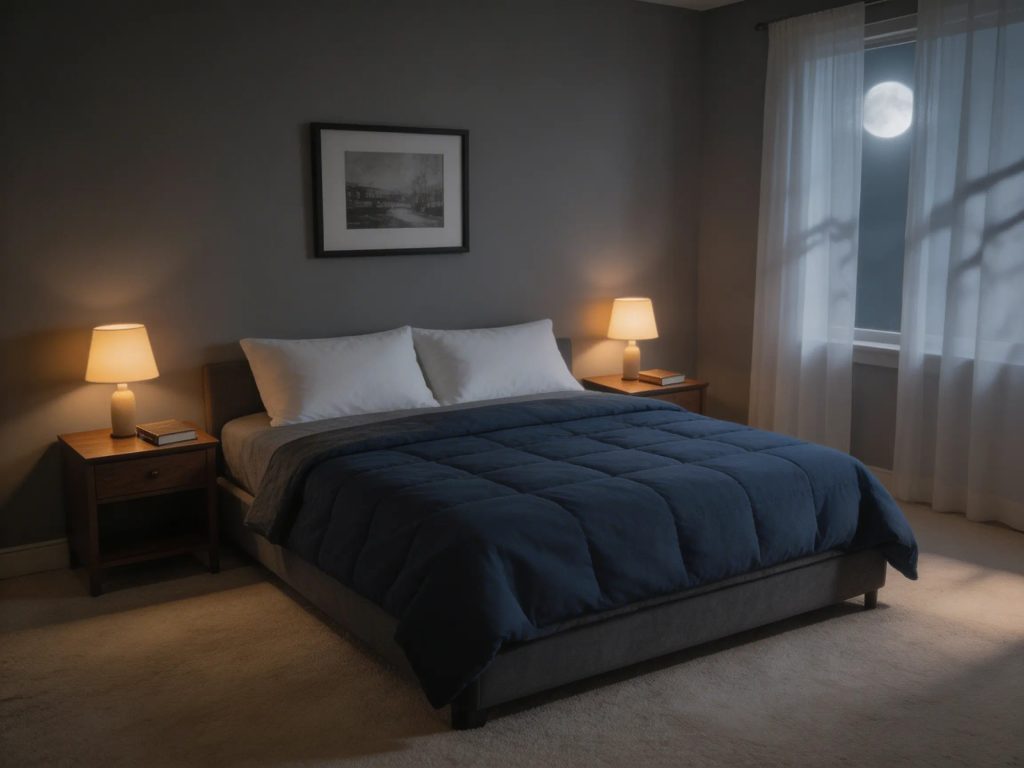
Why the Sleep Environment Matters
Think of the sleeping brain as being on a kind of low-level watch. While conscious awareness is switched off, the brain is still monitoring the environment for anything that might require a response. This is an ancient protective function — our ancestors needed to remain sensitive to sounds, light changes, and temperature shifts even while at rest.
The problem is that in the modern world, the bedroom environment is rarely perfectly stable. A neighbor’s car pulls up. A phone screen lights up across the room. The heating kicks on at 2am. Each of these can register as a signal to the brain that something has changed, gently nudging the body toward a lighter sleep stage or even full waking.
What the brain seems to prefer during sleep is consistency and predictability. A room that stays the same temperature, at the same noise level, with the same amount of light, gives the brain very little reason to pull you back toward wakefulness. It is one of the simplest ways to support deeper, more continuous sleep.
If you’ve been exploring how to increase deep sleep, looking at your sleep environment is a good place to start before reaching for more complex solutions.
Temperature: The Most Overlooked Sleep Disruptor
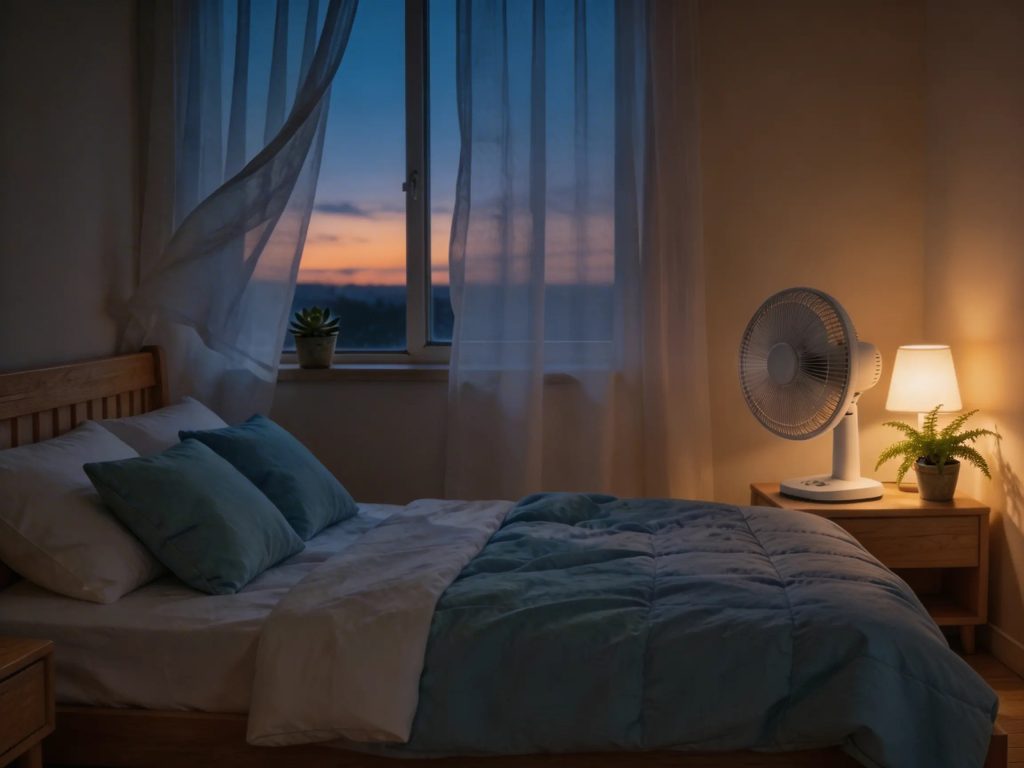
Of the three environmental factors, temperature is arguably the one that catches people off guard most often. Most of us think about light and sound when we think about sleep disruption — but an overheated sleep environment is one of the most common and overlooked reasons people wake in the night.
Here is why: as part of the natural process of falling asleep, the body gradually lowers its core temperature. This drop is actually one of the biological signals that helps shift you into deeper sleep stages. When the bedroom is too warm, this process is disrupted. The body struggles to release heat efficiently, which can make it harder to fall asleep and — perhaps more importantly — can cause repeated waking through the night.
Most sleep researchers suggest that a bedroom temperature somewhere between 60–67°F (16–19°C) tends to support the body’s natural cooling process well. This will feel quite cool to some people, especially those used to sleeping in warmer rooms. It can be worth adjusting gradually rather than making a sudden dramatic change.
A few simple adjustments can help. If you can control the room temperature, turning it down slightly before bed is a good starting point. Good airflow — even just a small fan positioned to move air gently around the room — can make a noticeable difference. Choosing bedding made from breathable natural fibres rather than synthetic materials helps the body release heat more effectively through the night. And it is worth paying attention to how much heat builds up around your head and neck area specifically.
The Small Cooling Adjustment Many People Find Helpful
The head and neck area is where many people notice heat building up during sleep, particularly in warmer months or in rooms that don’t cool down easily overnight. This is partly because it is where the body tends to radiate a significant amount of heat, and because the face is often the only part of the body exposed to the air.
Many people find that the sleep surface directly around the head — the pillow — plays a bigger role in temperature comfort than they might expect. Standard pillow fills and pillowcase fabrics can trap warmth against the skin, which may contribute to nighttime waking and restlessness. Switching to more breathable fabrics or materials designed to move heat away from the surface can be a simple, low-effort adjustment worth trying.
This doesn’t require changing anything about the room itself — it’s simply a matter of what the skin is in contact with for the hours you’re asleep.
A Simple Way to Keep Your Sleep Environment Cooler
Some readers find that using a cooling pillowcase helps manage the heat build-up that can occur around the head and neck during the night. It doesn’t change the room temperature, and it isn’t a sleep fix in itself — but it can make the sleep surface feel noticeably more comfortable and breathable through the night.
If you’re curious about the cooling pillowcase many of our readers ask about, you’re welcome to take a look:
👉 See the cooling pillowcase many readers use
Noise: The Hidden Sleep Disruptor
A sleep noisy environment doesn’t have to be dramatically loud to affect sleep quality. This surprises many people. You might not wake up fully when a car passes, a dog barks outside, or a house makes its settling sounds in the early hours — but your brain registers the change, and that brief activation can be enough to shift you into a lighter sleep stage or prevent you from settling into deeper sleep in the first place.
The key thing to understand about noise and sleep is that it is not volume alone that matters — it is unpredictability and contrast. A sudden sharp sound in an otherwise quiet room is far more likely to disturb sleep than a consistent background noise at a similar volume. This is one reason why some people actually sleep better with a fan running, or with a white noise machine — the constant, unchanging sound provides a kind of acoustic baseline that makes other sounds less jarring by comparison.
Practical steps here might include using earplugs if outside noise is significant, keeping pets out of the bedroom if they tend to move around at night, and considering whether a consistent background sound might help smooth over the environmental noise you can’t fully control. Even a simple fan placed on the far side of the room can be enough for many people.
It’s worth noting that sensitivity to noise during sleep tends to vary between people and can change over time, especially with age. If you’ve noticed yourself waking more easily at sounds that didn’t used to bother you, this is a common and normal shift — and it’s another reason a more stable noise environment can be genuinely helpful.
Light: The Silent Sleep Disruptor
Light has a more direct relationship with sleep biology than most people realise. The hormone melatonin — which helps signal to the body that it is time to sleep — is suppressed by light exposure, even at relatively low levels. The brain interprets light as a signal that it is daytime and therefore not time to be asleep.
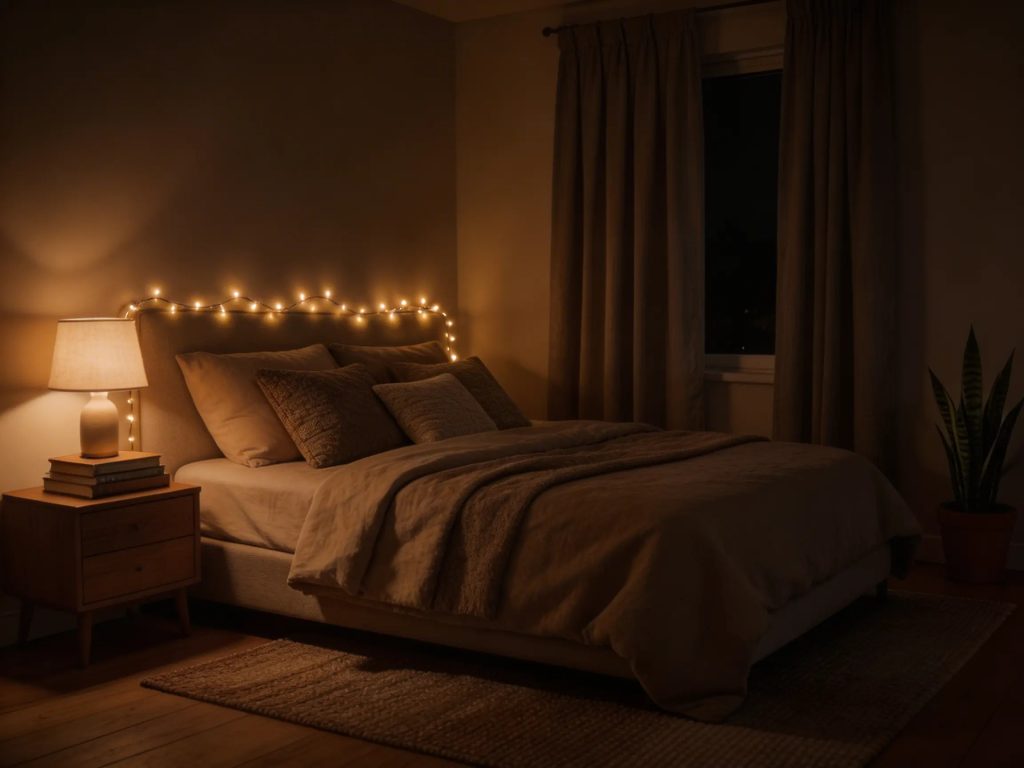
What this means practically is that even small, ambient light sources in the bedroom can interfere with both falling asleep and staying asleep. A charging phone that lights up with a notification. A thin strip of light from a hallway under the door. Streetlights filtering through curtains. These might seem trivial, but for some people they contribute meaningfully to sleep quality.
The simplest approach is to make the bedroom as dark as you can. Blackout curtains or a well-fitted eye mask are both straightforward options. If you need a small light in the bedroom — for safety or because you wake to use the bathroom — a dim red or amber light is less likely to disrupt melatonin than bright white or blue-toned light. It’s a small adjustment that can make the nighttime environment feel more continuous and less stimulating for the brain.
Avoiding bright screens in the period before bed is worth mentioning here too — though that is a topic for its own conversation around the broader subject of a good pre-sleep routine.
Quick Checklist: Improve Your Sleep Environment Tonight
Adjusting your environment doesn’t require a big overhaul. These are simple, practical changes you can try starting this evening:
- Keep the bedroom temperature cool — aim for 60–67°F (16–19°C) if possible, or as cool as is comfortable for you
- Reduce sudden noise changes — use earplugs, a white noise machine, or a simple fan to create a consistent sound environment
- Eliminate bright lights — blackout curtains, an eye mask, or covering LED indicators can all help
- Keep the environment consistent — a stable room is easier for the sleeping brain to stay settled in
- Choose breathable bedding — natural fibres and cooler sleep surfaces help the body regulate temperature through the night
- Pay attention to the pillow surface — what the skin is in contact with for hours at a time plays a role in overnight comfort
You don’t need to change everything at once. Trying one adjustment at a time makes it easier to notice what is actually making a difference.
Frequently Asked Questions
What is a sleep-conducive environment?
A sleep-conducive environment is a bedroom that has been set up to support the body’s natural sleep processes rather than interrupt them. This generally means keeping the room cool, quiet, and dark — and, importantly, consistent throughout the night. A stable environment gives the brain less reason to monitor for changes and makes it easier to stay in deeper sleep stages for longer.
What temperature is best for sleep?
Most research suggests a bedroom temperature of around 60–67°F (16–19°C) is well-suited to supporting the body’s natural temperature drop during sleep. That said, individual preferences vary, and comfort matters. If that range feels too cold, experimenting with the lower end of your comfort zone is a reasonable place to start.
Can noise disturb sleep even if I don’t fully wake up?
Yes — this is actually quite common. Sounds can pull the brain into lighter sleep stages or briefly activate the brain’s alert system without producing a full conscious waking. Over the course of a night, this kind of partial disruption can affect how rested you feel in the morning, even if you don’t remember waking up.
Why does a warm room make it harder to stay asleep?
Sleep involves a gradual drop in the body’s core temperature, which helps shift the body into deeper sleep stages. An overheated sleep environment interferes with this cooling process, making it harder to settle into deep sleep and increasing the likelihood of waking through the night. Keeping the room cool supports rather than works against the body’s natural sleep biology.
A Few Small Changes Can Go a Long Way
If your sleep feels fragmented or restless, it is easy to assume something is deeply wrong. But very often, the issue is environmental — something quiet and in the background that is simply making it harder for the brain to settle and stay settled.
The encouraging thing is that environmental adjustments are among the simplest changes you can make. They don’t require a new routine, a new supplement, or a visit to a specialist. Cooling the room a little, managing background noise, and darkening the space are all things that can be tried tonight. If you’re also exploring nutritional approaches alongside your environment, you might find our overview of magnesium and sleep support an interesting read alongside this.
Sleep is sensitive to its surroundings. Creating a sleep-conducive environment — calm, cool, dark, and consistent — is one of the kindest things you can do for the quality of your rest. Start with one change, pay attention to how you feel, and go from there. Small adjustments, tried with a little patience, often make more difference than they seem like they should.
If you’re waking at the same time every night, you may find this guide helpful.
About The Author