
If you’ve ever popped awake at 3:07 and felt instantly alert, you’re not alone. A 3AM wake-up can feel strangely “bright,” and once the mind starts analyzing—How long was I asleep? How will I feel tomorrow?—it’s easy for a short wake-up to turn into a long one.
This guide explains why do I wake up at 3am in plain sleep biology and gives you a calm, simple plan for what to do next—without myths, fear language, or dramatic interpretations.
Why waking at 3AM is common
Many people picture sleep as one smooth block. In reality, brief awakenings are built into normal sleep. Most of the time you roll over and forget it. But if you catch one of those wake-ups when your sleep is already lighter, it doesn’t take much—one glance at the clock, a bit of light, one thought—to feel wide awake. That’s why that wake-up sticks in your memory.
That’s why waking up at 3am every night can happen even when you’re doing a lot of things well. The 3–4AM window sits in a natural transition: sleep is often lighter, and the brain is a little more watchful. When people ask why do I wake up at 3am, they’re usually noticing this transition.
In my work with clients, the 3AM wake-up is one of the most anxiety-provoking experiences I encounter for them — not because it’s dangerous, but because people convince themselves it means something is deeply wrong. The first thing I tell them is : your body isn’t malfunctioning. It’s doing exactly what sleep biology predicts. Once they understand the mechanics behind it, the anxiety around waking drops significantly — and that alone often reduces how often it happens.
Sleep cycles: the 90-minute pattern behind 3AM wake-ups
Sleep runs in cycles that average about 90 minutes. Each cycle includes lighter stages, deeper stages, and usually some REM sleep. The important part for 3AM:
- You’re most likely to wake near the top of a cycle, when sleep is lighter.
- A small nudge (sound, temperature shift, light, movement) is more likely to bring you fully awake at that moment.
Another useful detail: the mix of sleep stages changes as the night goes on. Most people get more deep sleep earlier in the night, and more REM/lighter sleep later. So by the time you’re in the 3–5AM stretch, you’re naturally closer to the “surface,” which makes awakenings more noticeable.
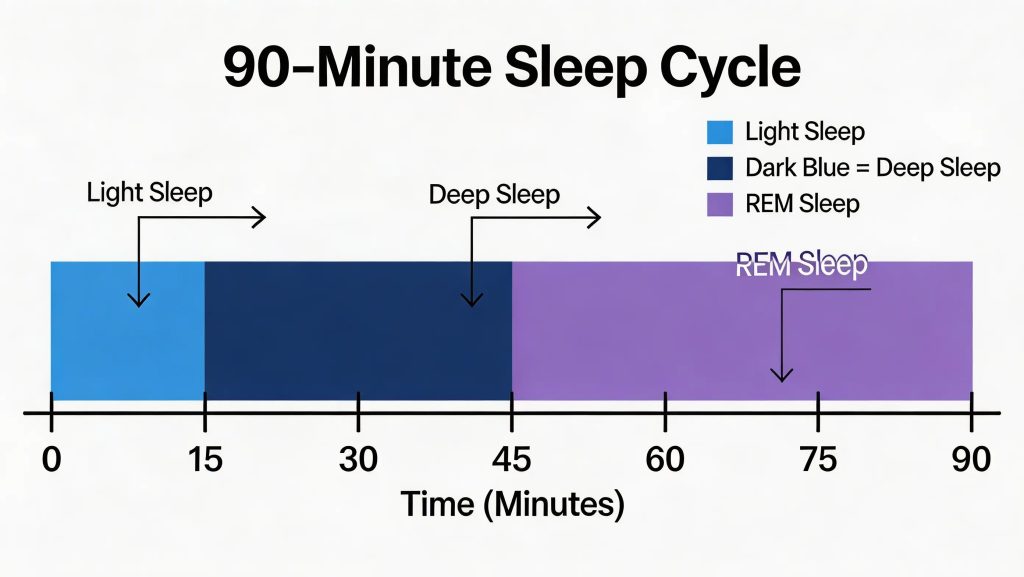
So a 3AM wake-up doesn’t automatically mean something “wrong” happened. It can simply be your timing lining up with a lighter point.
If deeper sleep feels like your weak spot, our guide Clinically Backed Ways to Increase Deep Sleep walks through simple, evidence-informed ways to support it.
Cortisol and the early-morning wake-up window
Cortisol isn’t just a “stress hormone.” It also supports daily timing—energy, alertness, and waking up. In the second half of the night, cortisol typically begins a gradual rise toward morning (sometimes called the early morning cortisol rise).
A cortisol 3am wake up can feel more ‘awake’ because your body is already starting its slow ramp toward morning. Wake during lighter sleep, and you notice that alertness immediately.
It’s usually not a sudden “cortisol spike.” It’s more like the dial is slowly turning up—and 3–5AM is closer to “on” than the first half of the night.
Why 3AM can feel more alert than midnight
Around 3–4AM, your body is entering a circadian transition window. Several “night” signals are still present, but your system is slowly preparing for morning.
At the same time, your brain is more likely to do an environmental safety scan. In lighter sleep, it becomes more sensitive to cues like:
- a phone or charger LED
- a thermostat cycle
- a small noise you’d sleep through earlier
- light leaking under a door
This is one reason why do I wake up between 3 and 4am is such a common question: it’s a real transition where the brain is easier to “tip” into wakefulness.
You can go deeper on light sensitivity in our article on red light and melatonin.
Why you wake up at 3AM and can’t fall back asleep
Waking briefly is normal. Waking up at 3am and can’t fall back asleep is usually about what happens after the wake-up.
Three common accelerators:
Light
Bright or blue-leaning light tells the brain “it’s morning.” Even a quick phone check can add more wakefulness than you meant to create.
Time awareness
Clock-checking triggers mental math: How much sleep left? That problem-solving mode is the opposite of drifting.
Input and novelty
Scrolling, messages, news, and “just one quick search” create emotional and cognitive stimulation. Once your brain gets novelty, it starts staying online.
A subtle fourth factor is effort: if you start trying hard to sleep, the brain begins monitoring for results (“Am I asleep yet?”). Monitoring is alertness. A low-effort approach works better at 3AM.
These are also frequent early morning awakening causes people don’t notice until they look back at patterns.
Why do I wake up at 3am? The calm summary
- Sleep cycles create natural “surface moments.”
- 3–4AM is a transitional circadian phase.
- Cortisol is beginning to rise toward morning.
- The brain does a more active safety scan in lighter sleep.
- Light and stimulation can lock wakefulness in place.
Now let’s get practical.
How to Fall Back Asleep After Waking at 3AM
Your goal at 3AM is simple: keep your system in night mode. You’re not forcing sleep—you’re removing the things that keep you awake.
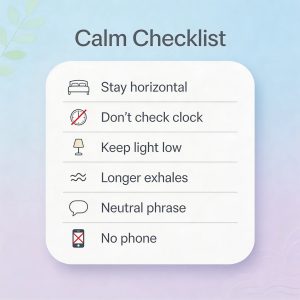
1) Stay horizontal
If possible, don’t sit up. Staying lying down reduces the “we’re awake now” signal.
2) Don’t check the clock
If you haven’t looked, don’t. If you already did, drop the time story and move on.
3) Keep light extremely low
No overhead lights. Avoid screens. If you must move, use the dimmest, warmest light available and keep it close to the floor.
4) Use longer exhales than inhales
Try 8–12 slow breaths:
- inhale gently for 3–4 seconds
- exhale slowly for 6–8 seconds
If your mind wanders, just return to the exhale. The longer exhale is the downshift.
5) Use neutral mental repetition
Give your brain something boring and steady so it doesn’t plan tomorrow. Repeat a phrase like “heavy and warm,” name simple objects in the room with your eyes closed (“pillow, sheets, blanket”), or count slowly. Keep it neutral.
6) Avoid phone stimulation
If you need audio, choose something pre-selected and low input with the screen off. Don’t invite novelty.
For a printable version you can follow half-asleep, grab the 3AM Wake-Up Reset guide.
Sleep is sensitive to its surroundings. Beyond breathing, small things — a cooler room, less noise, real darkness — can make the difference between lying awake and drifting off.
A Simple Light Option for Middle-of-the-Night Wake-Ups
If you ever need light at 3AM—bathroom, water, checking on a pet—using a dim red or amber night light can help you avoid blasting your eyes with bright, blue-leaning light. It’s an optional tool, not a fix, but it can make it easier to stay in “sleep mode.”
If you’d like to see a simple dim red/amber night light that fits those criteria, here’s one option to consider.
FAQ
Why am I waking up at 3am every night?
Often it’s timing plus a small input: you’re hitting lighter sleep in the 3–4AM window, and something (light, noise, temperature, alcohol, late caffeine, stress) tips you fully awake. Focus first on reducing stimulation after the wake-up, then look at patterns (bedtime consistency, evening light, room temperature).
Is cortisol a 3am wake up trigger?
It can contribute. Cortisol naturally rises toward morning, and in the second half of the night that rising signal can make wake-ups feel more alert—especially if you wake near a lighter cycle peak.
What are early morning awakening causes that aren’t obvious?
Light exposure (LEDs, phones), warmer bedrooms, alcohol (more fragmented sleep later), late caffeine, late heavy meals, and inconsistent sleep timing are common culprits.
Why do I wake up between 3 and 4am and can’t fall back asleep?
Because that’s a lighter-sleep transition window and the brain’s safety scan is more active. Once you add clock-checking, bright light, or phone input, wakefulness tends to stick.
What is the 3am wake up hormone?
Most people mean cortisol. It’s part of normal circadian timing, not a sign that something is “wrong,” but it can make the 3–5AM window feel more wakeful than midnight.
What if I’m waking up at 3am and can’t fall back asleep for a long time?
Treat it like a “low-stimulation zone.” Stay horizontal, keep light extremely low, and return to the long-exhale pattern or a neutral phrase. The more boring and repetitive the moment is, the easier it is for sleep pressure to take over again.
In closing…
A 3AM wake-up is usually a timing moment plus stimulation—not a mystery. Tonight, pick one change: cover the clock, keep light extremely low, or use the long-exhale pattern. Small inputs matter more at 3AM, which means small fixes often do too. Over a few nights, repetition matters: when you respond the same way—dark, quiet, low input—your brain stops treating the wake-up like a cue to fully turn on.
About The Author

