

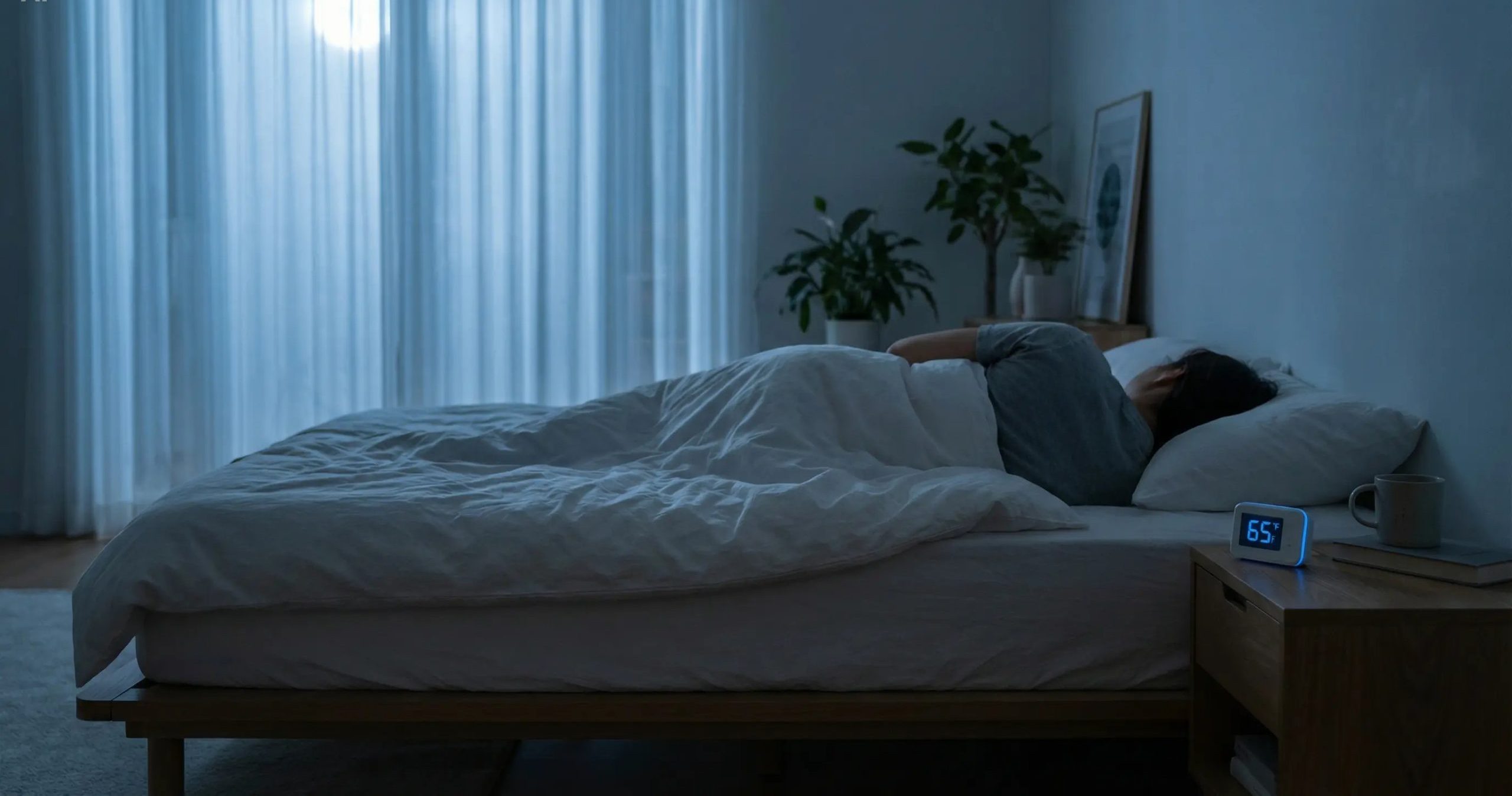
- The research-backed optimal sleep temperature range is 60–67‚F (15–19‚C) — most bedrooms run warmer than this.
- Your body must drop its core temperature by 1–2 degrees Fahrenheit to initiate and maintain sleep.
- Temperature dysregulation is one of the leading causes of waking in the middle of the night.
- A dark, quiet, cool bedroom can significantly increase the amount of deep (slow-wave) sleep you get each night.
- Small, targeted changes — cooling bedding, a sound machine, blackout curtains — have an outsized impact on sleep quality.
This article is for informational purposes only and is not a substitute for professional medical advice, diagnosis, or treatment. If you’re experiencing persistent sleep issues, please consult a qualified healthcare provider.
This post contains affiliate links. If you purchase through these links, we may earn a small commission at no extra cost to you. We only recommend products we genuinely believe in.
You’ve been in bed for an hour. You kick off the covers because you’re too hot, then pull them back because now you’re too cold. You drift off eventually — but wake up at 2AM damp, restless, and nowhere near rested. Sound familiar? Temperature is one of the most underestimated factors in sleep quality, and for most people, the optimal sleep temperature in their bedroom is simply never dialled in. This guide covers both the science behind why it matters so much and exactly what to do about it.
What Is the Optimal Sleep Temperature?
The short answer, backed by research: your bedroom should be between 60 and 67‚F (15–19‚C) for most adults. That’s likely cooler than your current thermostat setting. A study published in the Journal of Physiological Anthropology found that thermal environment is one of the most critical factors in initiating and sustaining sleep — specifically because of how it interacts with the body’s core temperature cycle.
Here’s the key mechanism: for sleep to begin, your core body temperature needs to drop by roughly 1–2 degrees Fahrenheit. This isn’t optional — it’s part of your circadian rhythm, the internal 24-hour clock that governs your sleep-wake cycle. As evening approaches, your body begins releasing heat through your extremities (hands and feet), drawing warmth away from your core. A cool room helps this process along. A warm room fights it.
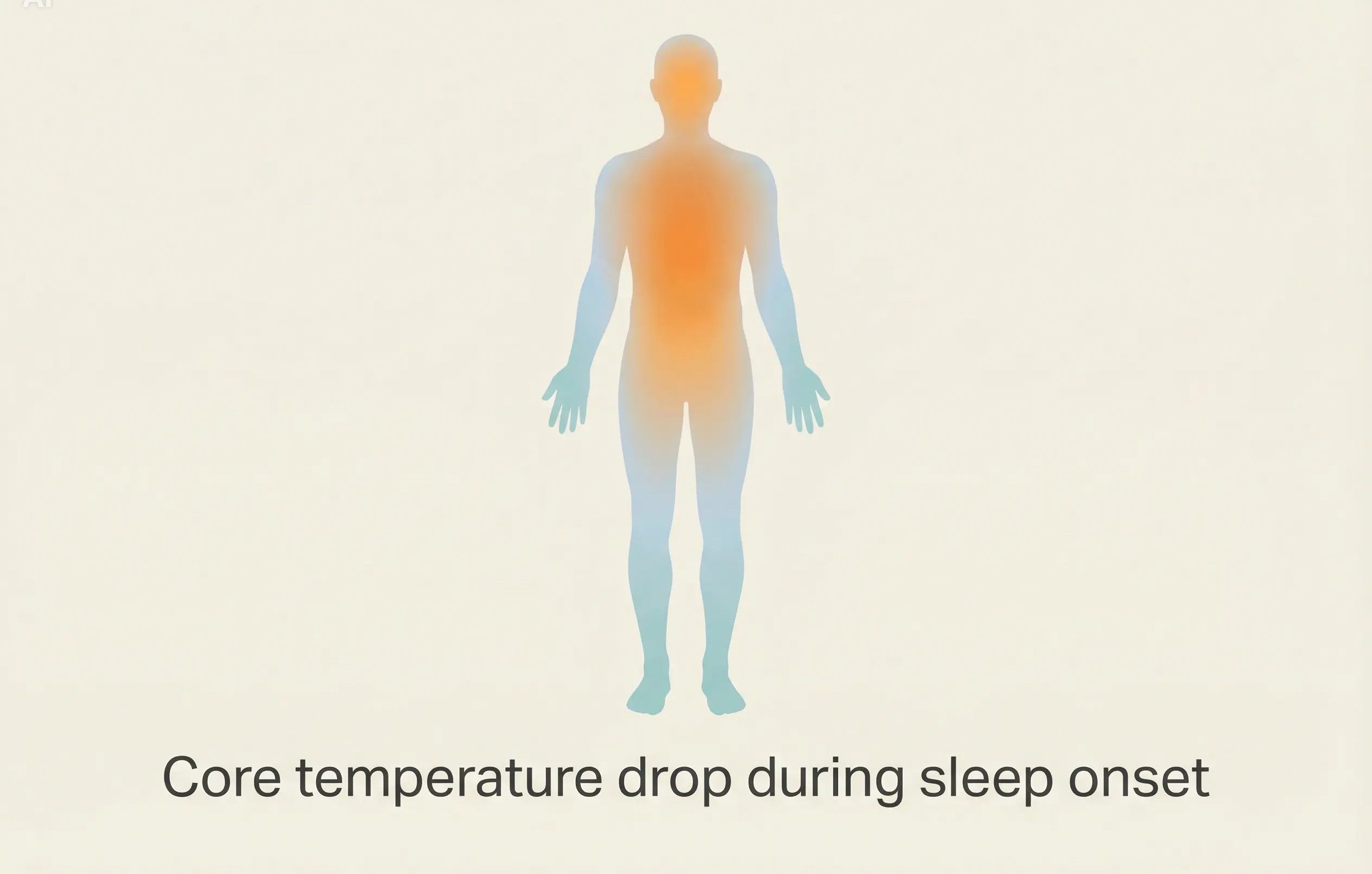
Core thermoregulation during sleep onset — the body redistributes heat outward as it transitions into deeper sleep stages.
When your bedroom is too warm, your body can’t shed that core heat efficiently. You lie there uncomfortable, or you fall asleep but cycle through lighter stages more than you should. According to the National Sleep Foundation, temperatures above 67‚F increase the likelihood of waking during the night — which is why optimal sleep temperature studies consistently find that slightly cool environments produce the most restorative sleep.
On the other end: a room that’s too cold (below about 60‚F) can also disrupt sleep, typically by triggering muscle tension and reducing blood flow in a way the body interprets as a stress signal. The 60–67‚F window isn’t arbitrary — it’s where thermoregulation works with your sleep physiology rather than against it.
What Is the Optimal Temperature for Sleeping — By Season and Situation
The 60–67‚F range is a solid baseline, but real life adds complexity. Here’s how to think about temperature across different circumstances.
Summer vs. Winter
In winter, most people naturally keep their bedroom cooler — which actually works in their favour. The challenge comes in summer, when ambient heat makes the target range harder to reach without air conditioning. If you don’t have AC, circulating fans, blackout curtains that block afternoon sun, and cooling bedding (more on this below) can make a real difference.
Age and Sleep Temperature
Older adults tend to have a reduced capacity for thermoregulation during sleep, which is one reason sleep fragmentation increases with age. The same 60–67‚F range still applies, but older sleepers may benefit from actively cooling the room earlier in the evening to compensate for slower physiological heat release.
Menopause and Hormonal Changes
Hot flashes and night sweats are among the most disruptive sleep problems for women in perimenopause and menopause — and they’re essentially a thermoregulation problem. If this applies to you, cooling bedding isn’t just a comfort upgrade; it’s actively therapeutic. Moisture-wicking materials and breathable fabrics can meaningfully reduce the severity of night waking caused by hormonal temperature spikes.
Couples with Different Temperature Preferences
This is extremely common and genuinely hard to resolve with a shared thermostat. The practical solution: use separate bedding. Each person has their own duvet or blanket rather than sharing one. This removes the thermal tug-of-war without requiring either person to sacrifice comfort.
Beyond Temperature — What Makes a Good Sleep Environment
Temperature is the biggest lever, but it’s one piece of a larger picture. What makes a good sleep environment is a combination of sensory conditions that tell your nervous system it’s safe, stable, and time to let go. Here’s how to think through each one.
Darkness
Melatonin — the hormone that signals your body to sleep — is highly sensitive to light. Even low-level ambient light (a streetlamp through thin curtains, a charging LED, the standby glow from a TV) can suppress melatonin production and delay sleep onset. Blackout curtains are one of the most effective and underrated bedroom upgrades you can make. If curtains aren’t practical, a well-fitted sleep mask provides the same benefit.
If you wake at night and need to move around, the colour of the light you use matters enormously. For guidance on what light to use when you wake at night, red night light for sleep is the safest option for melatonin preservation. If you need a dedicated light source for night-time bathroom trips, our guide to the best plug-in red night light covers the most practical outlet-level options. Overhead white or blue-toned light will effectively reset your alertness, making it much harder to fall back to sleep.
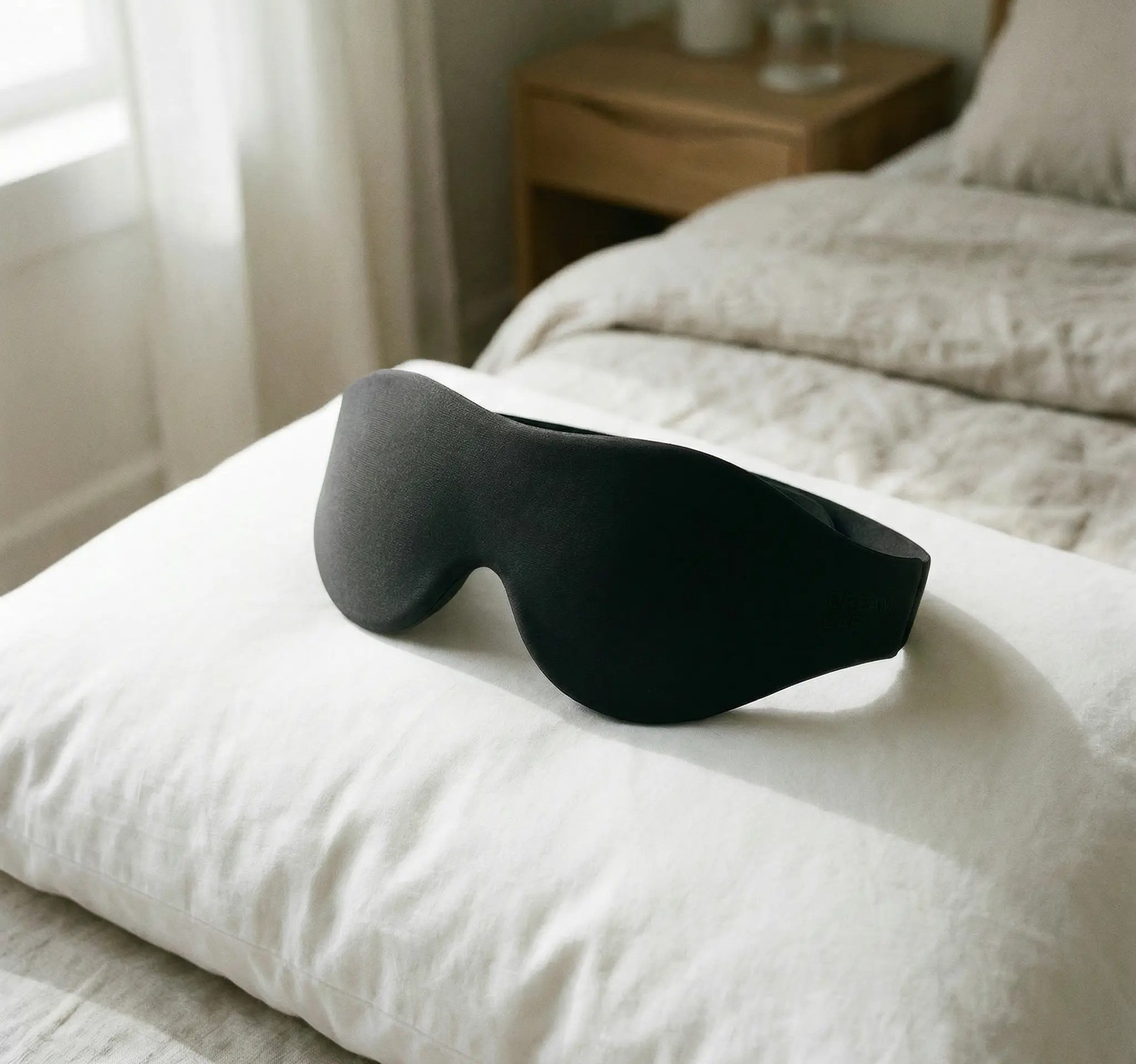
Contoured Sleep Mask
A 3D moulded sleep mask blocks light completely without pressing against your eyes — ideal for side sleepers and travel. The air pocket design lets you blink freely and stays comfortable through the night. Pairs perfectly with any blackout setup when curtains aren’t enough.
View on Amazon →Sound
Noise disruption is a major but underappreciated cause of shallow sleep and middle-of-the-night waking. You don’t have to be fully jolted awake by a sound for it to fragment your sleep — brief arousals of just a few seconds can repeatedly pull you out of deep sleep without you realising it. Unpredictable sounds (traffic surges, neighbours, a barking dog) are the most disruptive because your brain never fully habituates to them.
White noise, brown noise, and fan sounds work by masking these intermittent spikes rather than eliminating sound entirely. A consistent acoustic backdrop means sudden noises are dampened relative to the baseline, so your brain doesn’t flag them as alerts worth waking up for.
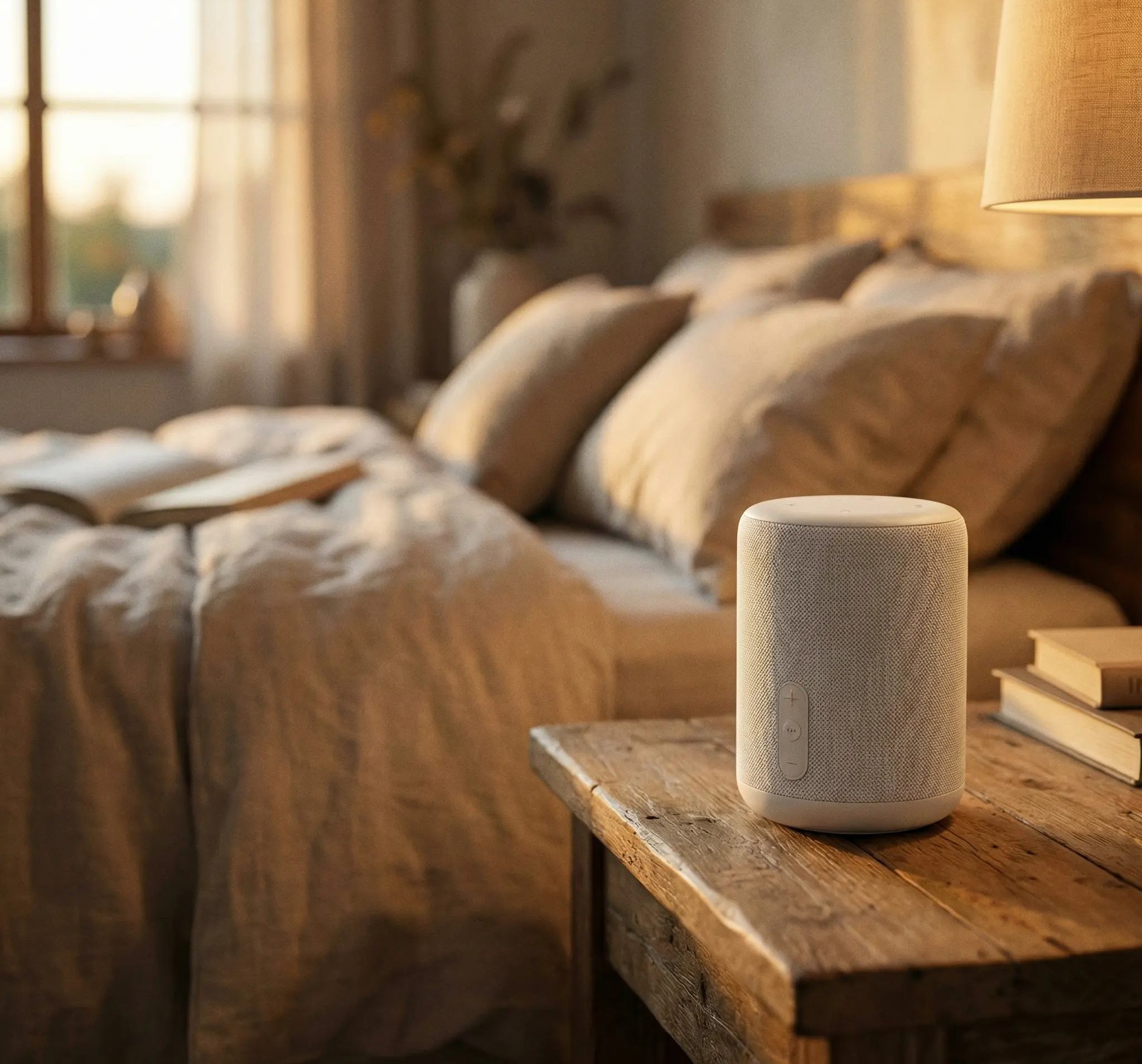
White Noise Sound Machine
A dedicated sound machine runs independently — no screen, no notifications, no battery drain. Look for one with multiple options (white, brown, fan) so you can find the frequency that works best for you. Brown noise tends to feel warmer and is often easier to stay asleep through than standard white noise.
View on Amazon →Bedding and Mattress
Your bedding is a thermal interface — it either helps your body regulate temperature through the night or it works against it. Synthetic materials like polyester trap heat and moisture, which is particularly problematic in the second half of the night when your body temperature naturally starts to rise again. Natural fibres like cotton, bamboo, and Tencel (lyocell) are significantly more breathable and moisture-wicking.
Bamboo in particular has become a popular choice for hot sleepers because of its naturally thermo-regulating properties. It absorbs moisture faster than cotton and releases it more effectively, keeping the sleeping surface cooler and drier over a full night.
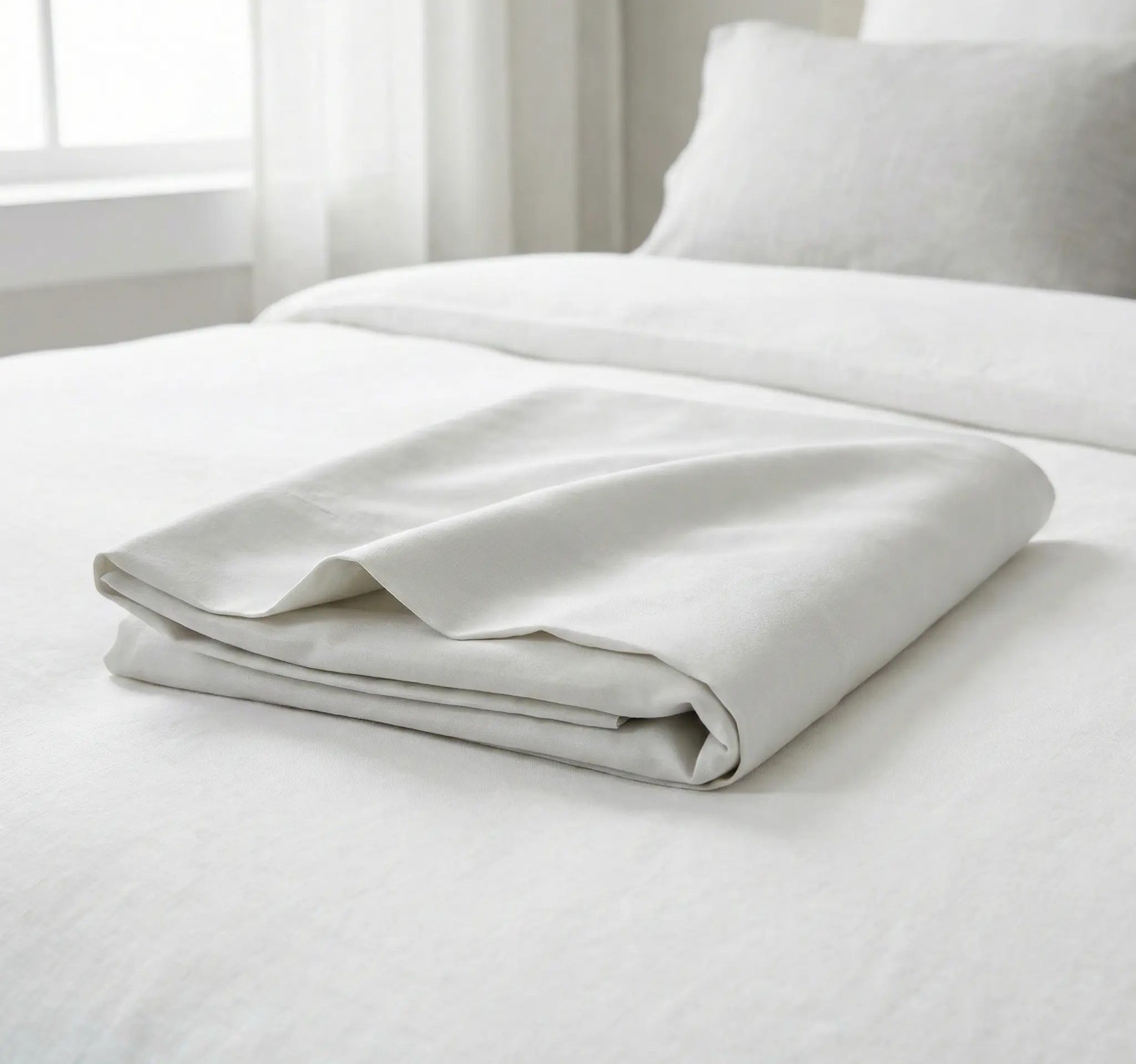
Cooling Bamboo Pillowcase
Your pillow surface is the closest bedding contact point to your head — the area most sensitive to temperature change. A bamboo or moisture-wicking pillowcase can meaningfully reduce the “hot pillow” problem that wakes many people overnight. Look for a 300–400 thread count and a deep pocket design that stays fitted.
View on Amazon →Air Quality and Humidity
Dry air — common in winter with central heating running — can cause nasal congestion and throat irritation that subtly disrupts sleep quality. The optimal humidity range for a bedroom is 40–60%. Below 30% and you may notice parched sinuses; above 60% and the environment can feel stuffy and encourage dust mites or mould. A basic humidity gauge is an inexpensive and genuinely useful tool.
EMF and Device-Free Zones
Phones on the nightstand are a sleep environment problem on multiple levels. The blue light from the screen suppresses melatonin. Notifications create intermittent sound disruptions. And the mere presence of the phone creates a psychological pull — the temptation to check the time, check messages, check “just one thing.” Moving your phone outside the bedroom (or at minimum across the room on Do Not Disturb) removes all three problems simultaneously.
What a Poor Sleep Environment Looks Like
Before we get to the fixes, it helps to name what a poor sleep environment actually looks like — because for a lot of people, it’s simply what they’ve always lived with and never questioned.
A room that’s chronically too warm — thermostat set at 72‚F or higher, a synthetic duvet that traps heat, minimal airflow. Thin curtains that let in streetlight and morning sun. A phone on the nightstand with notifications enabled. A TV in the bedroom that runs until you fall asleep. Inconsistent background noise — quiet periods interrupted by traffic or voices. Each of these is individually disruptive. Together, they can suppress your deep sleep stages even on nights when you technically manage 7–8 hours.
The subtle point here is that you may not even realise your environment is working against you. You might think you sleep fine — but wake up groggy, unrested, and reliant on coffee to function. That’s often the signature of sleep that lacks depth, and your environment is frequently the culprit.
Are You Sleeping But Not Getting Deep Sleep?
Deep sleep — known as slow-wave sleep (SWS) — is the phase where your body does its most critical restoration work: tissue repair, immune function, memory consolidation, and growth hormone release. It typically dominates the first half of the night. So if you’re sleeping but not getting deep sleep, you’re missing the most physically restorative portion of the sleep cycle.
The question of whether deep sleep is better than light sleep is a bit of a false choice — you need all stages. But what research consistently shows is that environmental disruption — warmth, noise, light — specifically suppresses entry into and duration of deep sleep. Your brain stays in lighter N1 and N2 stages, cycling through them repeatedly without spending enough time in the restorative slow-wave phase. You might clock 7 hours on paper and still feel exhausted.
If you’ve made environmental improvements and still feel like you’re not getting restorative sleep, how to increase deep sleep covers the evidence-based interventions — from sleep timing to exercise to targeted supplementation — that have the most impact.
How to Build Your Optimal Sleep Environment — Room by Room
Here’s what actually building optimal sleep conditions looks like in practice. Think of this as a setup guide, not a rigid prescription — start with the changes that feel most relevant to your situation.
Set your thermostat to 65–67‚F (18–19‚C) about 30 minutes before bed, giving the room time to cool before you get in. If you don’t have climate control, a circulating fan can bring the effective temperature down by 2–3 degrees and move stale air out of the sleeping area.
Install blackout curtains or use a contoured sleep mask. This is especially important if you live somewhere with ambient light pollution or if you tend to wake with sunrise. Research has shown that even a 10-lux light level — roughly equivalent to a dim nightlight — can affect melatonin levels during sleep.
Switch to breathable cotton or bamboo bedding. If you run warm at night, this single change can be transformative. The synthetic duvet is usually the biggest offender — swap that first, then reassess.
Add a sound machine if noise is a factor in your environment. Run it at a level that’s audible but not intrusive — roughly the volume of a soft shower in the background. You want it to mask irregular noise, not dominate the room.
Remove all screens from the bedroom. If the TV stays, at least turn it off before getting into bed. Place your phone face-down on Do Not Disturb on the far side of the room. The goal is a space that your brain associates exclusively with rest.
If you find yourself waking despite these changes, it’s worth investigating whether something else is driving the disruption. This guide on why you keep waking up at night breaks down the most common causes in detail. And if you find yourself lying awake unable to drift off again, how to fall back to sleep after waking up has practical, non-medication techniques that actually work.
▲ Free Guide
Still Waking Up at 3AM?
Your bedroom isn’t always the reason. This free guide covers the patterns most people miss — and exactly what to do about them.
- Why you wake at the same time every night (the cortisol connection)
- The 4-step reset routine to use when it happens
- What to stop doing immediately if you want deeper sleep
Get Your Free Reset Guide →
Free. No spam. Unsubscribe anytime.
The Best Products for an Optimal Sleep Environment
Based on the science covered above, these are the products that directly address the biggest environmental sleep problems. Each recommendation connects back to a specific physiological mechanism — this isn’t a random product list, it’s a targeted toolkit.
Cooling bamboo pillowcases address the most immediate thermal contact point — your head and face. The product card in the bedding section above covers exactly what to look for. If you only make one bedding change, start here.
A white noise machine tackles the single biggest cause of mid-night micro-arousals in urban and suburban environments. The difference between sleeping through a garbage truck at 3AM and waking up to it is often just consistent acoustic masking.
A contoured sleep mask is the most affordable high-impact sleep tool most people aren’t using. Blackout curtains are the better long-term solution for most rooms, but a mask travels with you and takes effect immediately.
Blackout curtains are worth investing in if ambient light is a consistent issue. Look for a double-layer design with a thermal backing — this also helps in summer by reducing heat gain through the glass during afternoon sunlight hours.
When Your Environment Is Optimised But You’re Still Waking Up
If you’ve addressed temperature, light, sound, and bedding and you’re still waking regularly, the disruption is likely coming from inside rather than outside. The most common internal causes include stress and anxiety (which spike cortisol and create early-morning waking), sleep apnea (which fragments sleep through repeated breathing disruptions), and circadian rhythm issues — especially common in shift workers, frequent travellers, and people who’ve developed irregular sleep schedules.
If you’ve been waking up after only 4 hours of sleep consistently, for example, that’s often a cortisol issue or a circadian phase problem rather than an environmental one. The environment work is still valuable — it removes one major category of possible cause — but it may not be sufficient on its own.
If night waking has been ongoing for more than a few weeks and is meaningfully affecting your daytime function, it’s worth speaking with your GP or a sleep specialist. Persistent insomnia and suspected sleep apnea both have effective, evidence-based treatments that go well beyond bedroom optimisation.
Frequently Asked Questions
Research consistently points to 60–67‚F (15–19‚C) as the optimal range for most adults. This window supports the core temperature drop that initiates sleep while keeping the environment warm enough to prevent cold-related stress responses. Most thermostats are set warmer than this — which is one of the most common unrecognised causes of poor sleep quality.
Yes, for most people, 70‚F sits just above the upper threshold of the recommended range. At this temperature your body has to work harder to shed core heat, which can delay sleep onset and increase the number of brief arousals during the night — even if you don’t consciously wake. Dropping to 67‚F or below makes a measurable difference for many sleepers.
Yes, significantly. Thermal comfort is directly linked to the proportion of deep slow-wave sleep you achieve each night. Excess heat is particularly disruptive to deep sleep because it increases physiological arousal. Studies using polysomnography — sleep lab monitoring — have found that warm environments reduce time in deep sleep even when subjects report sleeping through the night.
Bamboo and Tencel (lyocell) are the top choices for hot sleepers, followed by high-quality cotton. Bamboo has particularly strong moisture-wicking and thermo-regulating properties, making it effective for people who sweat at night or experience hormonal temperature spikes. Avoid polyester and microfibre — these materials trap heat and don’t breathe.
If you don’t have air conditioning, the most effective combination is: blackout curtains during the day to block heat gain from sunlight, a circulating fan overnight to move air, cooling bamboo or moisture-wicking bedding, and opening windows during the cooler evening hours if safe to do so. A cool shower before bed can also lower your core temperature by 1–2 degrees — effectively mimicking what the ideal room should be doing for you.
The ideal sleep environment is cool (60–67‚F), dark (effectively blackout-level), quiet or covered by consistent ambient sound, and device-free. These aren’t arbitrary preferences — each corresponds to a physiological trigger that either supports or disrupts the hormonal and neurological processes behind quality sleep. Get all four right, and the difference is usually felt within a night or two.
Sources
- Okamoto-Mizuno & Mizuno (2012). Effects of thermal environment on sleep and circadian rhythm. Journal of Physiological Anthropology. jphysiolanthropol.biomedcentral.com
- National Sleep Foundation — Bedroom Temperature and Sleep. sleepfoundation.org
- Mayo Clinic — Sleep tips: 6 steps to better sleep. mayoclinic.org
- Cleveland Clinic — What’s the Best Temperature for Sleep? health.clevelandclinic.org
- Harvard Health Publishing — Blue light has a dark side. health.harvard.edu
About The Author


