Key Takeaways
- Waking mid-night triggers a cortisol spike — your alertness isn’t your fault, it’s biology.
- The 15-minute rule: if sleep won’t come, get up and sit quietly rather than fighting it in bed.
- 4-7-8 breathing activates your parasympathetic nervous system and can quiet a racing mind in minutes.
- Reaching for your phone is the single worst move — even a dim screen tells your brain it’s morning.
- If night waking is happening every night, CBT-I (not melatonin) is the gold-standard treatment.
It’s sometime after 3AM. Your eyes snap open and within about thirty seconds your brain has launched its full monologue — tomorrow’s meeting, that text you forgot to reply to, whether you locked the back door. You know you need to sleep. You know stressing about not sleeping makes it worse. And knowing all of that does absolutely nothing. You’re wide awake, staring at the ceiling. Again.
If you’re reading this from your bed right now, this article is for you. Knowing how to fall back to sleep after waking up isn’t about trying harder — it’s about understanding what’s happening in your body and working with it instead of against it. We’ll get to the practical techniques quickly, because we know your energy is limited at this hour.
And if you keep waking up at night and can’t go back to sleep on a regular basis, the later sections of this article are especially worth reading — because occasional waking and chronic waking are two different problems that need two different approaches. Understanding what causes night wakings during sleep is the first step toward breaking the pattern.

Why can’t I fall back asleep after waking up?
Let’s keep this brief — you deserve to understand the “why” before you try any fixes, but you don’t need a sleep science lecture at 3AM.
When you wake unexpectedly during the night, your body doesn’t passively wait for sleep to return. It reacts. There’s a small cortisol spike — your alertness hormone — which is why you can go from deeply asleep to fully wired in what feels like seconds. At the same time, your brain activates a mild threat-scanning reflex. Primitive, unhelpful at 3AM, but very much present.
This fires up your sympathetic nervous system, raising your heart rate and sharpening your senses. The cruel irony: the harder you try to force sleep, the more your brain reads that effort as stress — and stays alert. That’s why you can’t fall back asleep after waking up. The goal isn’t to force sleep. It’s to give your brain nothing to stay awake for.
How to fall back to sleep after waking up — what actually works
These aren’t hacks you’ve never heard of — they’re techniques with real evidence behind them, explained clearly enough to actually use right now, in the dark, at whatever hour this is.
If you’ve been lying awake for roughly 15 minutes and sleep isn’t approaching, get up. Not to scroll or eat — just to sit somewhere quiet and dim until you feel genuinely drowsy. This prevents your brain from learning to associate the bed with wakefulness. Done consistently, it re-trains that association within days.
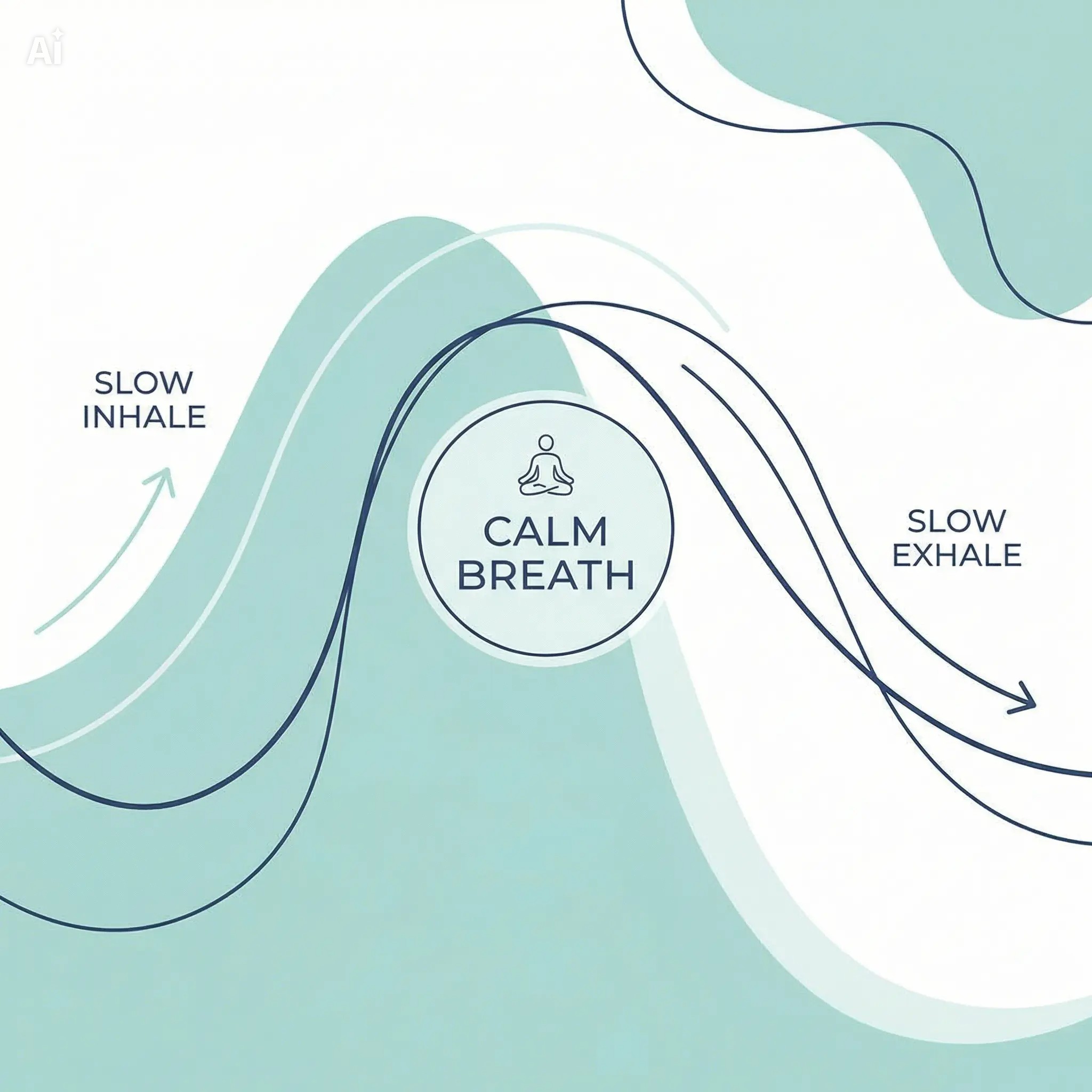
Breathe in through your nose for 4 counts. Hold for 7. Exhale fully through your mouth for 8. The extended exhale activates your parasympathetic nervous system — the “rest and digest” state — and physically lowers your heart rate. Four cycles. It feels odd at first. It works.
Starting at your feet, tense each muscle group firmly for 5 seconds, then let go completely. Move upward — calves, thighs, stomach, hands, shoulders, face. By the top, your body often feels noticeably heavier. It gives your mind something concrete and unstimulating to follow, and physically releases tension you didn’t know you were holding.
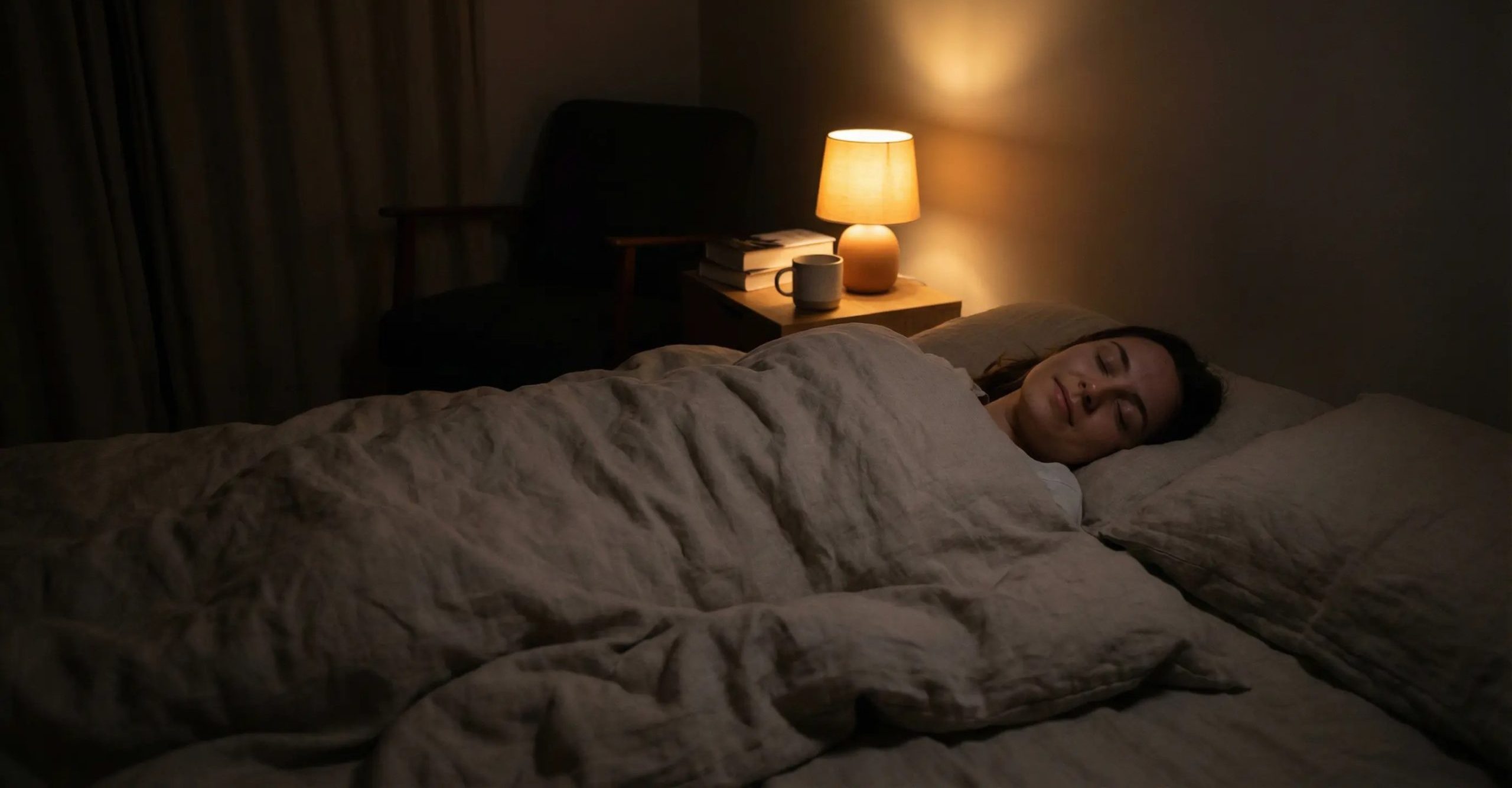
If your mind is looping — replaying tomorrow, rehearsing arguments, expanding a to-do list — lying there trying to ignore it rarely works. Keep a small notebook by the bed. In very dim light, write down whatever is circling. Externalizing those thoughts tells your brain it doesn’t need to hold them anymore. If journaling before bed isn’t already in your routine, it’s one of the highest-return habits you can build for sleep.
Two environment factors matter here above all: keep the room as dark as you possibly can, and make sure you haven’t gotten cold. A slightly cool room supports sleep onset, but waking up cold is a known trigger for staying awake. Comfort matters more than you might think at this hour.
Specific situations — what to do when…
How to fall back asleep at 3AM specifically
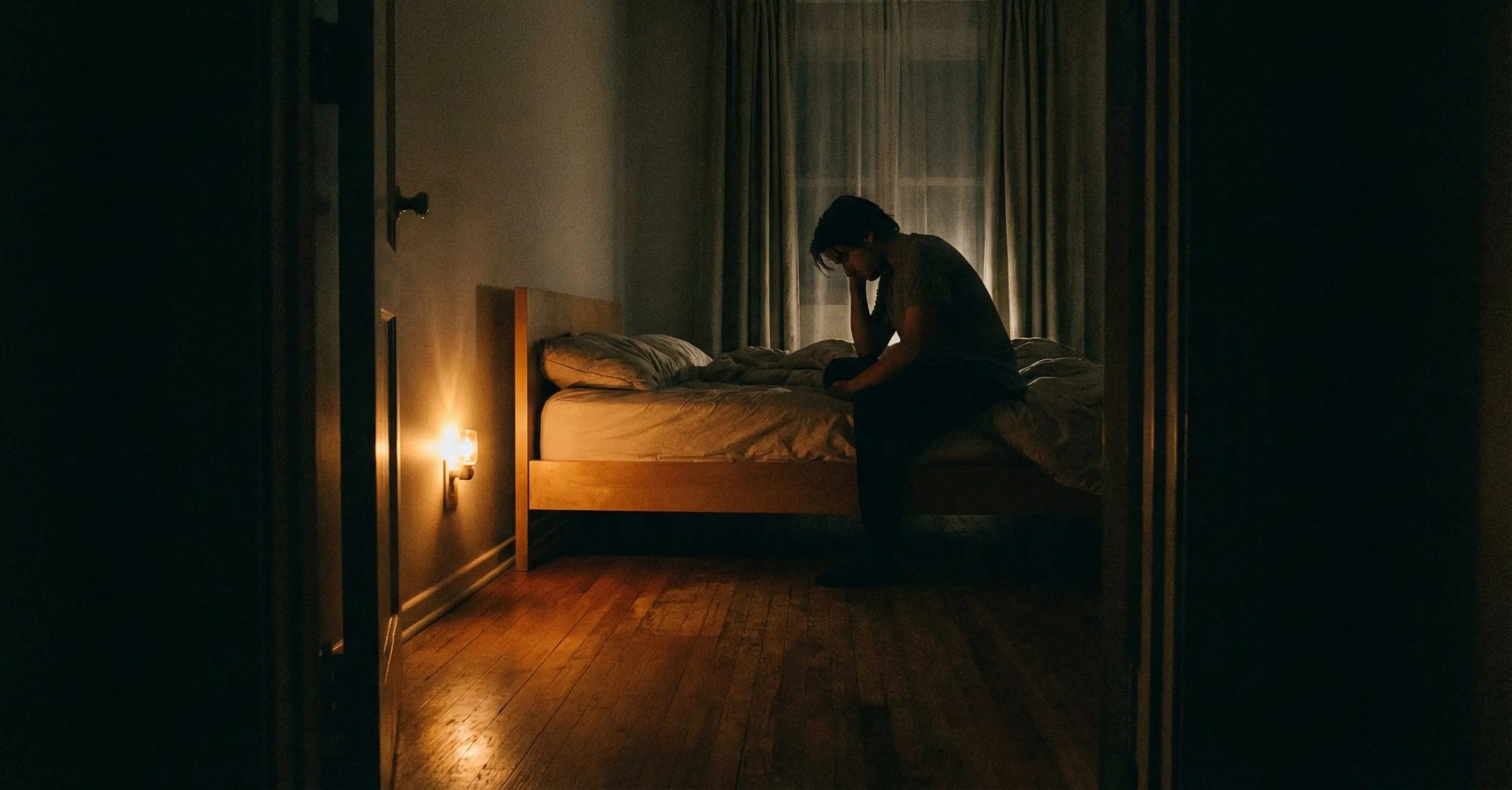
There’s a reason 3AM waking feels uniquely brutal. By that point, your deepest slow-wave sleep has already happened. You’re now in lighter REM-dominant cycles — naturally closer to the surface, easier to tip into full wakefulness. Cortisol has begun its gradual early-morning rise, so your brain is already nudging toward alertness even before anything woke you.
This is why why you keep waking up at 3AM is one of the most searched sleep questions on the internet — it’s tied to real biology, not anxiety or weakness. All four techniques above apply here, and the single most important thing you can do is avoid any light exposure whatsoever.
Can’t fall back asleep after waking up to pee
Nocturia — waking to use the bathroom — is one of the most common causes of night waking in adults, and the return to sleep is where most people lose the battle unnecessarily. The biggest mistake: turning on a bright bathroom light. Even 90 seconds of white or blue light is enough to suppress melatonin and shift your brain into morning mode.

Use the dimmest light available — ideally a red night light for sleep (more on that below). Go directly back to bed. Don’t stop for water. Don’t check your phone on the way. The goal is to keep your body in “night mode” as completely as possible.
Can’t fall back asleep after only 4–5 hours
Waking after four or five hours feels distressing because you assume you haven’t gotten enough sleep. Sometimes that’s true — but sometimes your body has completed its most restorative cycles and is simply transitioning. If this is a persistent pattern, our article on waking up after only 4 hours of sleep covers the specific mechanics in detail and what’s usually driving it.
Waking up too early and can’t fall back asleep
Early morning waking — say, 5AM when you wanted 7 — is slightly different from middle-of-the-night waking. At that hour, cortisol is rising more steeply and your circadian clock is genuinely leaning toward day. This pattern is often linked to depression, advancing sleep phase syndrome, or a bedtime that’s too early for your chronotype. The same techniques apply, but if early waking is your consistent pattern, it’s worth a conversation with your doctor — it’s one of the specific flags a clinician will look at.
What to avoid when you wake up at night
Sometimes knowing what not to do is more valuable than any technique. These are the most common mistakes that turn a brief wake-up into a lost hour.
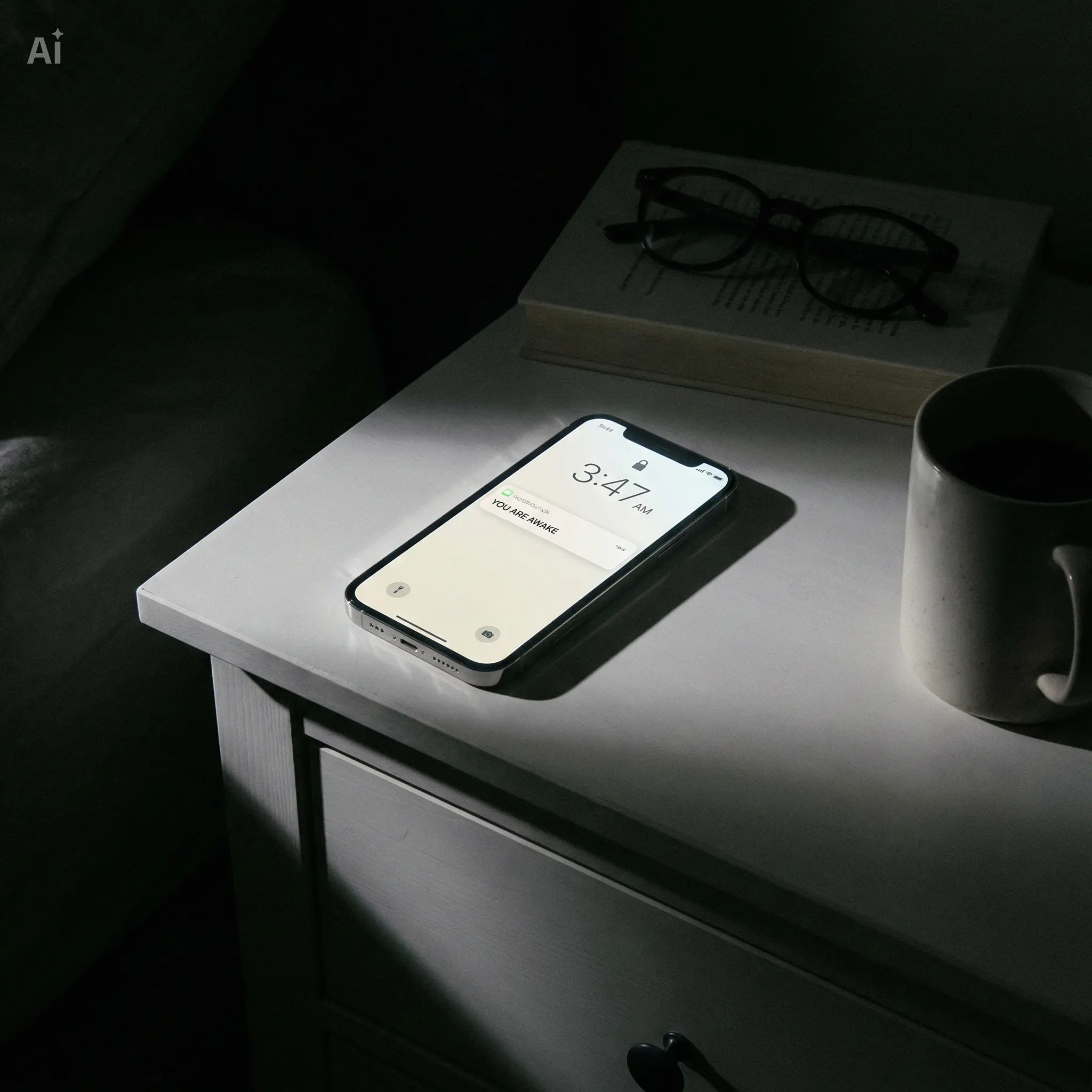
The thread running through all of these is stimulation. Every one of these — even briefly — gives your brain a reason to stay switched on. At 3AM, your only job is to offer it absolutely nothing interesting.
When it keeps happening every night
There’s an important distinction between occasional waking and waking at the same time every single night. The second pattern often has a different cause: conditioned arousal. Your brain has learned — through repetition — to wake at that specific hour. Not because anything disturbs you, but because that’s now what your nervous system does.
Understanding what it means when you wake up at 3AM every night can help you tell the difference between a temporary phase and a pattern worth addressing properly. The most effective treatment available isn’t a supplement or a new mattress. It’s CBT-I — Cognitive Behavioural Therapy for Insomnia. It’s a structured short-term program that directly targets the thought patterns and behaviors maintaining the problem. The American College of Physicians recommends it as the first-line treatment before medication, and results last far longer than sleeping pills.
“The goal of CBT-I isn’t to think your way into sleep — it’s to rebuild the relationship between your bed and the feeling of sleepiness, one night at a time.”

If your night waking comes with other symptoms — persistent low mood, loud snoring, gasping, or significant daytime fatigue — please speak to your doctor before trying behavioral approaches alone. These can indicate conditions like sleep apnoea or depression that need specific treatment first. The medical disclaimer at the top of this article applies especially here.
Sleep tools that can genuinely help
We’re not going to list every sleep product on the market. There are two tools that directly address the specific problems covered in this article — and both are inexpensive enough that they’re worth trying before anything more elaborate.

A contoured sleep mask — If there’s any ambient light in your room (streetlight, charging LEDs, a partner’s phone), a well-fitted sleep mask removes it entirely. For people who wake easily, even low-level light during the second half of the night can disrupt the REM sleep that should be happening. A good mask costs less than a single takeaway and makes a real, measurable difference.
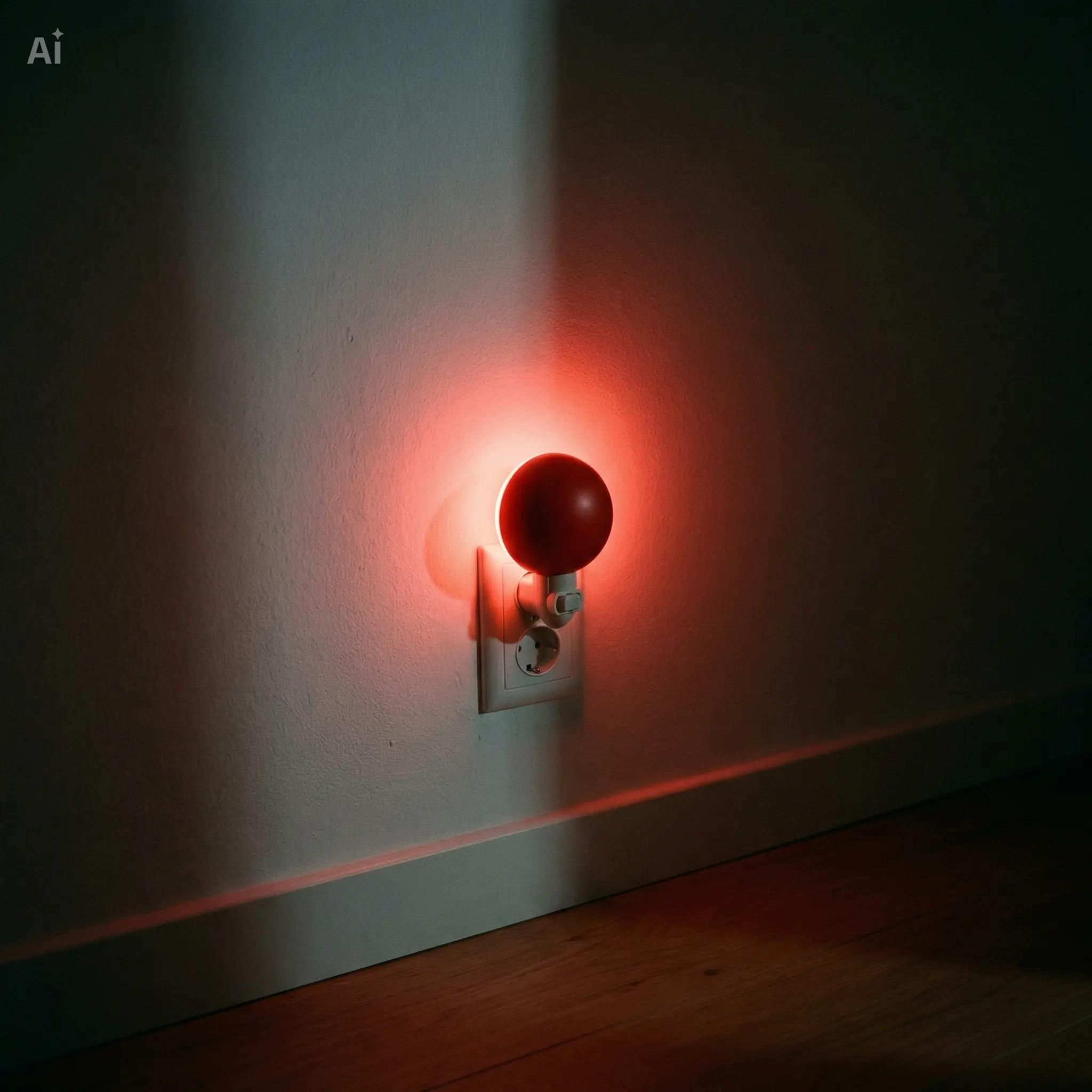
A red or amber night light — For bathroom trips or any reason you need to move around at night, a dim red or amber light keeps you out of the blue-light trap. Red wavelengths have minimal impact on melatonin production compared to white or blue light. Our guide to the best plug-in red night light covers the most practical options at every price point. Once published, we’ll link to our full guide on what light to use when you wake at night for a complete breakdown.
Frequently asked questions
- Buysse DJ. Insomnia. JAMA. 2013;309(7):706–716. pubmed.ncbi.nlm.nih.gov
- Sleep Foundation. How to Fall Back Asleep After Waking Up. sleepfoundation.org
- Mayo Clinic. Insomnia: Symptoms and Causes. mayoclinic.org
- American Academy of Sleep Medicine. Clinical Guidelines: Cognitive Behavioural Therapy for Insomnia. aasm.org
- Cleveland Clinic. Why You Wake Up in the Middle of the Night. clevelandclinic.org
About The Author