Key Takeaways
- Red light is the least disruptive wavelength for your sleep hormones — it won’t signal your brain to stay awake the way white or blue light does.
- A red night light for sleep works best when placed at floor or outlet level — not at eye height or overhead.
- Both red and amber night lights are solid choices; red is slightly better for melatonin preservation, but amber feels warmer for many people.
- Red light is also safe and effective for nurseries — it won’t suppress melatonin in babies during night feeds or diaper changes.
- Overhead white LED lights, phone screens, and blue-toned nightlights are the worst offenders during middle-of-the-night wake-ups.
- A dim red light is all you need — just enough to navigate safely, not enough to illuminate the room.
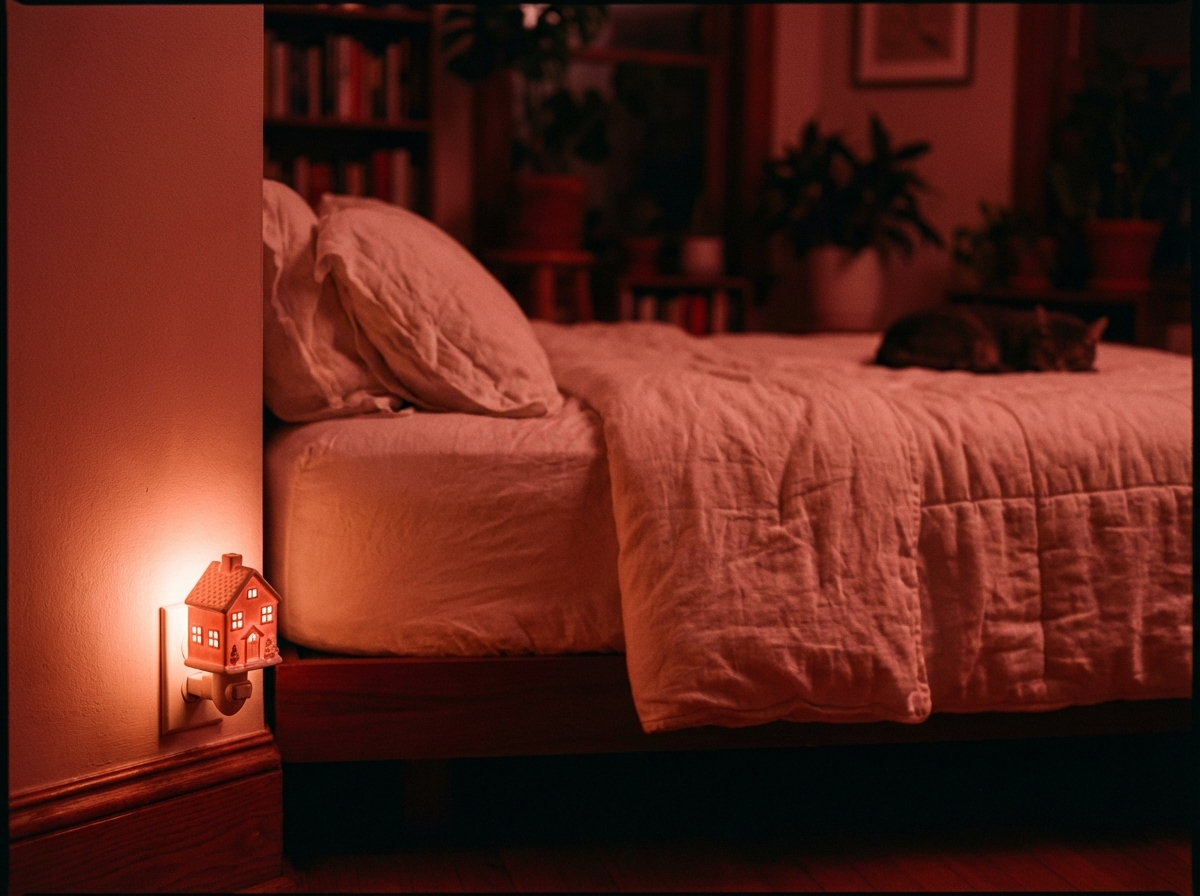
You wake up at 3AM needing the bathroom. Half asleep, you reach for the light switch — and the second that overhead bulb floods the room, something shifts. Your eyes sting. Your brain starts humming. And just like that, you’re wide awake, staring at the ceiling for the next hour wondering what went wrong. A red night light for sleep is the simple, low-cost fix that most people never think to try — and the science behind why it works is surprisingly compelling.
Most nightlights on the market emit white or blue-toned light, which is exactly the wrong kind of light for your brain at 2AM. Red light operates on a completely different wavelength — one that your body doesn’t register as a “wake up” signal. That small difference can mean the gap between drifting back to sleep in minutes versus lying awake until your alarm goes off.
If you’ve ever wondered why you keep waking up at 3AM, your lighting environment might be a bigger factor than you’d expect.
What Is a Red Night Light?
A red night light is exactly what it sounds like — a low-wattage bulb, plug-in unit, or small lamp that emits only red or deep amber wavelengths of light. Unlike standard household bulbs or phone screens, it produces no white light and virtually no blue light.
You can find them in a few different forms: small plug-in nightlights that sit at outlet level, low-wattage red bulbs that screw into a bedside lamp, and clip-on reading lights with a warm red setting. Some are dimmable. Some have motion sensors. The common thread is that they all glow in that deep red-to-amber range — the part of the visible spectrum that your brain responds to very differently than the cool white or blue tones in standard lighting.
Think of it as the opposite of your phone screen or your bathroom vanity light. Those blast short-wavelength blue light straight into your eyes. A red nightlight quietly illuminates just enough to navigate safely, without sending your brain an accidental wake-up call.
Why Red Light Is Different From Regular Light
Your body runs on a roughly 24-hour internal clock called the circadian rhythm. One of its key jobs is regulating melatonin — the hormone that makes you feel sleepy and signals your body that it’s time to rest. Your brain produces melatonin in response to darkness, and suppresses it in response to light.
Here’s where wavelength matters. Not all light affects melatonin equally. Blue and white light — the kind from overhead LEDs, phone screens, and most nightlights — are short-wavelength, high-energy signals. Your brain interprets them the same way it interprets sunlight: daytime, be alert, stop making melatonin. A study published in the Journal of Clinical Endocrinology & Metabolism found that even relatively dim indoor light exposure before sleep can significantly suppress melatonin levels.
Red light sits at the opposite end of the visible spectrum. It’s long-wavelength, low-energy, and doesn’t trigger the same suppression response. That’s the core reason why red light affects melatonin differently — and why choosing the right light at night can genuinely change how quickly you fall back asleep after waking.
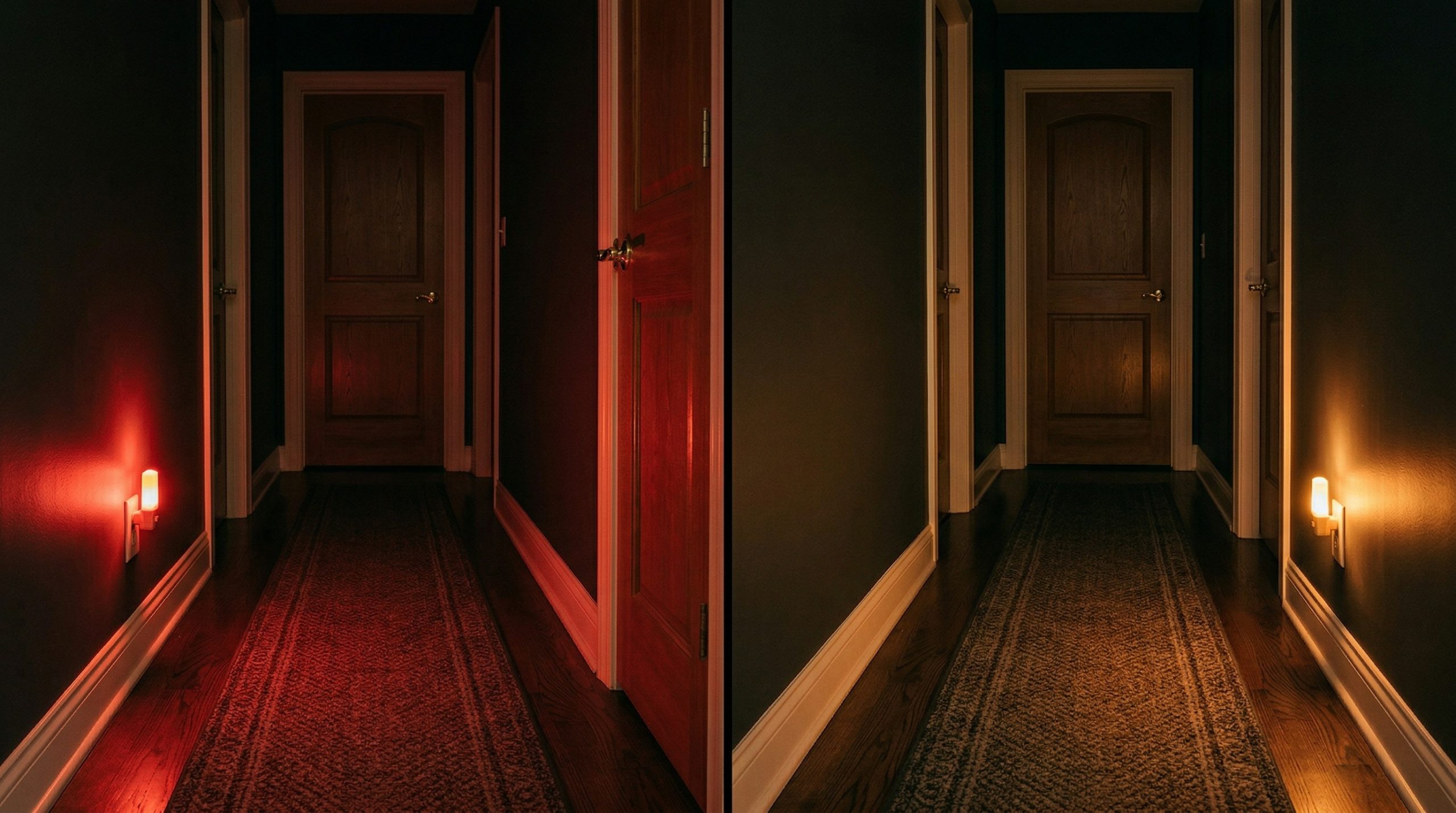
Red vs amber night light — both are far better than white or blue-toned light for nighttime navigation.
Red Night Light Benefits
The most obvious benefit is melatonin preservation. When you switch on a red light to navigate to the bathroom at 2AM, your body doesn’t register it as daylight. Your melatonin levels stay relatively stable, which means your brain doesn’t need to restart the whole process of winding down when you get back into bed.
That directly feeds into the second benefit: it’s easier to fall back asleep. If you’ve ever used a bright bathroom light at night and found yourself lying awake for an hour afterward, that’s not insomnia — that’s light-induced arousal. A red or deep amber light keeps your brain in a low-arousal state rather than snapping it into alertness. There’s a real practical difference once you understand how to fall back asleep after waking at night and the role your light environment plays.
Red light is also gentler on your eyes. In a darkened room, your pupils dilate to take in more light. A sudden blast of white light is physically uncomfortable — it causes involuntary squinting and activates light-sensitive cells in the retina more aggressively. Red light at low intensity is far less jarring.
For couples and families, there’s a social benefit too. If one partner wakes frequently — whether for the bathroom, a feeding, or just light insomnia — a red nightlight causes far less disruption to the sleeping partner than a white bedside lamp. The dimmer and redder the light, the less it spills across the room.
Finally, red light can help regulate your sleep environment more consistently. It’s always on at a fixed, dim intensity — so there’s no temptation to flip on a brighter light “just for a second” and accidentally wake yourself up properly.
Amber or Red Night Light — Which One Should You Choose?
Amber light sits just above red on the visible spectrum — warmer-toned than orange, but not the deep crimson of a pure red light. Both are significantly better than white or blue-toned light for sleep, and both avoid the short wavelengths that suppress melatonin.
The practical difference comes down to biology and preference. Pure red light (roughly 620–750nm wavelength) has the most evidence behind it for melatonin preservation — it’s simply further from the blue end of the spectrum. Amber light (roughly 570–620nm) still does a solid job, but it sits slightly closer to the problematic wavelengths.
That said, amber often feels more comfortable and natural to many people. It has a candle-like warmth that red doesn’t quite replicate. If you find a deep red light unsettling or too dim-looking, amber is a perfectly valid alternative. The key is to choose either over any white, cool, or blue-toned option.
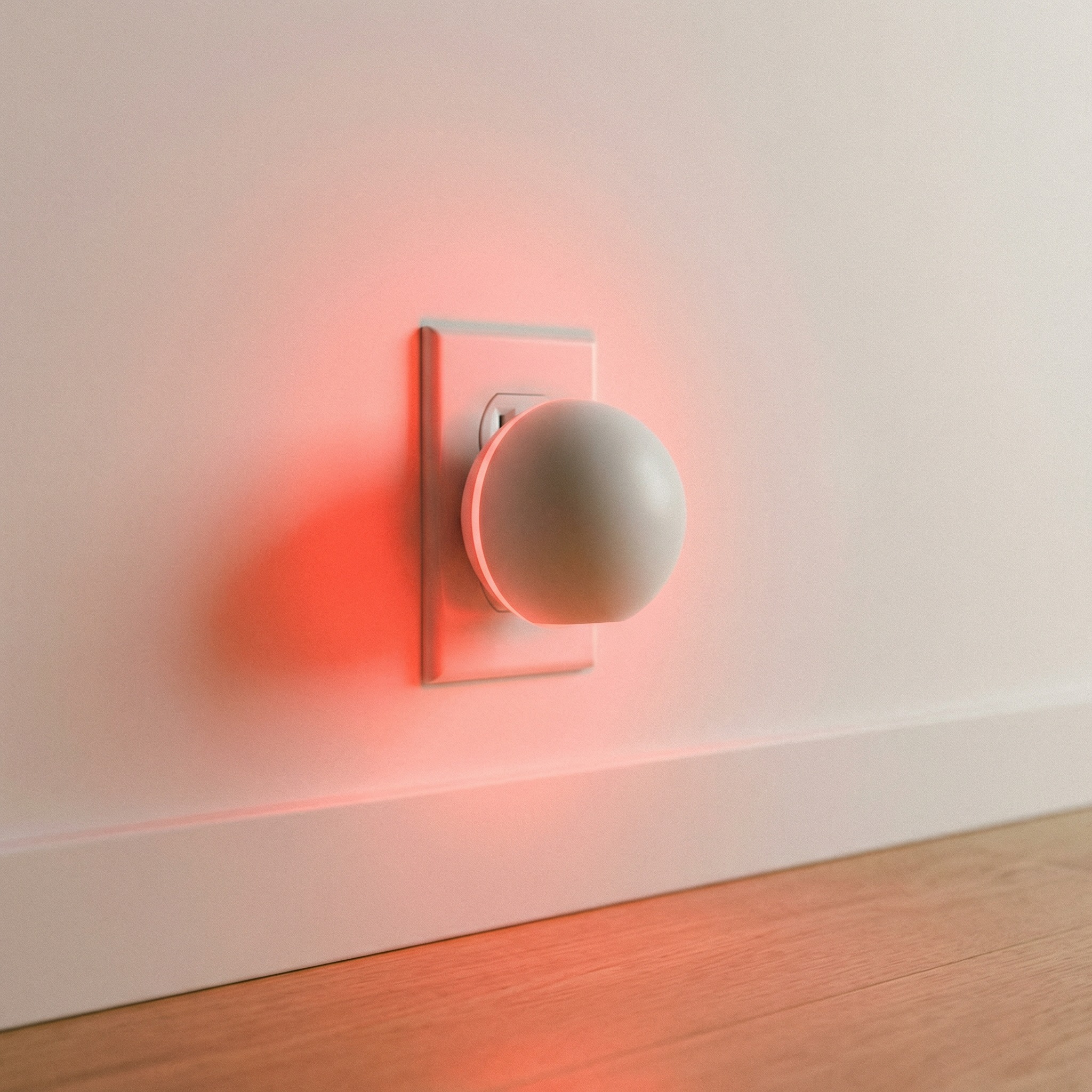
Plug-In Red Night Light
Look for a plug-in unit that emits only red wavelengths — no white or blue light component at all. Outlet-level placement is key, so a unit that plugs directly into a low wall socket is ideal. Dimmable options give you control over brightness, and a motion-sensor version means it only activates when you’re actually moving around. Check that the product description specifically mentions “no blue light” — not just “warm white.” For our full breakdown of the top options, see our guide to the best plug-in red night light for sleep.
View on Amazon →How to Use a Red Night Light for Sleep Correctly
Placement is the most important factor people get wrong. A red nightlight should be at floor level or outlet height — not on a nightstand at eye level, and definitely not overhead. The lower it sits, the less light enters your eyes directly, which is the whole point.
Brightness should be the minimum you need to navigate safely. You’re not trying to read by it or find lost items — you’re trying to walk to the bathroom and back without stubbing a toe. If you can see the floor in front of you, it’s bright enough.
Keep your exposure brief and purposeful. Don’t linger in the lit area, and try not to look directly at the light source itself — even a dim red light is more stimulating when stared at directly. Navigate, do what you need to do, and get back into the dark.
A good setup is a single plug-in red nightlight in the hallway between your bedroom and bathroom, plus a secondary one inside the bathroom near the floor. That way you never need to touch a light switch, and you’re never exposed to bright white light at any point during the night.
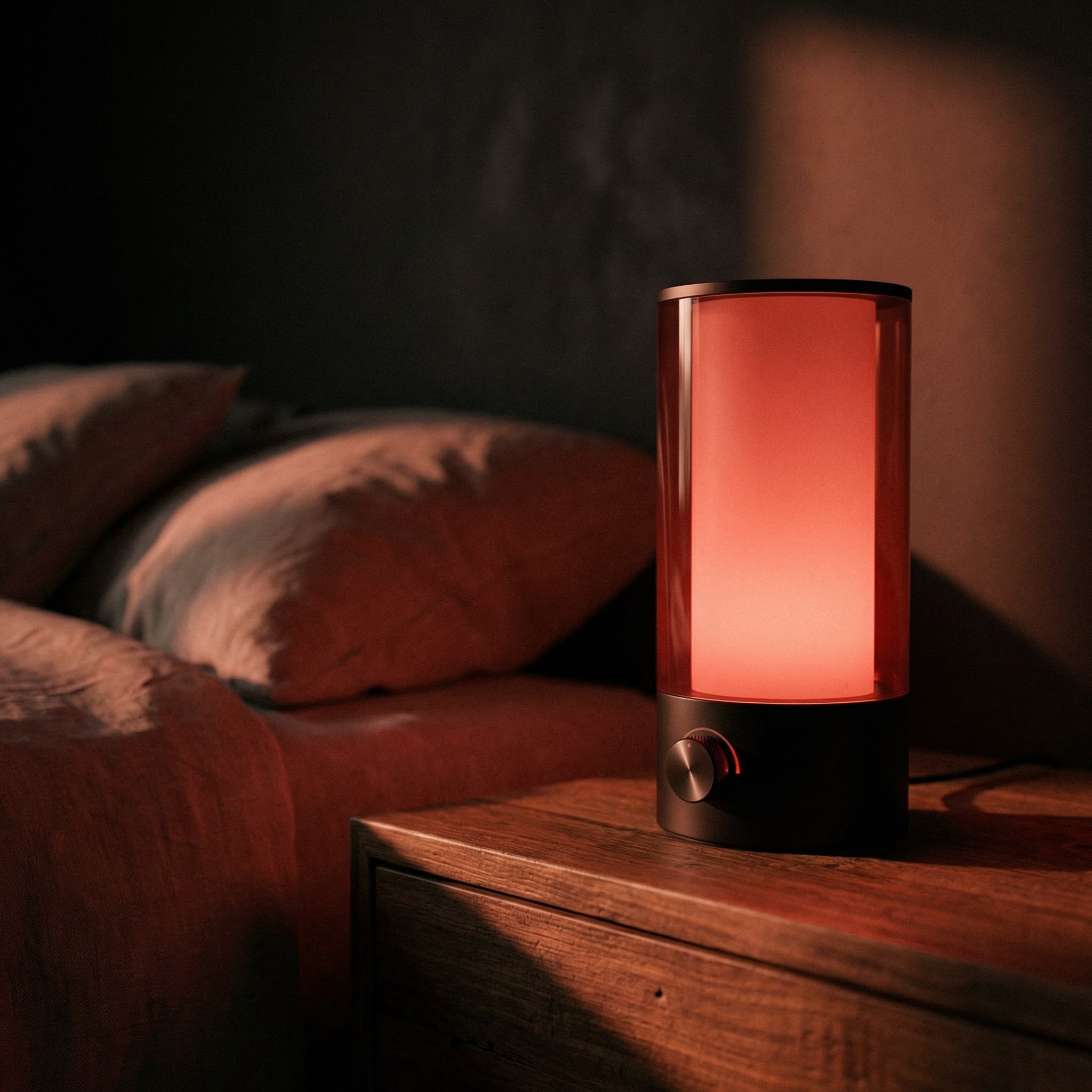
Dimmable Bedside Red Lamp
A dimmable bedside lamp with a pure red or deep amber bulb is useful if you do any late-night reading or need light at a table rather than just for navigation. Look for a lamp with a dimmer dial rather than a simple on-off switch — the ability to dial down to near-zero brightness is worth it. Make sure the bulb produces only red or deep amber output with no blue-light component. LED red bulbs that screw into standard sockets are widely available and affordable.
View on Amazon →Red Night Light for Nursery and Kids
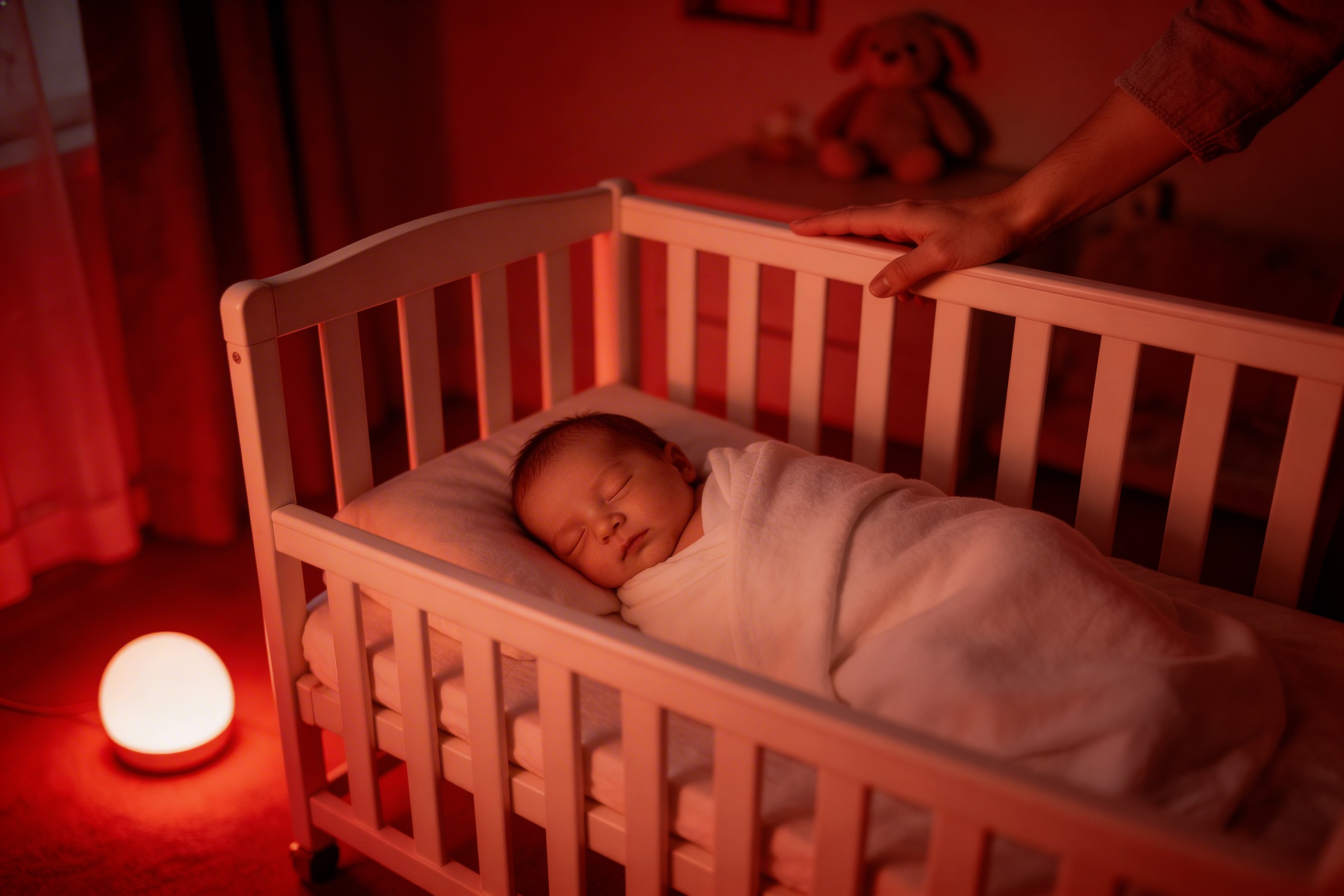
Everything that applies to adults applies to babies and toddlers — arguably more so. Infants are highly sensitive to light disruption, and their circadian rhythms are still developing in the early months. Using a red night light for nursery feeds and diaper changes means you can handle everything without jolting your baby into full wakefulness.
Red light doesn’t suppress melatonin in children any more than it does in adults, which means a baby who wakes for a feed in a red-lit room is far more likely to settle back to sleep quickly than one exposed to a bright white overhead light. For toddlers who need a nightlight for comfort, a dim red or amber option is a much better choice than the standard white plug-in units most parents reach for.
Red nightlights are safe for nursery use — just keep the brightness low and the placement at floor or baseboard level, as you would in any room. There’s nothing to worry about in terms of eye safety at normal nightlight intensities.
Free Download: The 3AM Wake-Up Reset Guide
Wake up in the middle of the night and can’t get back to sleep? This free guide walks you through a calm, step-by-step reset that works with your sleep science, not against it.
What to Avoid — Lights That Make Night Wakings Worse
Overhead white LED lights are the single biggest offender. Flipping on a bright overhead light at 2AM is the equivalent of telling your brain it’s morning — and your brain listens. Melatonin drops, cortisol starts to rise, and suddenly you’re fighting your own biology trying to get back to sleep.
Phone screens are just as bad, if not worse. The combination of blue-wavelength light, mental stimulation, and social media dopamine is almost perfectly designed to keep you awake. If you need to check the time, use a simple bedside clock with a red or amber display — not your phone.
Bathroom vanity lights are another common culprit. Most bathroom mirror setups use bright cool-white or daylight-spectrum bulbs positioned right at eye level — exactly the wrong kind of light in the worst possible position. If you can swap those bulbs for a red or amber option, do it. Or simply don’t turn the vanity lights on at all during the night.
Blue-toned nightlights — the kind marketed as “energy saving” or “cool white” — are also worth replacing. They may seem dim, but short-wavelength light is stimulating even at low intensities. Pair a well-chosen nightlight with the rest of your full sleep environment setup to get the most out of these changes.
Frequently Asked Questions
Yes — a dim red nightlight left on through the night is unlikely to disrupt your sleep significantly. Red wavelengths don’t suppress melatonin the way white or blue light does, so your body’s sleep signals remain largely intact. Just keep it dim and positioned low so it’s not shining directly at your face while you sleep.
It does. Red light is the most sleep-friendly option for nurseries because it doesn’t interfere with melatonin production in infants or toddlers. Using a red or deep amber light during night feeds and diaper changes helps keep your baby in a calm, drowsy state rather than triggering a full wake-up.
Absolutely. Standard LED red bulbs are available in E26 and E27 base sizes that fit most regular table lamps and floor lamps. Look for ones marketed specifically as “no blue light” or “sleep-friendly” rather than standard red-tinted decorative bulbs, which may still emit some white light.
Amber is a very good option — significantly better than white or blue-toned light. Red is marginally superior in terms of melatonin preservation because it sits further from the blue end of the spectrum. But if amber feels more comfortable or natural to you, it’s a perfectly valid choice and far better than the alternatives.
Yes, and this is where it makes the biggest practical difference. By preserving your melatonin levels during a middle-of-the-night trip to the bathroom, a red light keeps your brain in a low-arousal state. That makes it substantially easier to settle back into sleep quickly rather than lying awake for an extended stretch.
The minimum brightness needed to navigate safely is the ideal level. You want enough light to avoid tripping over furniture or stubbing a toe — not enough to read by. Many plug-in red nightlights have an adjustable brightness or multiple settings; the lowest one that still illuminates your path is usually the right choice.
Sources
- Gooley JJ et al. “Exposure to Room Light Before Bedtime Suppresses Melatonin Onset and Shortens Melatonin Duration in Humans.” J Clin Endocrinol Metab. 2011. PubMed
- Sleep Foundation — How Light Affects Sleep. sleepfoundation.org
- National Institutes of Health — The Effect of Light on the Human Circadian System. ncbi.nlm.nih.gov
- Cleveland Clinic — What Is Melatonin? clevelandclinic.org
About The Author