

Key Takeaways
- Your body’s internal clock (circadian rhythm) can train itself to wake you at a precise time — even when the original trigger is long gone.
- This self-reinforcing pattern is called conditioned arousal, and it’s one of the most overlooked causes of chronic night waking.
- The 3AM–4AM window is peak vulnerability time: deep sleep has ended, cortisol is rising, and your sleep is at its lightest.
- Anxiety is a major driver — it keeps your nervous system on low-level alert, making early morning the perfect time for racing thoughts to surface.
- A consistent morning wake time is one of the most effective tools to reset a fragmented sleep cycle.
You glance at your phone. It’s 3:17AM. Again. Third night in a row — same time, almost to the minute. There’s something almost eerie about it, like your body has set its own private alarm. If you keep waking up at the same time every night and can’t figure out why, you’re in very good company. This happens to a huge number of adults, and it’s rarely random.
The good news: there’s a real explanation for it. Your body isn’t malfunctioning — it’s doing something it’s been quietly trained to do. Once you understand the “why,” you’ll also understand how to stop it.

Why Does Your Body Wake Up at the Same Time Every Night?
The short answer is your circadian rhythm — your body’s internal 24-hour clock that governs everything from when you feel sleepy to when your hormones shift. This clock doesn’t just track day and night. It programs your entire sleep architecture, including when you move through each sleep stage and, critically, when you naturally begin to lighten toward wakefulness.
In the first half of the night, you spend most of your time in deep, slow-wave sleep. This is the restorative phase — the kind that’s hard to pull you out of. By the second half, your sleep naturally gets lighter. You cycle through more REM (rapid eye movement) sleep, which is much easier to interrupt. This is completely normal, but it means you’re more biologically vulnerable to waking between roughly 2AM and 5AM.
Now here’s where it gets interesting: if you wake up at 3AM one night — for any reason at all — your brain files that away. The next night, it starts preparing for it. Cortisol (your body’s alerting hormone) begins to rise a little earlier. Your sleep lightens slightly ahead of schedule. Before long, you’re waking up not because something is disturbing you, but because your body has learned to anticipate it. This process is called conditioned arousal, and understanding what causes night wakings during sleep is exactly why “I keep waking up at the same time every night” is one of the most common sleep complaints doctors hear.
The Most Common Reasons You Wake Up at the Same Time
Conditioned arousal explains the mechanism, but something has to start the pattern in the first place. Here are the most common culprits — and understanding which one applies to you is the first step toward fixing it.
The Early-Morning Cortisol Surge
Your body starts ramping up cortisol in the pre-dawn hours to prepare you for waking. In most people this peaks between 6AM and 8AM, but in people under chronic stress, that surge can begin earlier and more sharply — pulling them out of sleep at the same time every night without any external trigger at all.
Blood Sugar Dips
This one surprises people. Blood glucose naturally dips around 2AM–4AM, and if you’re sensitive to these fluctuations — or if you ate dinner early or skipped a late snack — the drop can trigger a mild stress response that pulls you awake. Your body is essentially sounding an internal alarm for fuel.
Sleep Apnea
Obstructive sleep apnea causes repeated partial awakenings as breathing is interrupted. Because apnea events tend to cluster during REM sleep — which is most prevalent in the second half of the night — many people with undiagnosed sleep apnea wake consistently at the same time without realizing the cause. If you snore, wake feeling unrested, or have been told you stop breathing, get evaluated.
Alcohol and Sleep Architecture
Alcohol is sedating initially, which is why it can feel like it helps you fall asleep. But as your body metabolizes it — typically 3–5 hours after your last drink — it triggers a rebound effect that disrupts sleep architecture. The result: you wake up at roughly the same time each night after drinking, often feeling restless or anxious.
Environmental Triggers
Your heating system kicks on at 3:15AM. Your partner’s alarm goes off at 4AM. A delivery truck rumbles past. Environmental cues are remarkably consistent, and once your sleep is light enough to register them, they become reliable wake triggers. A quality sound machine can help here — by masking variable noise patterns with a steady, neutral backdrop, it removes the cue before it can pull you out of sleep. It’s also worth considering light: if you need to get up, using a red night light for sleep instead of overhead lighting keeps your melatonin intact and makes it far easier to drift back off. For a specific product recommendation, our guide to the best plug-in red night light is a good place to start.
Bladder Patterns
Your bladder, like everything else, runs on a schedule. If you drink a lot of fluid in the evening or have an overactive bladder, your body can train itself to wake you at a predictable time for the bathroom. The fix is usually behavioral: reduce fluid intake after 7PM and avoid caffeine in the afternoon.

Waking Up at the Same Time Every Night and Anxiety
If anxiety is part of your day-to-day life, there’s a strong chance it’s also shaping your sleep. Anxiety creates a state called hyperarousal — a low-level nervous system activation where your brain and body never fully let their guard down, even during sleep. The result is sleep that’s more fragile, lighter in quality, and far more easily interrupted by even subtle internal changes.
Here’s what makes the early morning particularly cruel for anxious sleepers: this is precisely when cortisol begins its natural pre-dawn rise. For most people, that’s a gentle process. For someone with anxiety, that cortisol signal can land like a starting gun — the mind snaps awake and immediately starts running. Worries that felt manageable at 10PM become vivid and urgent at 3AM. Future concerns, unresolved conversations, looming deadlines: they all rush in during that window.
Waking up same time every night with anxiety also has a cruel self-reinforcing quality. The act of waking up itself becomes a source of anxiety. You start dreading that hour. You check the clock. You start bracing for it before you even fall asleep. And so waking up at the same time every night with anxiety tends to get worse over time, not better, without deliberate intervention.
The most effective treatment for anxiety-driven sleep disruption is Cognitive Behavioral Therapy for Insomnia (CBT-I), which directly targets the thought patterns and behaviors that sustain the cycle. A therapist trained in CBT-I can help you dismantle both the anxiety and the conditioned arousal that’s keeping the pattern locked in.
What Does It Mean If You Wake Up at 3AM or 4AM Specifically?
There’s a reason 3AM and 4AM come up so often in conversations about sleep disruption. These hours aren’t arbitrary — they sit right at the intersection of several biological events that make waking up significantly easier.
By 3AM–4AM, most people have completed their cycles of deep, slow-wave sleep. The body has shifted predominantly into REM sleep, which is lighter and more easily disturbed. At the same time, cortisol begins its gradual pre-dawn rise. Body temperature starts to tick upward. Melatonin levels start dropping. All of these signals are telling your brain that morning is approaching — and for many people, that’s enough to tip them from light sleep into full wakefulness.
Waking up at the same time every night at 4AM is especially common among people who go to bed early, because their sleep timeline is simply shifted earlier. If you’re in bed by 9PM or 10PM, 4AM represents six or more hours of sleep — and your body may genuinely be signaling that it’s done. For more on this, take a look at our piece on waking up after only 4 hours of sleep.
If you’re specifically wrestling with the 3AM window, our articles on why you keep waking up at 3AM and what it means when you wake up at 3AM go deeper into the science and what to do in the moment.
The Spiritual Meaning of Waking Up at the Same Time Every Night
Many people who wake at a precise time — especially 3AM — find themselves wondering whether it carries a deeper significance. In various spiritual and religious traditions, the early morning hours are considered a time of heightened awareness: a window for prayer, reflection, or messages from a higher source. Some schools of thought suggest that specific hours correspond to particular energies or meanings.
Whatever interpretation resonates with you is completely valid. Spiritual experience and physiological explanation aren’t mutually exclusive. But it’s also worth knowing that the underlying mechanism is biological — and that it’s something you can understand, address, and change. You can hold both truths at once, and still get a good night’s sleep.
Should You Wake Up at the Same Time Every Day?
Here’s a counterintuitive piece of sleep science: yes — deliberately waking at the same time every morning is one of the most powerful tools you have for improving your sleep. Not just on weekdays. Every day, including weekends.
This is called an anchor wake time, and it’s a cornerstone of CBT-I. When you wake at a consistent time each morning, you give your circadian rhythm a reliable daily signal to synchronize to. Over time, your body learns exactly when to start winding down at night, when to enter deep sleep, and when to emerge naturally in the morning. The result is more stable, predictable sleep architecture — which directly reduces the kind of fragmented, same-time waking we’ve been talking about throughout this article.
Should you wake up at the same time every day? If you want to stop your body from waking you at 3AM uninvited, the answer is almost certainly yes. Social jetlag — the disruption caused by shifting your wake time by even 90 minutes on weekends — is a surprisingly powerful sleep disruptor that most people never connect to their night waking problem.
How to Stop Waking Up at the Same Time Every Night
Understanding the cause is half the battle. The other half is being strategic about breaking the cycle. Here’s what the evidence actually supports.
Set a Consistent Morning Wake Time
Pick a realistic time and protect it — even after a rough night. This is the single most effective lever for resetting your circadian rhythm. It feels hard the first week. Within a few weeks, most people start falling asleep more easily and staying asleep longer.
Identify and Address the Root Cause
The solution has to match the cause. If anxiety is driving your waking, breathing exercises and CBT-I will be far more effective than blackout curtains. If your heating system or a partner’s schedule is the cue, a sound machine might solve it in days. If blood sugar is dipping at 3AM, a small protein-based snack before bed might be worth testing.
Use Stimulus Control to Break Conditioned Arousal
Stimulus control means teaching your brain that the bedroom is for sleeping — not for lying awake staring at the ceiling. The rule: if you’ve been awake for more than 20 minutes, get up. Go to another room, do something calm in dim light, and return to bed only when you feel genuinely sleepy. It feels counterproductive, but it’s one of the most effective ways to weaken the conditioned waking pattern over time.
Keep Your Sleep Environment Consistent
Temperature, darkness, and sound consistency all matter. Even subtle changes — a partner leaving the bedroom, the radiator cycling on — can trigger arousal in light sleep. A sound machine creates a steady audio backdrop throughout the night, masking the variable environmental cues that trigger same-time waking.
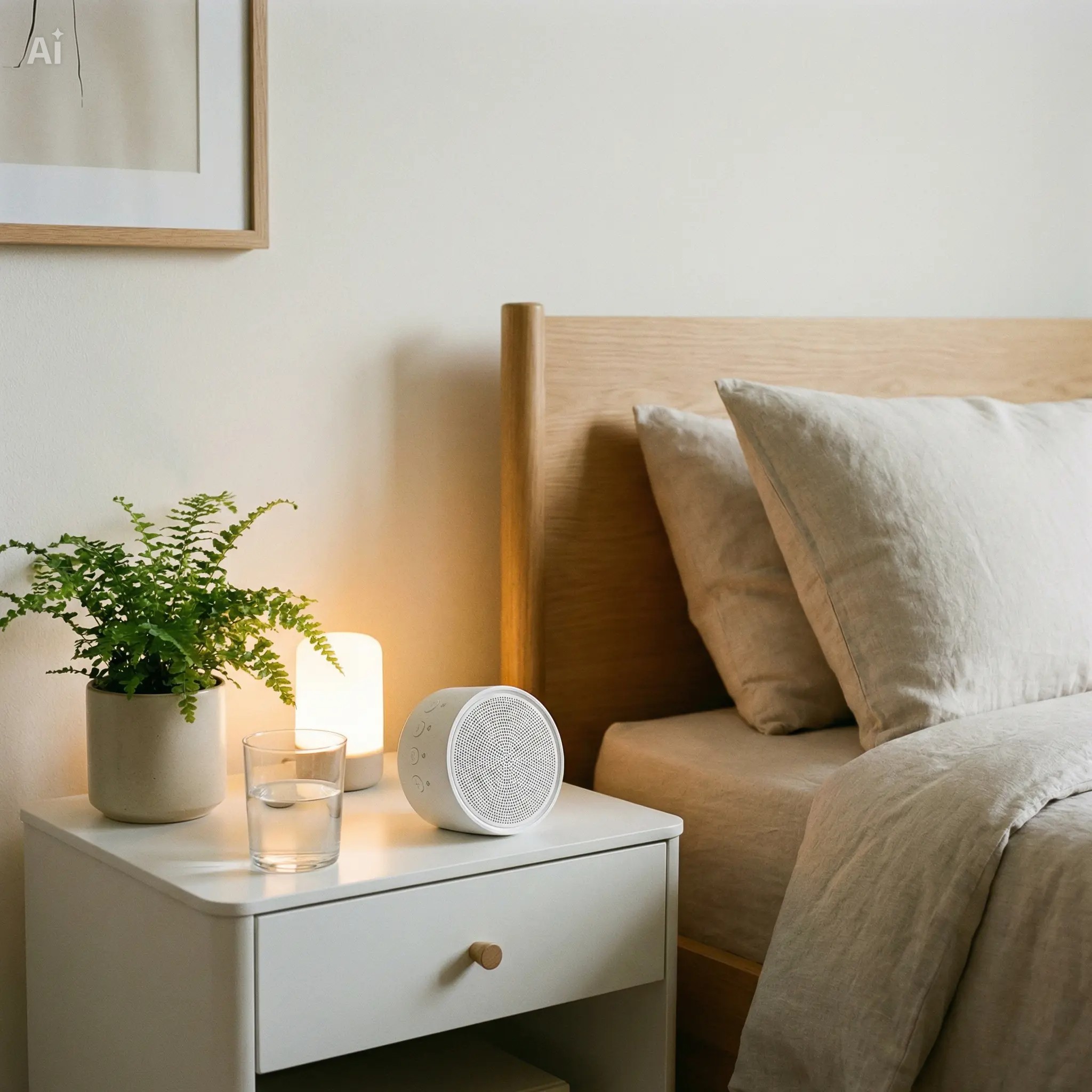
Sound Machine for Better Sleep
A consistent sound environment is one of the most underrated fixes for same-time waking. A good sound machine masks variable noise cues — the ones your brain has learned to use as wake triggers — and keeps your sleep environment stable throughout the night.
href=”https://amzn.to/3NbyfWR” rel=”nofollow sponsored noopener” target=”_blank” class=”sv-product-btn” >View on Amazon →If You Wake Up and Can’t Get Back to Sleep
Knowing what to do in the moment matters just as much as the longer-term strategy. Our guide on how to fall back asleep after waking at night walks through exactly what to do — from specific breathing techniques to the stimulus control process — so you have a plan when you need it most.
Still Waking Up at the Same Time Every Night?
You don’t need more tips — you need a reset. Our free 3AM Wake-Up Reset Guide gives you a simple, step-by-step plan to break the pattern for good. Grab your free copy below.
Download Our Free Guide →When to See a Doctor
Same-time waking is often manageable with the behavioral and lifestyle changes outlined above. But there are situations where it’s worth getting a professional opinion sooner rather than later.
See a doctor if your waking is accompanied by gasping or choking (a possible sign of sleep apnea), heart pounding or palpitations, heavy sweating unrelated to room temperature, or persistent anxiety that feels unmanageable on your own. Also seek help if the pattern has continued for more than three to four weeks despite consistent lifestyle changes. Underlying conditions like sleep apnea, anxiety disorders, or hormonal imbalances genuinely won’t resolve on their own — and the right support can make an enormous difference to how you sleep.
Frequently Asked Questions
Your body’s circadian rhythm creates a predictable internal schedule for sleep and wakefulness. Once you wake at a particular time — for any reason — your brain begins to anticipate it. Through a process called conditioned arousal, your body starts preparing to wake up before the original trigger even occurs. Over time, the waking becomes self-sustaining even if the original cause has resolved.
In most cases, no. Same-time waking is usually driven by conditioned arousal, anxiety, blood sugar fluctuations, or environmental cues. However, if waking is accompanied by gasping, heart racing, or heavy sweating — or if it’s persisted for weeks without improvement — it’s worth speaking with a doctor to rule out sleep apnea or other underlying conditions.
The 3AM–4AM window aligns with the end of deep sleep cycles and the beginning of the body’s pre-dawn cortisol rise. Sleep is naturally at its lightest during this period, which makes it the most common time for nighttime waking. It’s not unusual — it’s an unavoidable feature of your sleep biology. Understanding that makes it easier to address.
Yes, and it’s one of the most common drivers. Anxiety keeps the nervous system in a state of low-level alert (hyperarousal), making sleep fragile. When cortisol begins to rise in the early morning, anxious thoughts surface more easily. The waking itself can also become a source of anxiety, creating a self-reinforcing cycle that gets worse without deliberate intervention such as CBT-I.
Start with a consistent morning wake time — every day, including weekends. This anchors your circadian rhythm and gradually breaks the conditioned pattern. Identify and address the root cause: anxiety, alcohol, blood sugar, or environmental noise. Use stimulus control if you’re lying awake for more than 20 minutes (get up, do something calm, return when sleepy). If anxiety is a major factor, CBT-I is the most effective long-term treatment available.
Sources
- Sleep Foundation — Why Do I Keep Waking Up at the Same Time Every Night?
- Cleveland Clinic — Why Do I Keep Waking Up at 3AM?
- Mayo Clinic — Insomnia: Symptoms and Causes
- American Academy of Sleep Medicine — CBT-I Clinical Guidelines
- PubMed / NCBI — Hyperarousal and sleep reactivity in insomnia (2016)
About The Author


