

Affiliate Disclosure: This post contains affiliate links. If you purchase through these links, we may earn a small commission at no extra cost to you. We only recommend products we genuinely believe in.
Key Takeaways
- Waking up after 4 hours of sleep often aligns with the end of your second full sleep cycle — a natural, physiological transition point.
- Stress, alcohol, blood sugar dips, and temperature changes are the most common reasons you stay awake after this transition.
- Waking at the same time every night is usually a learned pattern — your brain has been trained to expect it.
- Most cases respond well to consistent sleep habits, environment adjustments, and managing evening cortisol.
- If night waking is persistent and affects your daily functioning, it’s worth a conversation with your doctor.
Medical Disclaimer: This article is for informational purposes only and is not a substitute for professional medical advice, diagnosis, or treatment. If you’re experiencing persistent sleep issues, please consult a qualified healthcare provider.
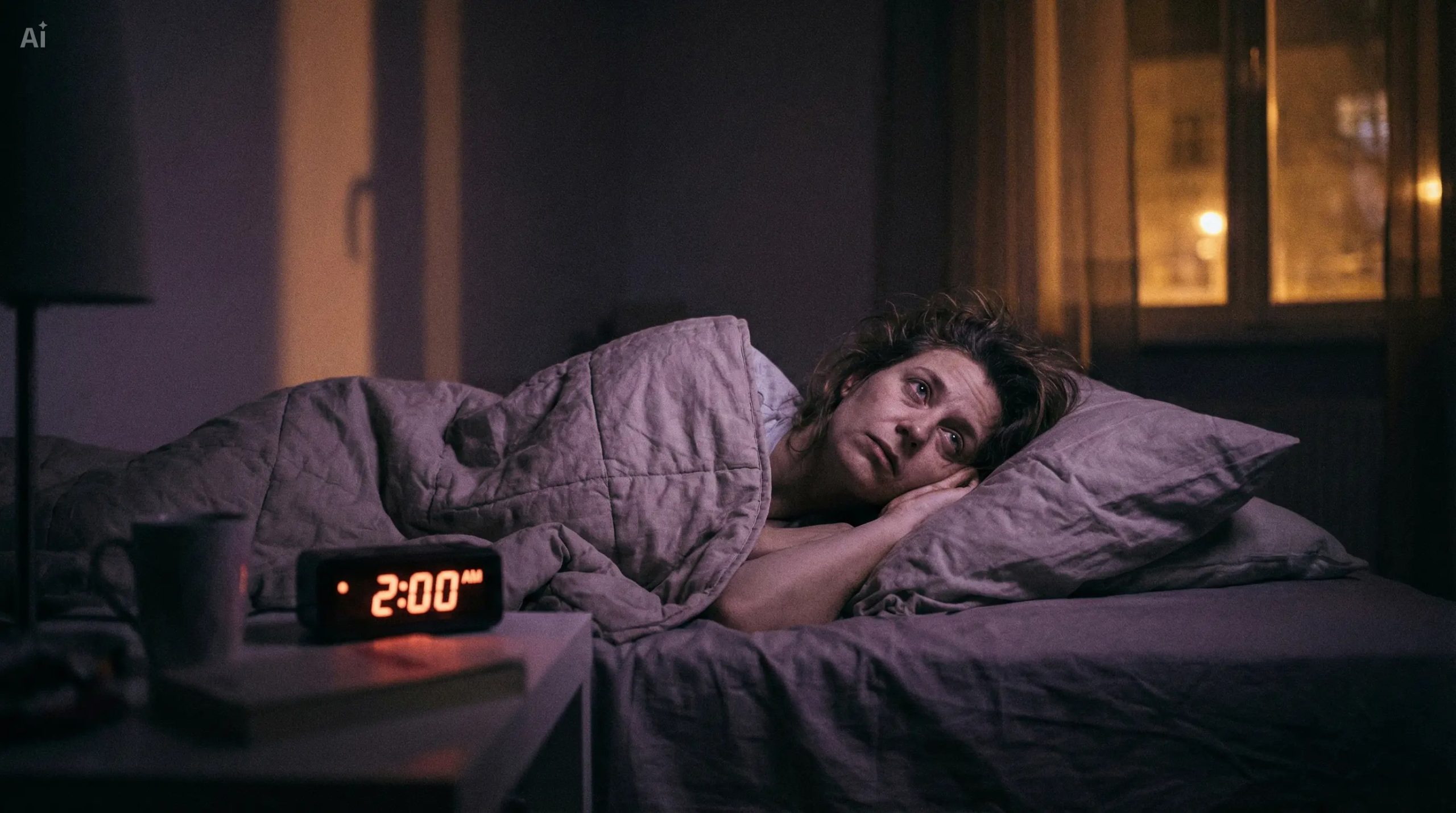
It’s somewhere around 2 or 3AM. You open your eyes, completely alert, and immediately know — sleep is gone for now. You went to bed at a reasonable hour, you fell asleep fine, and yet here you are, wide awake after what feels like barely any time at all. If you wake up after 4 hours of sleep night after night, you’re dealing with one of the most frustrating sleep patterns there is.
The question of why do I wake up after 4 hours of sleep doesn’t have a single answer — but it does have real, understandable ones. And more importantly, it has solutions. Before we get to those, it helps to understand what’s actually happening in your body at that four-hour mark, because the timing isn’t coincidental.
Quick Answer
Waking up after 4 hours of sleep typically happens because four hours marks the end of roughly two complete 90-minute sleep cycles — a natural transition point where the brain briefly surfaces toward consciousness. If something internal or external catches the brain’s attention at that moment, you wake up and struggle to fall back asleep. Stress hormones, alcohol metabolism, blood sugar changes, and environmental factors are the most common triggers.
What’s Actually Happening When You Wake Up After 4 Hours?
Sleep isn’t a uniform state you drop into and stay in until morning. It’s a cycling process — your brain moves through a repeating sequence of stages roughly every 90 minutes, passing through light sleep, deep slow-wave sleep, and REM before starting the cycle again.
Four hours is almost exactly the length of two complete cycles. So waking up 4 hours after falling asleep isn’t random timing — it’s your brain surfacing at the end of a natural cycle boundary, just as it does multiple times throughout any night. The difference is that most of those transitions happen invisibly. You stir briefly and slip back into the next cycle without ever registering it.
What makes the four-hour mark feel different for many people is a combination of physiology and circumstance. By this point in the night, the deepest, most restorative slow-wave sleep has largely been completed. The cycles ahead are lighter, REM-dominant, and far closer to the surface of consciousness. Your brain is already in a more wakeable state — and it doesn’t take much to tip it over the edge into full wakefulness.
The body is also undergoing a series of hormonal and metabolic shifts around this time. Cortisol — the hormone that prepares you for wakefulness — begins its natural morning climb. Blood sugar, which has been gradually dropping during sleep, may dip low enough to register as a mild stress signal. Core body temperature starts to tick upward. These aren’t malfunctions. They’re your body’s way of preparing for morning — they just occasionally start a few hours too early for some people.
Understanding this doesn’t fix the problem on its own, but it does change the relationship with it. Waking at the four-hour mark isn’t a sign that your sleep is broken. It’s a sign that something — internal or external — is catching your brain’s attention at a moment when it’s already closer to the surface than it was three hours ago.
Why Do I Wake Up After 4 Hours Sleep? The Most Common Causes
If you find yourself asking why do I wake up every few hours, the answer is usually one of a handful of well-understood factors. Most of them are addressable — once you know which one you’re dealing with.
Stress and Elevated Cortisol
This is the most common culprit, and it’s one people frequently underestimate. Cortisol doesn’t only respond to acute stress — it responds to background stress, too. A difficult period at work, ongoing financial worry, a health concern, or simply a packed and unrelenting schedule can keep your baseline cortisol elevated. When that cortisol rise happens to coincide with a natural sleep cycle transition at the four-hour mark, the brain gets a jolt of alertness precisely when it’s most vulnerable to waking.
High evening cortisol also delays the release of melatonin, which means sleep architecture is already compromised before you even close your eyes. The result is sleep that feels lighter from the start — and a much higher chance of staying awake when that cycle transition arrives.
Alcohol
Alcohol is deeply misunderstood as a sleep aid. It does help you fall asleep faster — it’s a sedative, and that sedative effect is real. But it comes with a catch. As your body metabolises alcohol over the first three to four hours of sleep, it produces a rebound effect that significantly fragments the second half of the night. Deep sleep is suppressed, REM is disrupted, and the brain bounces into a lighter, more alert state right around that four-hour window.
Many people who drink in the evening and then wonder why they wake up at 2 or 3AM are experiencing exactly this pattern. The alcohol wore off, and the nervous system has overcorrected toward alertness. We cover this in more detail in the section on solutions below.
Blood Sugar Dips
The brain runs on glucose, and it doesn’t stop needing it when you’re asleep. If blood sugar drops significantly during the night — which can happen after a light evening meal, a high-sugar dinner that caused a spike and crash, or in people with blood sugar regulation issues — the body interprets this as a mild stress signal and releases cortisol and adrenaline to compensate. Those hormones, even in small amounts, are enough to pull you out of sleep at a natural transition point.
Sleep Apnea
Obstructive sleep apnea — where the airway partially or fully collapses during sleep, causing brief breathing interruptions — is a significant and frequently undiagnosed cause of middle-of-the-night waking. People with sleep apnea often wake multiple times without knowing why, sometimes with a dry mouth, headache, or feeling of gasping. If you snore loudly, wake unrefreshed despite adequate hours, or feel excessively sleepy during the day, sleep apnea is worth investigating with your doctor.
Age-Related Sleep Changes
Sleep architecture changes measurably with age. Adults over 40 tend to spend less time in deep sleep, experience lighter sleep overall, and wake more frequently during the night. These changes are normal — but they do mean that the natural cycle transitions become more noticeable and harder to sleep through as we get older. This isn’t a disorder. It’s biology. But it does mean that the strategies for supporting sleep quality become more important, not less, as we age.
Environmental Factors
A room that’s too warm, noise that’s inconsistent, light coming through curtains as the hours pass — all of these can act as triggers at a natural cycle boundary. The sleep environment that felt fine at 11PM may be meaningfully different at 3AM, and a brain that’s already in a lighter sleep stage needs very little provocation to tip into full wakefulness.
Why Do I Wake Up at the Same Time Every Night?
If your waking isn’t just occasional — if you find yourself surfacing at almost exactly the same time every night, reliably, night after night — there’s a specific mechanism behind that consistency that’s worth understanding.
The brain is extraordinarily good at building anticipatory patterns. When something happens at the same time repeatedly, the brain begins preparing for it in advance. Researchers call this conditioned arousal. Essentially, if you’ve woken at 2:30AM and stayed awake several nights in a row, your brain starts treating 2:30AM as a significant event — and begins ramping up alertness from around 2:15AM onward, making the waking almost self-reinforcing.
This is the reason why do I wake up every 4 hours at night becomes such a consistent pattern for some people. The original trigger — a stressful week, a few nights of alcohol, a period of illness — may have long since resolved. But the pattern the brain learned during that period can persist for weeks or months afterward, operating on autopilot.
Circadian rhythm plays a role here too. Your body clock governs not just when you feel sleepy but also the hormonal timing of sleep and waking. If your circadian rhythm has shifted — through irregular sleep times, shift work, or too much artificial light in the evenings — the timing of cortisol and other alertness hormones can misalign with your intended sleep window, producing waking at predictable times that feel hard to explain.
The reassuring part of all this is that conditioned patterns can also be unconditioned. The strategies in the next section are largely aimed at disrupting this cycle — changing your response to the waking so that the brain gradually stops treating it as a significant event.
How to Stop Waking Up After 4 Hours of Sleep
If you keep waking up after 4 hours of sleep, the good news is that most of the underlying causes respond well to practical changes. There’s no single fix — but there are several high-impact areas worth working through systematically.
Anchor Your Sleep Schedule
The single most effective change for most people is consistency. A fixed wake time — maintained even on weekends — is the strongest signal you can send to your circadian rhythm. It synchronises the hormonal timing of sleep and waking, reduces the likelihood of cortisol misalignment, and over time makes the four-hour transition smoother and less likely to result in full wakefulness. It takes a few weeks to take effect, but it’s consistently the most impactful lever available.
Manage Evening Cortisol
If stress is the driver, the solution isn’t just “stress less” — it’s creating a genuine physiological wind-down in the hours before bed. This means dimming lights, stepping away from screens, reducing mental stimulation, and giving the nervous system time to shift out of alert mode before sleep. A short breathing practice — extending the exhale to be longer than the inhale — directly activates the parasympathetic nervous system and lowers cortisol in a measurable way. Even ten minutes of this before bed can change the hormonal environment you fall asleep into.
Cut Alcohol Before Bed
If you regularly drink in the evening and regularly wake in the middle of the night, this is the most direct experiment available to you. Remove alcohol from the equation for two weeks and observe what happens to your sleep. For many people, this single change resolves the middle-of-the-night waking almost immediately. If you continue drinking, finishing your last drink at least three to four hours before bed gives the body more time to metabolise it before the vulnerable four-hour window arrives.
Stabilise Blood Sugar Before Bed
A small, balanced snack before bed — something with both protein and a slow-release carbohydrate — can help maintain more stable blood sugar through the night. This doesn’t mean a heavy meal. Think a small handful of nuts, a slice of whole grain toast with nut butter, or a few crackers with cheese. The goal is simply to prevent the overnight dip that can trigger a cortisol response at the cycle transition.
Optimise Your Sleep Environment
Temperature is particularly relevant for four-hour wakers, because the body’s natural temperature rise in the early morning hours amplifies what’s already a vulnerable transition point. A slightly cool room — around 65–68°F or 18–20°C — supports deeper sleep through the second half of the night. For people who naturally run warm or sleep with a partner who does, cooling bedding can make a meaningful practical difference here.
If temperature is contributing to your early waking, cooling pillowcases and mattress pads are one of the most practical environmental solutions — especially through warmer months when room temperature is harder to control.
Light management matters too — if you need to get up during the night, using a red night light for sleep instead of overhead lighting protects your melatonin and makes it easier to drift back off. If you’re not sure which one to get, our guide to the best plug-in red night light covers the most practical options.
For a full breakdown of building a sleep environment that supports uninterrupted sleep, the SnoozeValley guide on the ideal sleep environment covers every element in practical detail.
Change How You Respond When You Wake
How you behave in the first few minutes after waking has an outsized effect on whether the waking becomes a long one or a brief one. Checking the clock, reaching for your phone, turning on lights, or lying awake anxiously calculating how much sleep you have left — each of these deepens the alertness response and makes returning to sleep harder.
Stay still. Keep the room dark. Breathe slowly with a longer exhale than inhale. Give your brain something neutral and repetitive to focus on. The goal isn’t to force sleep — it’s to remove every signal that tells your nervous system something interesting is happening. Our article on how to fall back asleep after waking at night goes into the full practical approach for those moments.
If you’d find it useful to have a simple, step-by-step sequence for those moments when you wake at 3AM and can’t fall back asleep, the 3AM Wake-Up Reset Guide walks you through exactly that — calmly, without the pressure.
When Should You See a Doctor?
For most people, waking after four hours is a lifestyle and environment issue — uncomfortable and frustrating, but manageable without medical intervention. There are situations, however, where it’s worth seeking professional support rather than trying to resolve it independently.
Consider speaking with your doctor if your night waking is accompanied by loud snoring, gasping or choking sensations, or waking with a headache — these can indicate sleep apnea, which is both common and highly treatable but does require medical diagnosis. Similarly, if your waking is consistently tied to racing thoughts, low mood, or persistent anxiety that doesn’t respond to lifestyle changes, these may point toward an anxiety or mood disorder that would benefit from targeted support.
Chronic insomnia — defined as difficulty sleeping three or more nights per week for three months or longer — is a recognised condition with effective treatments, including Cognitive Behavioural Therapy for Insomnia (CBT-I), which has a strong evidence base and is generally preferred over medication as a first-line treatment.
As a reminder, this article is for educational purposes only and doesn’t replace professional medical advice. If you’re concerned about your sleep, please speak with a qualified healthcare provider.
If your four-hour waking is part of a broader pattern of middle-of-the-night disruption, our article on why you keep waking up at 3AM explores the full picture of night waking causes and solutions.
The Bottom Line
Waking up after four hours of sleep is one of the most common and least understood sleep complaints — and it makes sense that it’s frustrating. You did everything right. You went to bed at a sensible time. You fell asleep without difficulty. And then your brain decided 2AM was morning.
But the four-hour mark isn’t arbitrary. It’s where two complete sleep cycles end and a lighter, more wakeable stretch of sleep begins. It’s where cortisol starts to rise, body temperature starts to shift, and the defences against waking are at their thinnest. Understanding that doesn’t fix the problem — but it does make it feel less like a mystery and more like something that can be worked with.
Most people who wake consistently at the four-hour mark see meaningful improvement with a combination of sleep schedule anchoring, evening cortisol management, cutting alcohol before bed, and adjusting the sleep environment. Start with whichever of those feels most relevant to your situation, give it a few weeks, and build from there.
💡 Worth Remembering
The four-hour wake-up is almost always a trigger problem, not a sleep disorder. Something — internal or environmental — is catching your brain’s attention at a moment when it’s already close to the surface. Remove enough of those triggers and most people find the transition passes invisibly, just as it did when their sleep was working well.
Frequently Asked Questions
Why do I wake up after exactly 4 hours every night?
Four hours marks the end of roughly two complete 90-minute sleep cycles — a natural transition point where the brain briefly surfaces toward consciousness. If this has been happening repeatedly, your brain has likely developed conditioned arousal, meaning it has learned to expect waking at this time and begins increasing alertness in anticipation. The original cause may have long resolved, but the pattern persists.
Is waking up after 4 hours a sign of something serious?
In most cases, no. Waking after four hours is usually caused by physiological factors like stress, alcohol metabolism, blood sugar changes, or environmental disturbances — all of which are addressable. However, if your waking is accompanied by loud snoring, gasping, persistent daytime exhaustion, or significant mood changes, it’s worth speaking with a doctor to rule out sleep apnea or other underlying conditions.
How do I fall back asleep after waking at the 4-hour mark?
The most effective approach is to minimise stimulation in the first few minutes. Stay horizontal, keep the room dark, avoid checking the clock or your phone, and focus on slow breathing with a longer exhale than inhale. Don’t try to force sleep — instead, aim to create conditions where the nervous system can settle back down on its own. Most people find this works within 10–20 minutes when applied consistently.
Can alcohol cause you to wake up after 4 hours?
Yes — this is one of the most well-documented causes of middle-of-the-night waking. Alcohol is metabolised over roughly three to four hours, after which it produces a rebound effect that fragments sleep, suppresses REM, and pushes the brain toward a lighter, more alert state. If you drink in the evening and regularly wake in the early hours, alcohol is the most likely culprit and the most straightforward variable to test by removing it.
Does waking after 4 hours mean I’ve had enough sleep?
Unlikely for most adults. While a small percentage of people are genuine short sleepers — genetically predisposed to function well on less sleep — the vast majority of adults need 7–9 hours. If you wake after four hours feeling alert but then feel tired or foggy during the day, your body is telling you it needs more. Feeling refreshed after four hours and staying consistently energised throughout the day without caffeine is the true test.
📚 Sources
This article draws on research from the Sleep Foundation (“Sleep Cycles and Stages”), the National Institutes of Health / NHLBI (“Why Sleep Is Important”), Mayo Clinic (“Insomnia: Symptoms and Causes”), and peer-reviewed research on cortisol rhythms, alcohol and sleep architecture, and conditioned arousal published via PubMed. All sources are available at the institutions’ respective websites.
About The Author


